



Imari Ware Pair
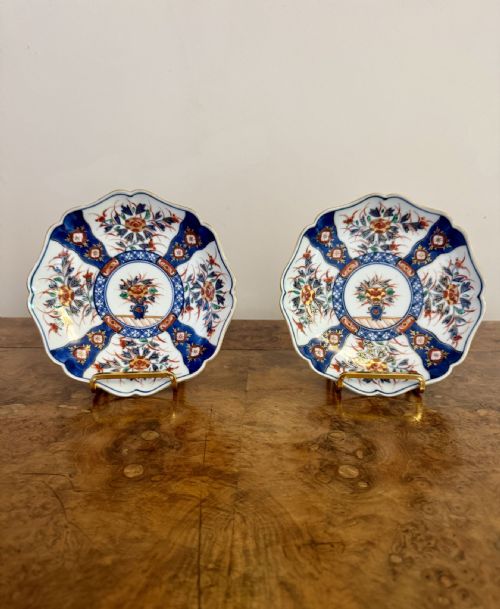
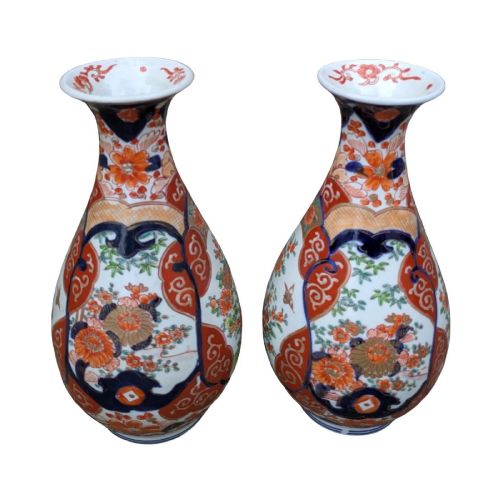
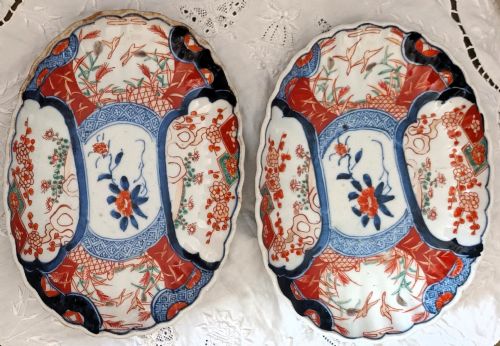
An imari ware pair brings together matching Japanese porcelain decorated in characteristic palettes that anchor traditional displays.
Imari Ware Pair
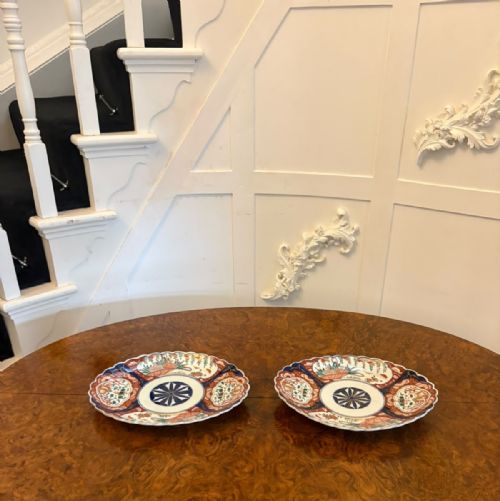
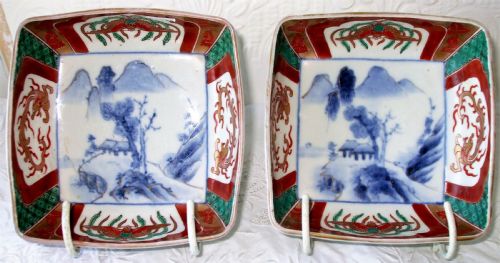
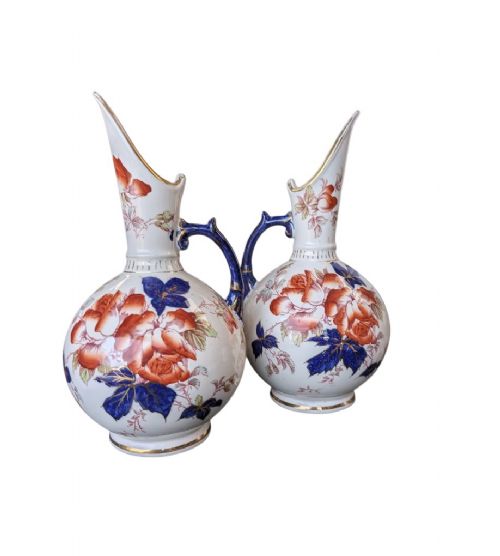
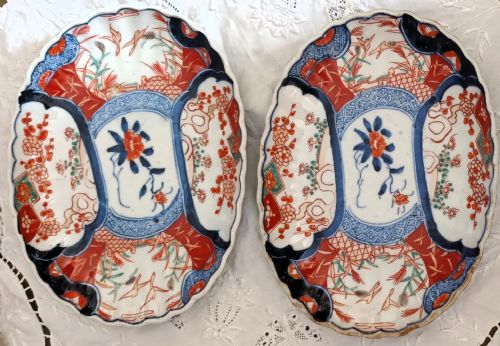
When you search for an imari ware pair, you encounter matched sets of porcelain vessels and plates created for export and domestic use. The pieces span periods from the Edo and Meiji eras through the Victorian decades, offering symmetrical arrangements for collectors.
You are most likely to meet decorative plates, dishes, and vases on this page. These items range from standard scalloped edge display dishes to large bottle shaped vases and hexagonal bowls.
How they were made
Potters formed these items from hard-paste porcelain, shaping them into plates, bowls, and vases before applying glaze. Artisans then hand painted the surfaces utilising enamel colours alongside gold leaf and gilt details.
Firing techniques fixed the enamel glaze and gilding onto the porcelain body. This process produced the characteristic bright palette associated with Japanese export wares.
Listings feature porcelain forms ranging from tripod bowls and clam shell dishes to large vases spanning multiple centuries of Japanese production.
What varies in quality
The precision of the hand painted details separates standard production items from finer examples. Artisans who executed intricate patterns with careful brushwork achieved superior visual balance across the pair.
Scale and form also define the range, as larger vases and unusual hexagonal or clam shell shapes require greater technical skill in the kiln. The preservation of the original gold leaf and enamel glaze further distinguishes the best pieces.
The Imari Ware Pair Glossary
- Imari
- Japanese porcelain decorated in a distinct palette of underglaze blue, iron red, and gold. This style originated in the town of Arita and found wide favour in export markets.
- Meiji Period
- The era in Japanese history lasting from 1868 to 1912. Many decorative plates and vases on the market date from this time.
- Edo Period
- The period in Japanese history spanning from 1603 to 1867. Early examples of these porcelain pieces originate from this historical span.
- Hard-paste porcelain
- A dense, vitrified ceramic material fired at high temperatures. It forms the durable white body of these traditional vessels.
- Gilding
- The application of gold leaf or gilt paint to the surface of the porcelain. This technique highlights specific decorative motifs within the design.
Imari Ware Pair: Frequently Asked Questions
How are imari plates displayed?
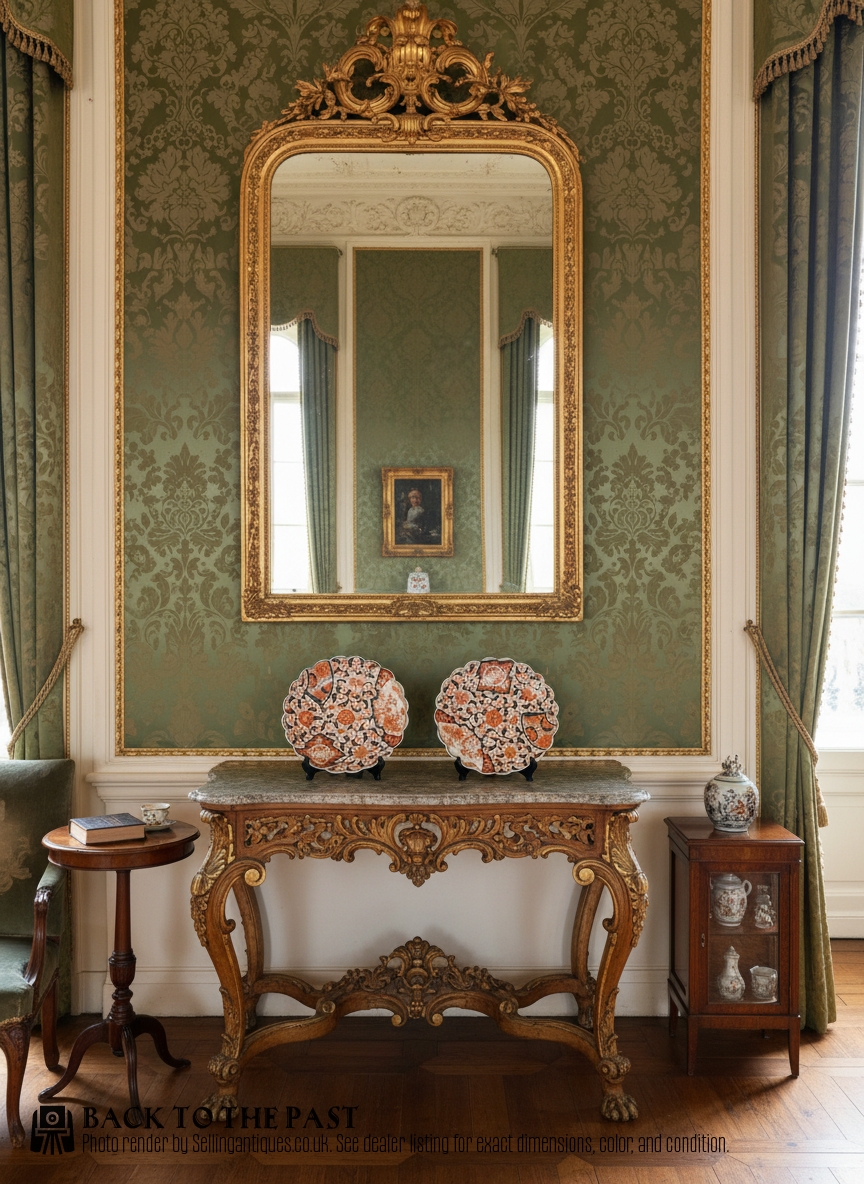
These decorative plates often feature scalloped edges designed for cabinet display or wall mounting. Collectors arrange matching pairs symmetrically to highlight the coordinated patterns.
Larger chargers and bowls serve as table centerpieces or focal points within a traditional interior scheme.
What colours define imari ware?
Traditional imari items rely on a combination of underglaze blue and iron red. Artisans layer these foundational tones with enamel glazes and gold leaf.
This vibrant palette remains consistent across various forms, including vases, pitchers, and dishes.
How do I identify meiji period pieces?
Meiji period items often date towards the later nineteenth and early twentieth centuries. The listings frequently associate these objects with the year 1900 or Victorian import dates.
Export records from this era show a high volume of matched plates and vases produced for Western buyers.
Where were these porcelain items made?
Production centred on Arita, a Japanese town renowned for its ceramic output. Kilns in this region supplied both domestic users and international export markets.
Export variations adapted traditional motifs to suit European and British tastes during the Edo and Meiji eras.