





Imari Ware Decorative Bowl
These imari ware decorative bowl pieces bring rich Japanese palettes into a room, offering the bold colours and intricate patterns that collectors prize.
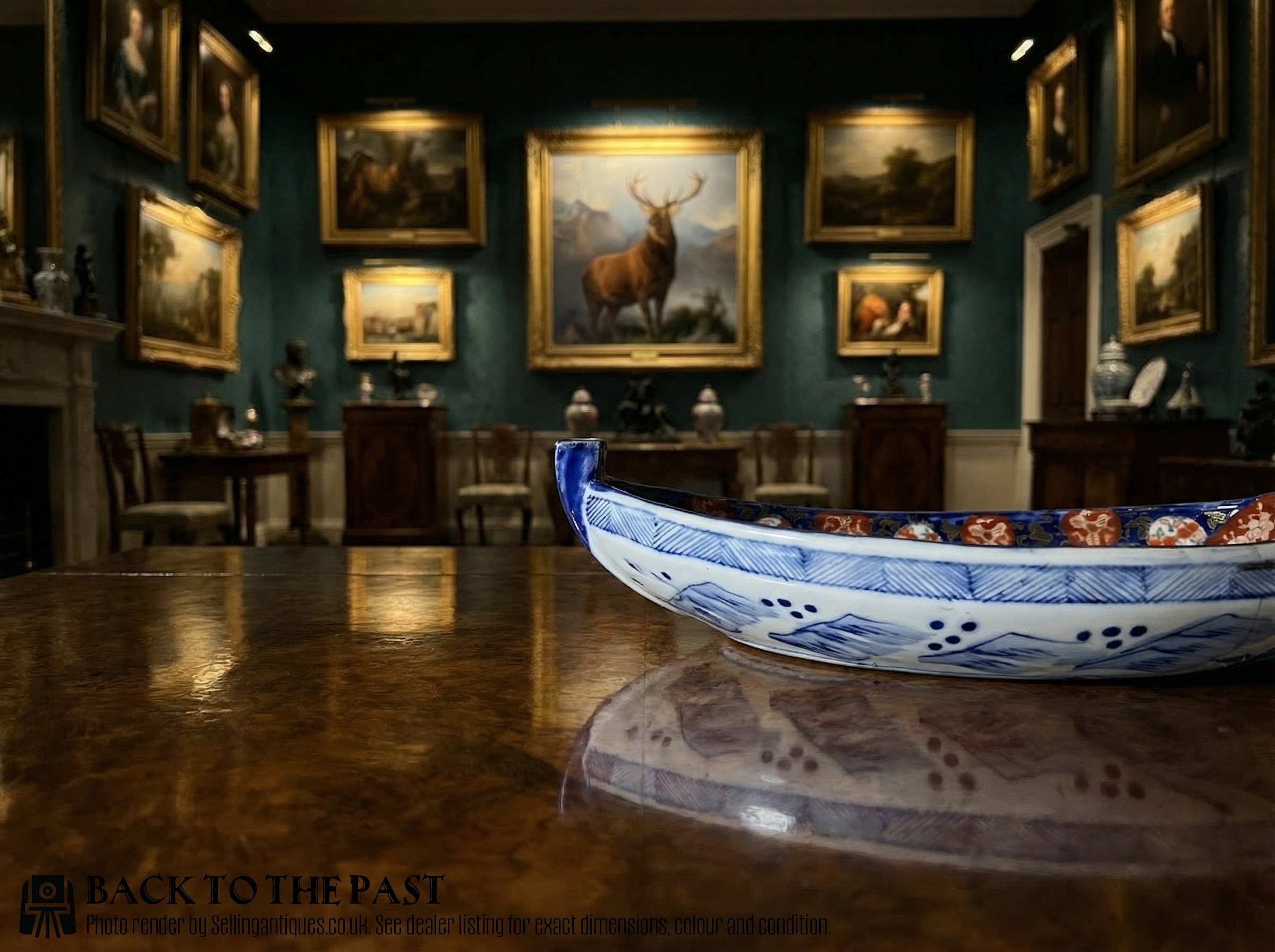
Imari Ware Decorative Bowl
When you search for imari ware decorative bowl pieces, you are looking at Japanese export ceramics spanning from the 17th century through the Edo and Meiji periods to around 1900. The forms include scalloped edge bowls, hexagonal shapes, boat shaped dishes, and tripod bowls.
The pieces on this page are most commonly porcelain vessels created in Arita and decorated with the characteristic cobalt blue and enamel palettes. You will find both single bowls and pairs or collections of shaped dishes designed for display.
How they were made
These items are shaped from porcelain clay and fired before receiving their painted decoration in cobalt blue underglaze and overglaze enamel colours. Artisans then added gilt, gilding, and gold leaf highlights to enhance the visual depth of the designs.
The glazing and firing techniques developed in Arita produced durable porcelain bodies capable of holding intricate patterns across various vessel forms, from large scalloped bowls to clam shell dishes.
Imari Ware Decorative Bowl Retail Price Guide 2026
Typical asking prices for imari ware decorative bowl among the pieces listed under this phrase on Sellingantiques today, from the lower quarter to the upper quarter. They describe what is for sale here now, not the wider market.
Materials appearing across the inventory include porcelain, glaze, enamel, cobalt blue, gold leaf, and gilding.
What varies in quality
The standard of a piece rests upon the crispness of the cobalt blue underglaze and the precision of the enamel work. Finer examples display balanced compositions and carefully applied gold leaf or gilding that sits harmoniously on the porcelain surface.
Form also dictates distinction, with unusual shapes like hexagonal bowls, tripod vessels, and boat shaped dishes often showing greater ambition in ceramic moulding than standard round dishes.
The Imari Ware Decorative Bowl Glossary
- Imari ware
- Japanese porcelain made in Arita and exported from the port of Imari, known for a palette of cobalt blue, iron red, and gold. It gained immense popularity in Europe during the Edo period.
- Arita
- The Japanese town in Hizen province where porcelain production originated. It remains the historical centre of Japanese ceramic manufacture.
- Edo Period
- The period in Japanese history from 1603 to 1868, characterised by economic growth and strict social order. Ceramics from this era are highly sought after by collectors.
- Meiji Period
- The era spanning from 1868 to 1912, marked by the modernisation of Japan and a continuation of refined export crafts. Pieces from this time often exhibit elaborate decorative details.
- Cobalt blue
- A deep blue pigment used under the glaze on ceramics, prized for its stability at high firing temperatures. It forms the foundation of traditional imari designs.
Imari Ware Decorative Bowl: Frequently Asked Questions
What is imari ware?
Imari ware refers to Japanese porcelain produced in Arita and shipped through the port of Imari for domestic and international markets. These ceramics are easily identified by their distinctive palette.
The style typically combines underglaze cobalt blue with overglaze red enamel and gold leaf accents, creating a rich visual contrast.
How old are these bowls?
The pieces available range from late 17th century examples made during the Edo period up to items produced around 1900 in the Meiji period.
Earlier pieces often originate from Arita and reflect the foundational techniques of Japanese export porcelain.
How were these dishes used?
While originally created as functional vessels and decorative items in Japan, many were exported to Europe to be displayed in formal rooms.
Collectors today use these bowls and dishes primarily for display on tables, shelves, or cabinets to add colour and historical character to an interior.
How do I care for antique porcelain?
Antique porcelain requires gentle handling to protect the overglaze enamel and gold leaf decorations from wear. Wash pieces by hand in lukewarm water using mild soap when necessary.
Avoid abrasive cleaners and harsh scrubbing to preserve the delicate gilding and painted surfaces.