


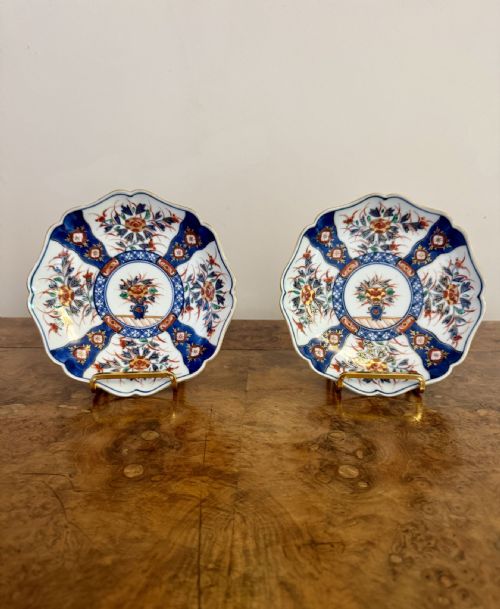
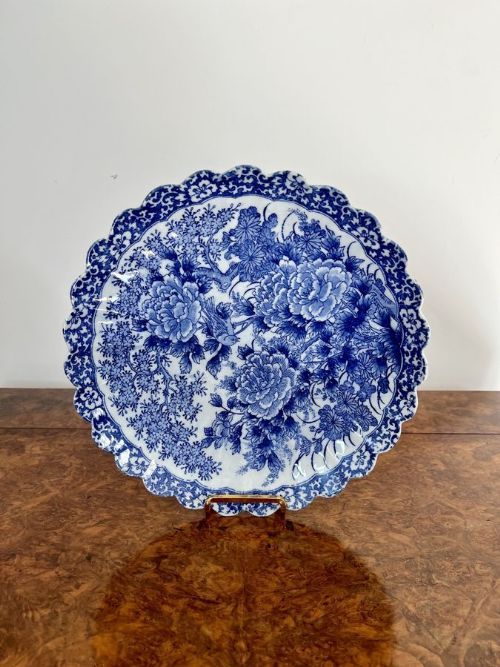


Imari Style Porcelain Dish
An imari style porcelain dish brings together cobalt underglaze, enamel, and gold leaf in a palette developed across centuries.
Imari Style Porcelain Dish
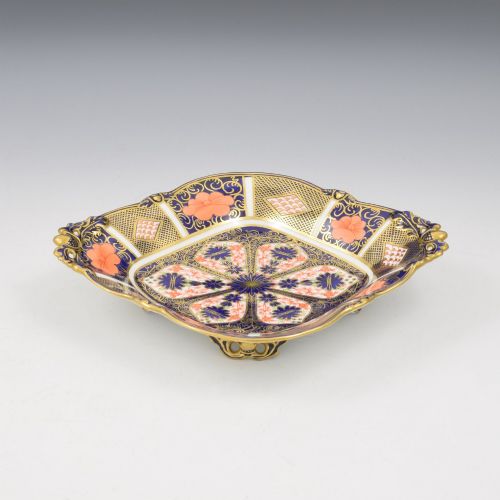
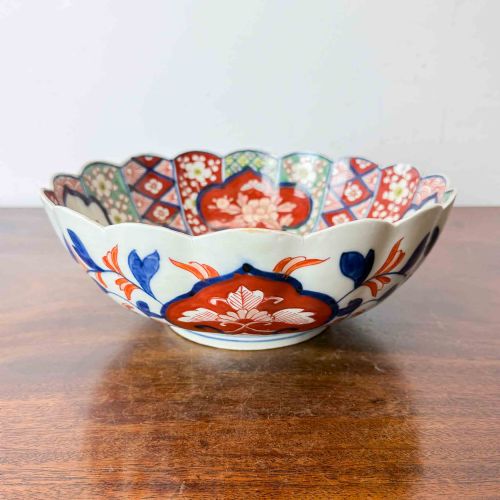
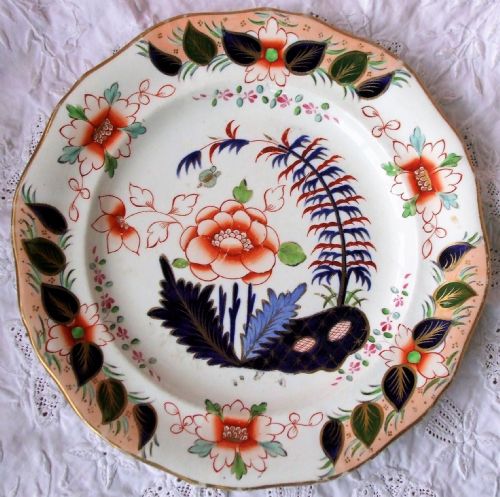
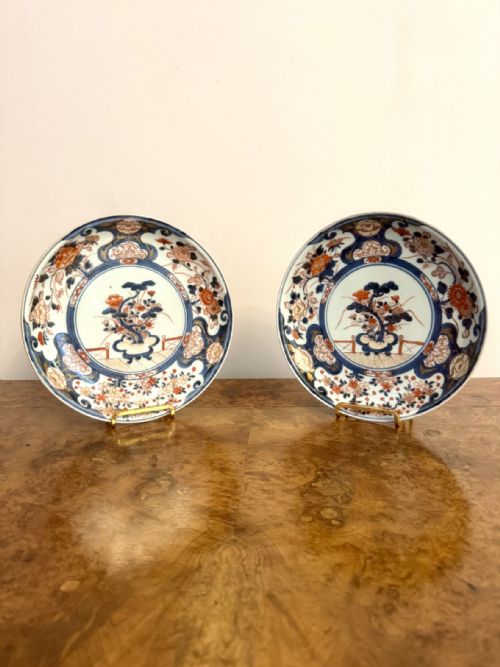
When you search for an imari style porcelain dish, you enter a field populated largely by Japanese export wares from the nineteenth century alongside English interpretations from factories like Royal Crown Derby and Chamberlain Worcester. The Japanese examples on offer range from scalloped edge plates and hexagonal forms to large chargers and deep bowls, reflecting the traditional aesthetic of the Edo and Meiji periods. Alongside these sit English ironstone and porcelain pieces produced during the Georgian and Victorian eras, demonstrating how domestic potteries adopted the palette for the European market.
The decorative schemes draw heavily on traditional Japanese motifs, including the Kakiemon style with its quail patterns, dragon and kylin designs, and compartmentalised panels filled with flora. Forms vary from simple round plates to fan shaped dishes, serving trays, and soup tureens, each shaped to hold dry goods or act as purely decorative centrepieces on a wall or dresser.
Materials and production methods
The foundation of these pieces is hard paste porcelain, ceramic, or ironstone, fired at high temperatures to create a durable white body. Cobalt underglaze forms the dark blue elements applied directly to the body before the initial glaze firing, ensuring permanence beneath the smooth surface.
Overglaze decoration follows the first firing, utilising enamel colours and gold leaf applied by hand. Subsequent low temperature firings fix the iron reds, greens, and gilt highlights that give the finished surface its distinctive metallic sheen and vibrant contrast against the cobalt blue.
Several plates display pairs of plump quails wandering through sparse foliage, faithfully copying eighteenth century Kakiemon designs.
Qualities of distinction
The distinction between ordinary and superior pieces rests on the precision of the hand painting and the depth of the palette. Finer examples display crisp cobalt underglaze work paired with cleanly registered enamel colours and generous use of gold leaf that retains its metallic brilliance.
Form and moulding also separate standard domestic wares from exceptional display items. Pieces featuring crisp scalloping, unusual shapes such as fans or hexagons, and unblemished glaze surfaces command greater attention than simple circular plates with routine factory decoration.
John Davenport of Longport·Royal Crown Derby·Chamberlain Worcester·Flight Barr And Barr·Samson
The Imari Style Porcelain Dish Glossary
- Cobalt Underglaze
- A blue pigment applied to ceramic bodies prior to glazing and firing, which reacts to high temperatures by turning a deep, permanent blue. This pigment forms the durable foundation of traditional imari designs.
- Enamel
- Coloured glass paste applied over the fired glaze and melted in a muffle kiln at a lower temperature. It provides the characteristic iron red and secondary hues found on imari style pieces.
- Kakiemon
- A style of Japanese porcelain decoration featuring asymmetric arrangements of birds, flowers, and quails in soft enamels. The style heavily influenced European porcelain manufacturers during the eighteenth and nineteenth centuries.
- Ironstone
- A heavy, durable type of earthenware patented in the nineteenth century by English potteries as a tough alternative to porcelain. It readily accepted imari style transfer printing and hand painting.
- Charger
- A large decorative plate, typically exceeding twelve inches in diameter, designed primarily for display on a sideboard or wall rather than for table service.
Imari Style Porcelain Dish: Frequently Asked Questions
How do I identify a true imari style dish?
Look for the characteristic tripartite palette combining cobalt underglaze blue, iron red enamel, and gold leaf highlights. The motifs often feature floral arrangements, compartmentalised panels, and birds.
Examine the weight and base of the piece, as Japanese export porcelain differs in paste consistency from English ironstone or bone china produced in imitation.
Were these dishes made for dining or display?
Smaller plates and dessert shapes saw active use on nineteenth century dining tables for sweets and fruit. Larger chargers and scalloped bowls served decorative functions on sideboards and walls.
Graduating sizes within a matched set indicate a utility purpose, whereas heavily gilded single chargers were created for visual impact.
How should I clean my antique porcelain?
Wash porcelain and ironstone pieces by hand in warm water using a mild, non abrasive detergent. Avoid soaking items with exposed gold leaf or overglaze enamel to prevent surface loss.
Dry the pieces thoroughly with a soft linen cloth rather than leaving them to air dry, which can cause water spotting on the glaze.
How do I tell Japanese export pieces from English copies?
Japanese pieces from the nineteenth century typically feature unglazed foot rims and lighter, finer porcelain bodies with hand painted cobalt. English copies from factories like Derby or Worcester often employ ironstone or bone china bases with factory marks.
English interpretations also tend to use slightly different red enamel tones and heavier gilding compared to their Meiji period counterparts.