


Imari Porcelain Set
These imari porcelain set pieces bring together bold iron-red and cobalt blue palettes across centuries of international kiln traditions.
Imari Porcelain Set
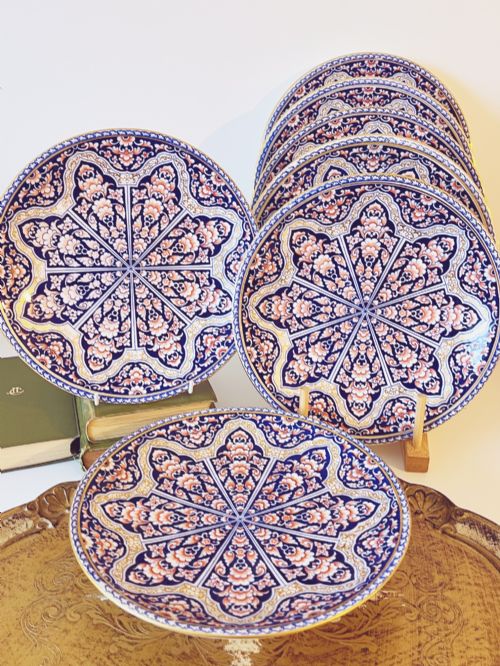
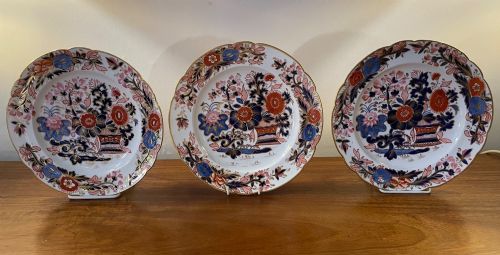
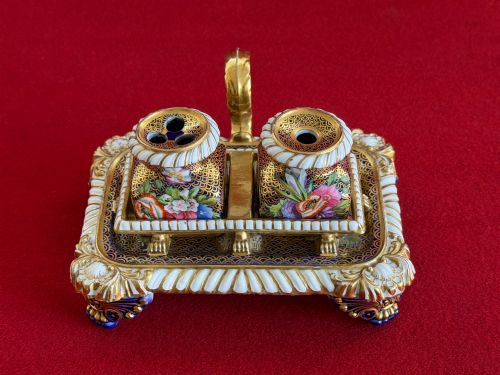
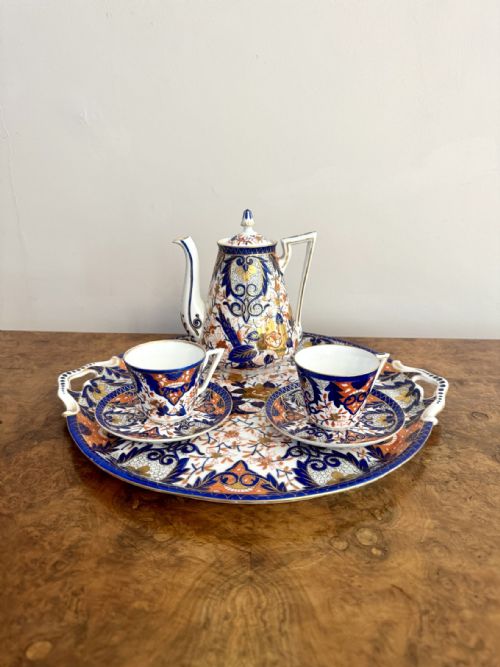
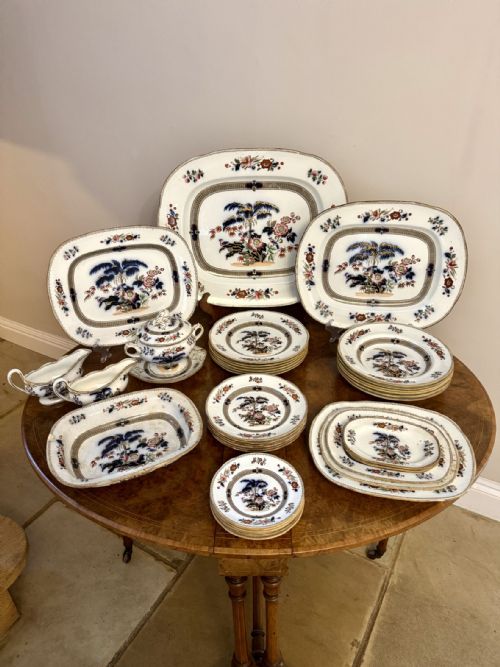
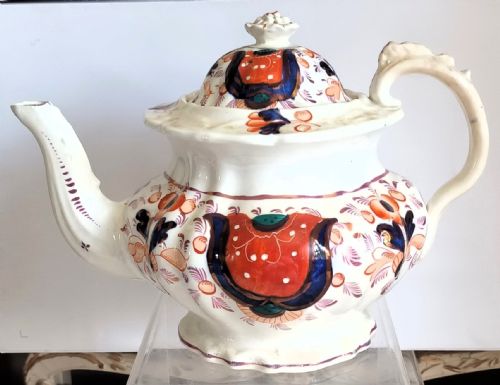
When searching for an imari porcelain set, buyers encounter an array of matched assemblages spanning Japanese export wares and British bone china or ironstone interpretations. The forms range from multi-piece dessert services and tea sets to garnitures of lidded vases and inkstands. These groupings showcase the enduring cross-cultural fascination with strongly coloured, contrasting motifs.
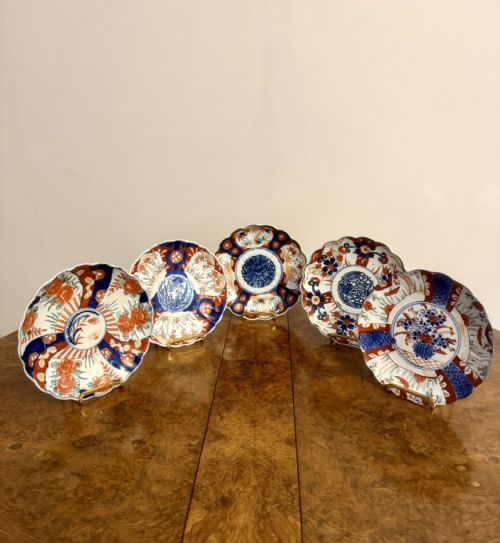
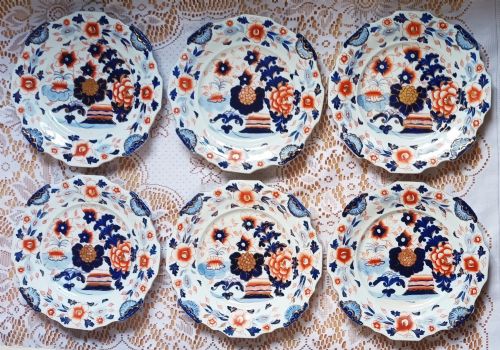
Japanese examples date from the Edo period and Meiji era, alongside 18th-century Chinese Qianlong interpretations and 19th-century British equivalents by factories such as Spode and Royal Crown Derby. The domestic versions often adapt the characteristic palette onto standard European service shapes like teacups, saucers, and dinner plates. Surviving items frequently appear in matched multiples of four, five, or six pieces.
The aesthetic bridges continents by translating traditional East Asian floral and structural designs onto sturdy utilitarian bodies. Whether composed of export dishes or local earthenware imitations, each gathering functions as a decorative statement and a serviceable dining ensemble.
Materials and production
Makers utilised hard-paste porcelain, bone china, ironstone, and earthenware as the foundational bodies for these sets. The pieces were shaped using throwing, moulding, or pressing techniques before receiving preliminary underglaze cobalt blue painting.
Enamel colours and supplementary gold leaf were added over the glaze in a secondary firing process to build the characteristic vibrant surface. Ormolu mounts and bronze fittings occasionally frame the ceramic elements in more elaborate decorative configurations.
Certain plates feature depictions of Black Ships, recording early Japanese encounters with Western trading vessels in painted ceramic detail.
Evaluating craftsmanship
The distinction between tiers rests upon the precision of the hand-painted brushwork and the complexity of the underglaze and overglaze interplay. Finer sets display crisp delineation within the iron-red and cobalt pigments, complemented by well-preserved applications of gold leaf.
Body selection further separates output, with translucent porcelain and refined bone china representing a higher standard of manufacture than heavier ironstone or earthenware variants. The structural integrity of multi-piece groupings and the uniformity of the glaze finish dictate the overall success of the assemblage.
Royal Crown Derby·Spode·Wedgwood·Royal Davenport·Masons·Minton·Coalport·Samuel Marti
The Imari Porcelain Set Glossary
- Imari palette
- A decorative scheme dominated by cobalt blue and iron-red, frequently accented with gilding. This distinctive combination originated in Japan before influencing European ceramic production.
- Garniture
- A matched set of three or more ornamental vases or vessels designed for symmetrical display on a mantelpiece or sideboard.
- Ironstone
- A durable type of heavy earthenware patented in the 19th century as a robust alternative to true porcelain. It accepted transfer-printed and hand-painted imari designs readily.
- Dessert service
- A specialised grouping of plates, comports, and bowls intended for the final course of a formal meal. These often feature elaborate hand-painted patterns.
- True trio
- A matching set comprising a teacup, a coffee cup, and a saucer. Collectors prize intact groupings from early British manufactories.
Imari Porcelain Set: Frequently Asked Questions
What is an imari porcelain set?
An imari porcelain set comprises matched or grouped ceramic items decorated in the distinctive palette of cobalt blue, iron-red, and gold. These collections range from tea and dessert services to decorative vase garnitures.
Such groupings may originate from Japanese export kilns or European factories replicating the aesthetic on local porcelain and ironstone bodies.
How do I date an imari set?
Dating relies on factory backstamps, shape characteristics, and the specific composition of the ceramic body. Early Japanese examples trace back to the Edo period, while British iterations often carry Victorian or Georgian registry marks.
Comparing the intensity of the enamel colours and the style of the floral or architectural motifs helps narrow the production era.
Can I use antique imari sets?
Many antique tea and dessert services remain structurally sound enough for careful occasional use. Hand-washed maintenance protects the delicate overglaze enamels and gold leaf from deterioration.
Ironstone and porcelain bodies tolerate light handling, though delicate handle joints and fragile rims require caution during gatherings.
What distinguishes Japanese from British imari?
Japanese imari wares typically utilise true hard-paste porcelain bodies with distinct potting characteristics from the Edo and Meiji eras. British versions translate the same palette onto bone china, earthenware, or ironstone bodies shaped to European dining fashions.
Examining the foot rings and paste texture reveals the geographical origin of the manufacturing kiln.