



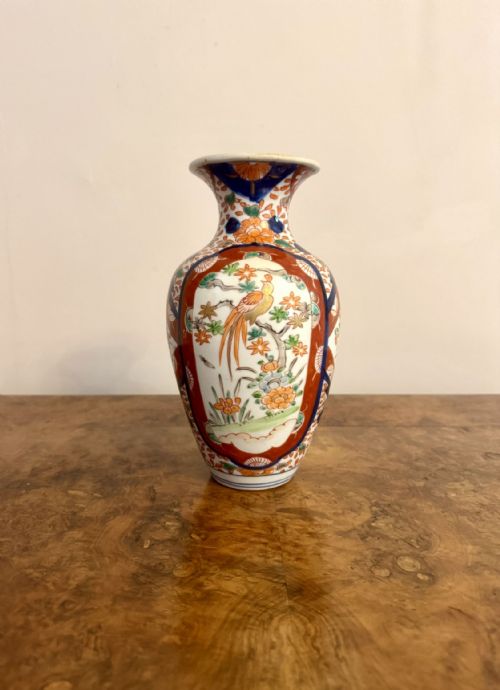
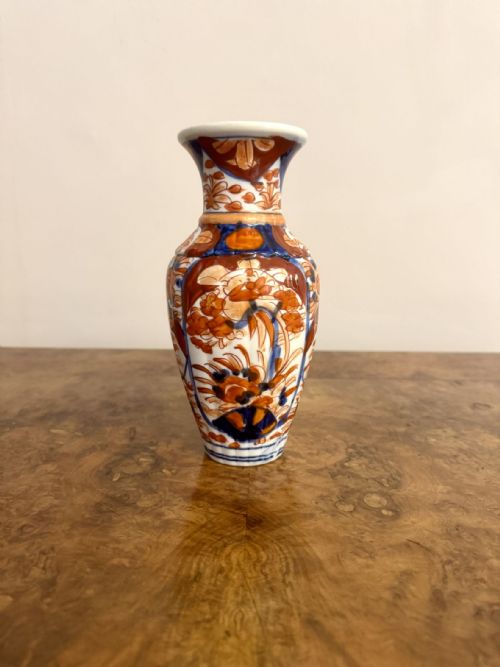


Imari Patterned Urn Vase
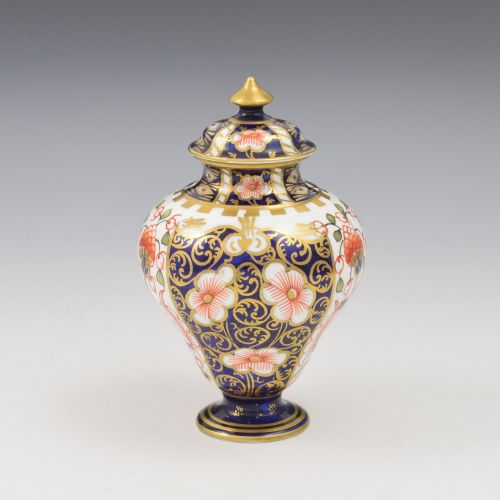
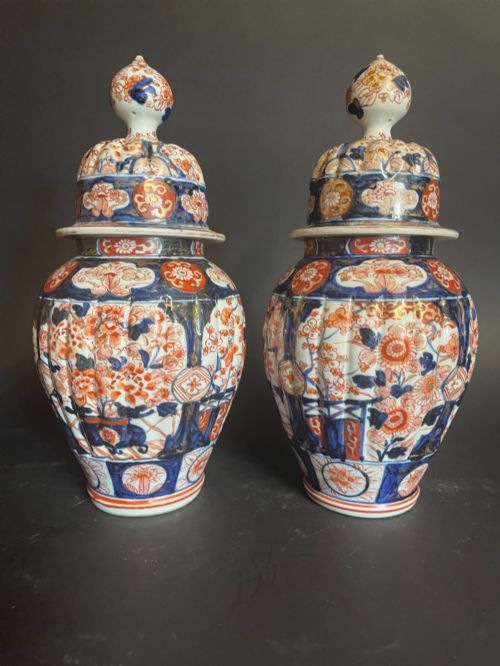
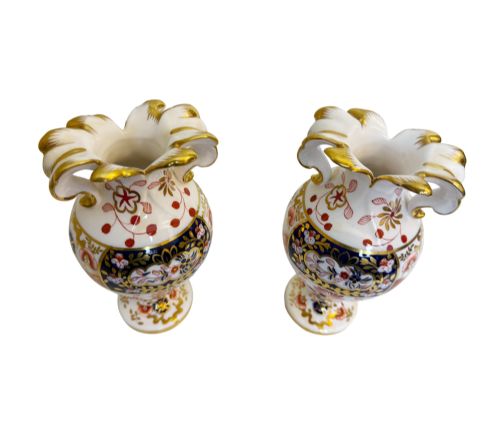
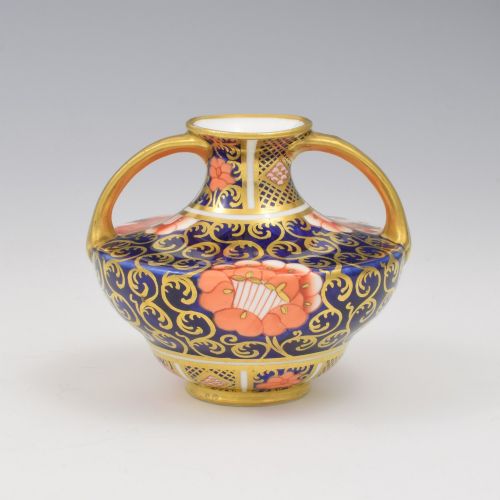
These imari patterned urn vase examples bring together deep ironstone and porcelain vessels decorated in the distinct Japanese and English palettes collectors prize.
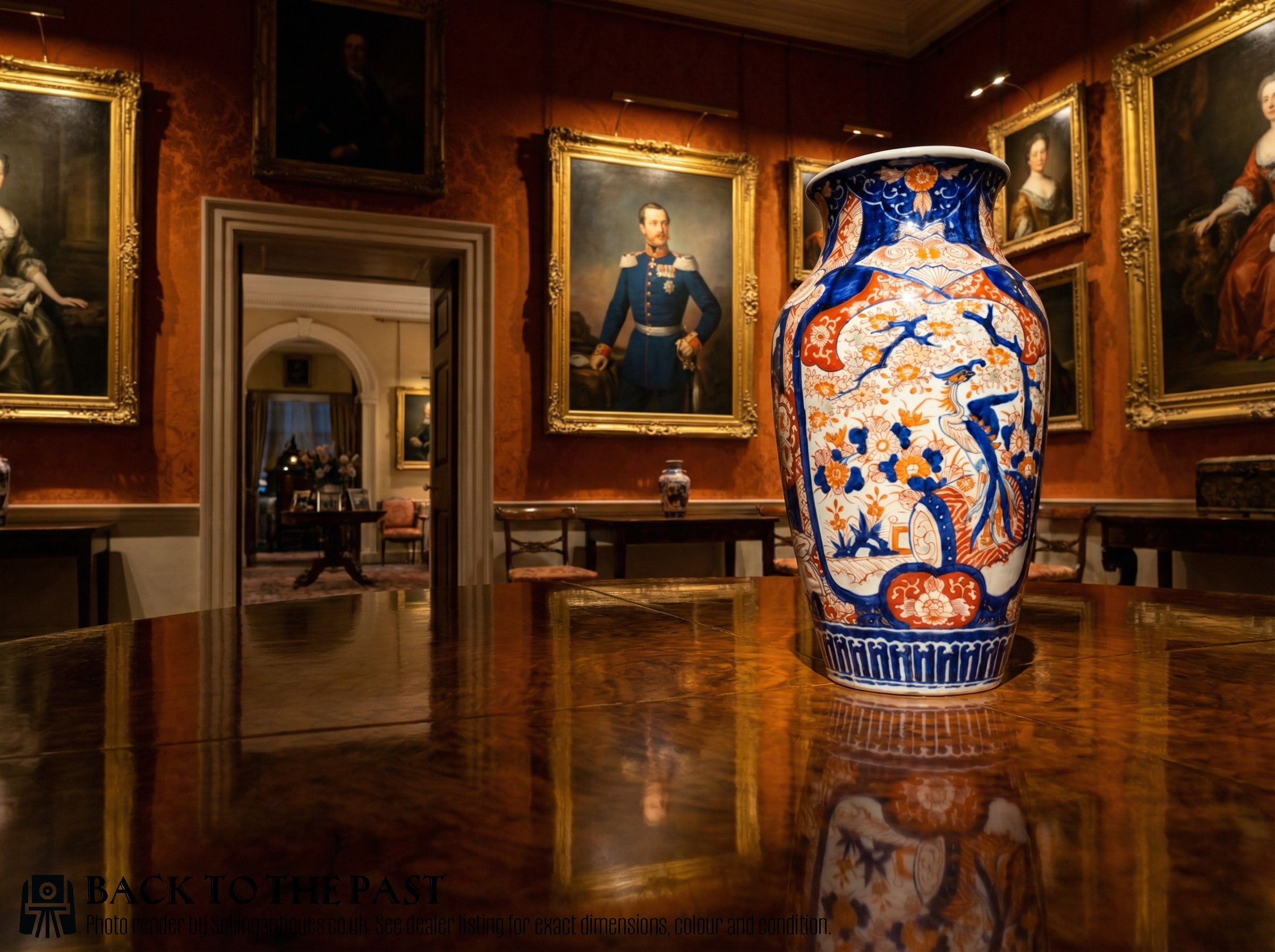
Imari Patterned Urn Vase
An imari patterned urn vase encompasses decorative vessels, lidded jars, and pot pourri containers produced across the eighteenth, nineteenth, and early twentieth centuries. These pieces display the characteristic palette associated with Japanese Imari alongside English interpretations by makers such as Spode, Masons, and Royal Crown Derby.
The selection on this page ranges from miniature twin-handled porcelain pieces to large Japanese baluster vessels and paired lidded jars. Buyers frequently encounter nineteenth-century examples and Edwardian porcelain alongside eighteenth-century Arita wares.
Forms vary from octagonal baluster shapes and bamboo-patterned bodies to converted table lamps and handled urns. Each object reflects either the traditional Japanese export aesthetic or the Georgian and Victorian adaptation of those motifs.
How they were made
Potters shaped these vessels using porcelain, ceramic, or ironstone, applying underglaze blue and iron red enamel alongside detailed gold leaf or gold gilding. The surface decoration relies on controlled firing techniques to fuse the complex pigments and metallic leaf onto the body.
English factories like Spode and Masons utilised ironstone and porcelain to replicate the vibrant palette of imported wares, sometimes combining transfer printing with hand-painted enamel highlights. Japanese workshops on the other hand worked in porcelain and ceramic to produce traditional baluster and lidded jar forms.
Imari Patterned Urn Vase Retail Price Guide 2026
Typical asking prices for imari patterned urn vase among the pieces listed under this phrase on Sellingantiques today, from the lower quarter to the upper quarter. They describe what is for sale here now, not the wider market.
Materials recorded across these vessels encompass porcelain, ceramic, ironstone, enamel, glaze, gold leaf, and gold gilding.
What varies in quality
Quality in an imari patterned urn vase rests upon the crispness of the hand-painted enamels and the precision of the gold gilding applied over the glaze. Finer pieces demonstrate superior control in the underglaze blue and a richer density of iron red and gold leaf.
The weight of the porcelain or ironstone body and the symmetry of thrown or moulded forms also distinguish finer production. Earlier eighteenth-century pieces and substantial nineteenth-century Japanese pairs show deeper tonal depth in the palette than later commercial output.
Royal Crown Derby·Spode·Masons
The Imari Patterned Urn Vase Glossary
- Imari
- A style of ceramic decoration originating in Japan, characterised by a distinctive palette of underglaze blue, iron red, and gilt. English factories subsequently adopted these motifs for their own porcelain and ironstone wares.
- Ironstone
- A heavy, durable type of ceramic patented in the nineteenth century by English manufacturers as a resilient alternative to porcelain. It frequently provided a sturdy base for vibrant enamel and gilt patterns.
- Baluster
- A vertical vase form featuring a rounded lower body that tapers towards the neck. This shape appears frequently among Japanese export porcelain and lidded jars.
- Pot Pourri
- A vessel designed with a pierced cover to hold dried scented plant materials. These lidded containers often feature elaborate handles and intricate enamel decoration.
- Gilding
- The application of gold leaf or gold powder to the surface of ceramics to highlight specific design elements. High quality pieces retain bright metallic highlights across the patterned panels.
Imari Patterned Urn Vase: Frequently Asked Questions
How do I date an imari patterned urn vase?
Dating relies on identifying the ceramic body, factory marks, and stylistic traits such as the specific application of gold leaf and enamel colours. Eighteenth-century examples differ noticeably in weight and brushwork from Edwardian or later nineteenth-century production.
Examining the base and glaze finish helps distinguish between traditional Japanese export pieces and English ironstone interpretations from factories like Spode or Masons.
Are these vases porcelain or ironstone?
The pieces span multiple ceramic bodies, with Japanese items typically rendered in fine porcelain while several English examples utilise heavy ironstone. Each material supports the distinct underglaze blue and iron red palette differently.
Checking the translucency and weight of the vessel usually reveals whether it is porcelain or the denser ironstone body favoured by nineteenth-century English makers.
How were lidded jars used historically?
Lidded jars and urns served primarily as decorative ornaments within period interiors, often displayed on mantelpieces or cabinets in matched pairs. Some variations functioned as pot pourri containers to fragrance formal rooms with dried botanicals.
Their robust construction allowed them to remain prominent decorative focal points in both Georgian and Victorian reception spaces.
How should I display an imari patterned urn vase?
These vessels require stable surfaces away from direct sunlight and heavy foot traffic to protect their delicate enamel and gold leaf detailing. Pairing them or displaying them alongside complementary porcelain enhances their visual impact.
Ensuring adequate lighting allows the intricate hand-painted patterns and gilt highlights to be fully appreciated within a room.