




Imari Ware Decorative Vase
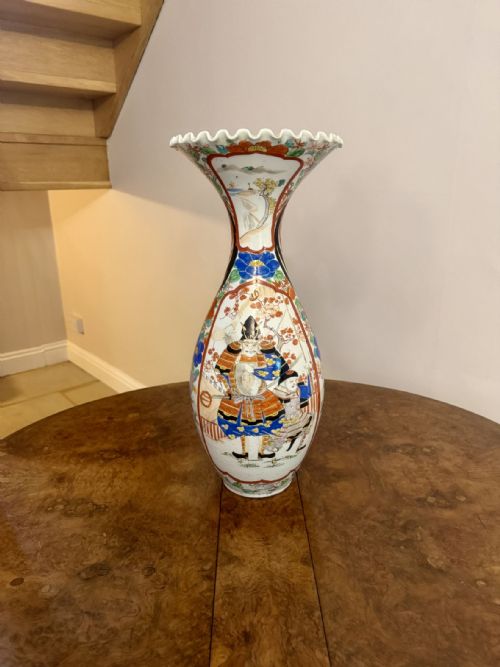
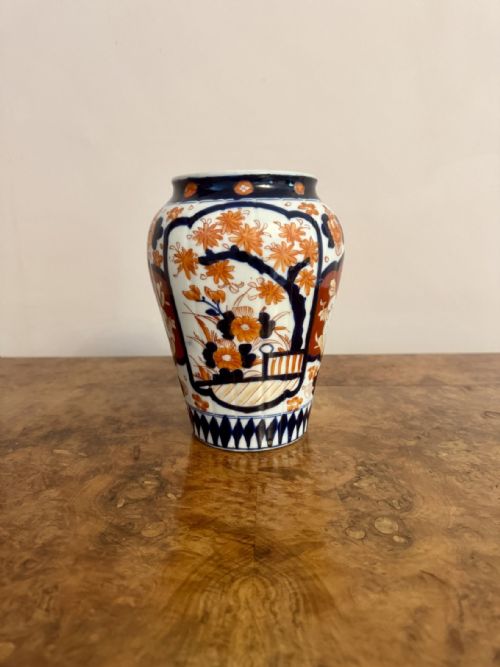
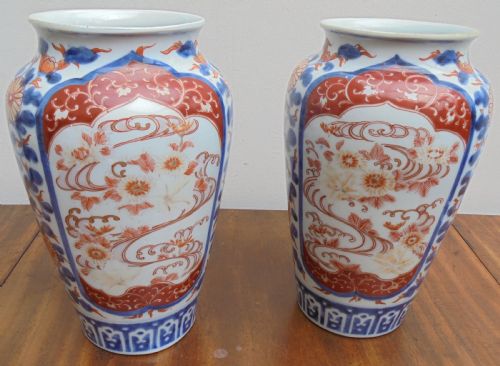
These imari ware decorative vase pieces bring rich iron-red, cobalt blue and gold leaf decoration to a room, offering the bold palette that collectors prize.
Imari Ware Decorative Vase
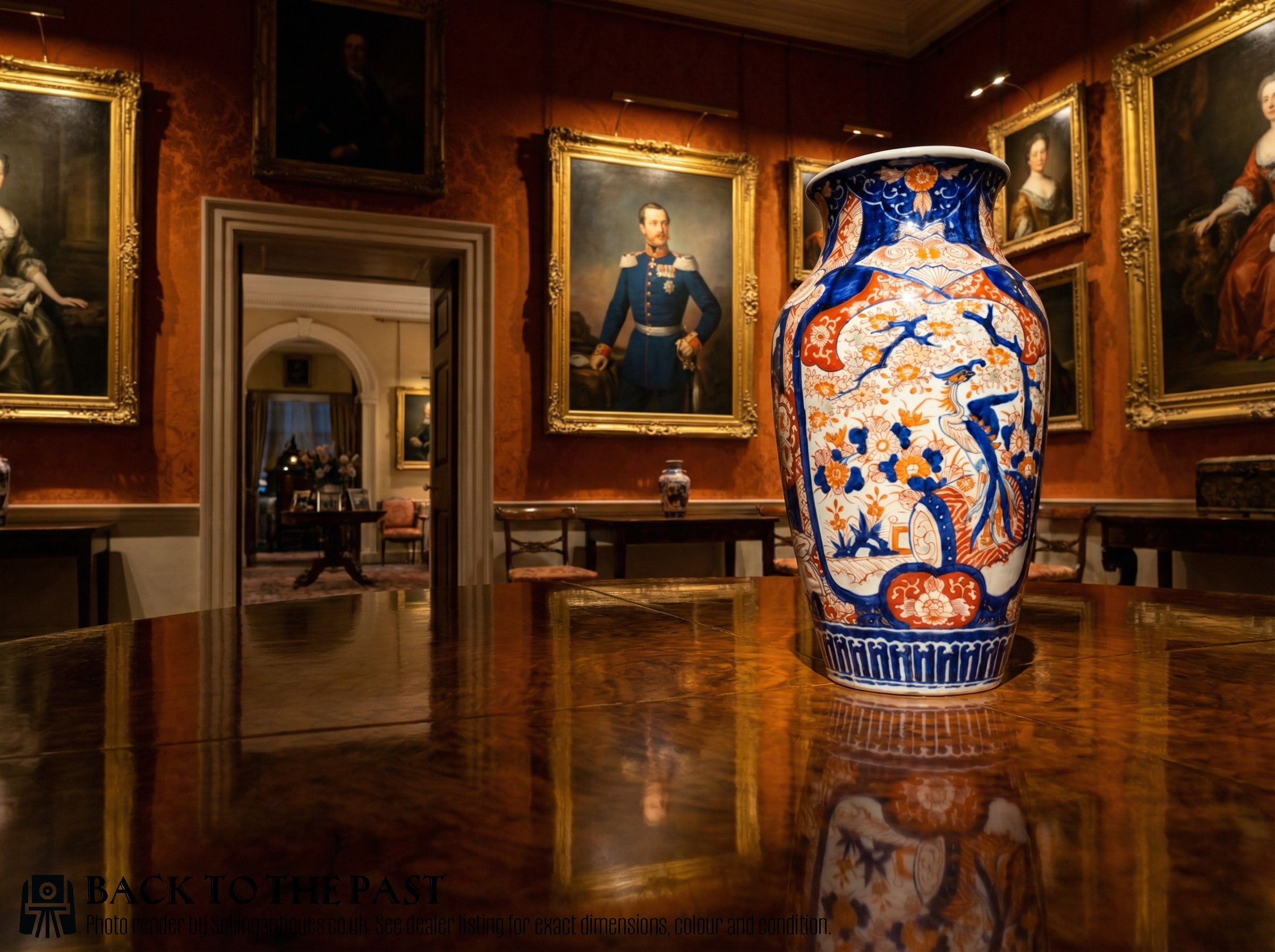
An imari ware decorative vase is a ceramic vessel defined by its distinct palette of underglaze cobalt blue, iron red, and gilt highlights. The examples gathered here span from the 19th century through the Edwardian period, capturing both Japanese export traditions and domestic British interpretations.
You will encounter various forms on this page, ranging from standard single vessels to large pairs, shaped vases, hexagonal profiles, and two-handled examples. Some groupings even include garnitures of three or collections of seven pieces.
The dominant origins recorded in these listings point directly to Japanese Meiji and Edo periods, alongside Edwardian creations such as pieces bearing pattern numbers from Royal Crown Derby. Buyers looking for this phrase will find a strong representation of turn-of-the-century craftsmanship dating from 1870 through 1910.
How they were made
The foundation of an imari ware decorative vase lies in hard porcelain shaped into vessels like hexagonal forms or two-handled bodies, then fired to create a durable base. Artisans applied cobalt blue underglaze decoration before the initial firing to set the deep blue tones characteristic of the style.
Overglaze enamels in iron red were then painted onto the surface, frequently enhanced with gold leaf or gold gilding to catch the light. A final glaze sealed the intricate pigments, ensuring the vibrant colour contrasts remained secure across centuries.
Imari Ware Decorative Vase Retail Price Guide 2026
Typical asking prices for imari ware decorative vase among the pieces listed under this phrase on Sellingantiques today, from the lower quarter to the upper quarter. They describe what is for sale here now, not the wider market.
Some Edwardian ceramicists borrowed Japanese export patterns so thoroughly they even numbered their porcelain buds.
What varies in quality
Quality in these vessels rests upon the crispness of the cobalt blue underglaze and the precision of the iron-red enamel work. Superior examples display dense, well-balanced patterns that cover the porcelain body without crowding the form.
The application of gold gilding or gold leaf also marks the distinction between standard vessels and exceptional pieces. Heavier porcelain bodies with complex moulding, such as hexagonal profiles or matching pairs and garnitures, generally command greater attention.
The Imari Ware Decorative Vase Glossary
- Cobalt
- A deep blue metallic oxide used under the glaze to create the foundational dark tones on porcelain. It provides the permanent underglaze contrast against which reds and golds are layered.
- Enamel
- Opaque glass-like paint applied over the fired glaze to introduce vibrant colours such as iron red. This technique allows for intricate surface detail on top of the porcelain body.
- Gilt
- A thin layer of gold applied to the surface of the ceramic to accent patterns and highlights. It adds a reflective quality that distinguishes finer decorative pieces.
- Garniture
- A set of matching vases designed to be displayed together as a decorative unit on a mantelpiece or shelf. These sets typically include three or more coordinated vessels.
- Meiji Period
- The era of Japanese history lasting from 1868 to 1912, known for prolific ceramic exports to the West. Many pieces from this time feature complex imari palettes.
Imari Ware Decorative Vase: Frequently Asked Questions
What is an imari ware decorative vase?
An imari ware decorative vase is a ceramic vessel characterised by its distinct palette of cobalt blue, iron red, and gold gilding. These pieces originated in Japan and were later emulated by European potteries.
The listings here show examples ranging from the 19th century through the Edwardian period, encompassing single vessels, pairs, and larger matching garnitures.
How were these vases used?
Historically, these vases served as prominent display items in domestic interiors, intended to add colour and formal symmetry to mantelpieces, sideboards, and drawing rooms. Their vibrant cobalt and red patterns made them focal points for decoration.
Matching pairs and sets of three, known as garnitures, were specifically arranged together to create a balanced aesthetic across a room.
How do I date an imari vase?
Dating relies on examining the porcelain body, the specific tones of the underglaze cobalt, and the style of the enamel painting. Reference to periods such as the 19th century or the Edwardian era provides a reliable chronological frame.
Makers' marks or pattern numbers, such as those found on Edwardian porcelain pieces, offer further specific points of reference for determining age.
How do I live with antique imari pieces?
Living with these ceramics involves placing them away from high-traffic edges where accidental knocks might occur. Their rich gold leaf and enamel details benefit from stable indoor environments out of direct, harsh sunlight.
Dusting them gently with a soft, dry brush helps preserve the overglaze enamels and gilding without risking abrasion to the surface.