
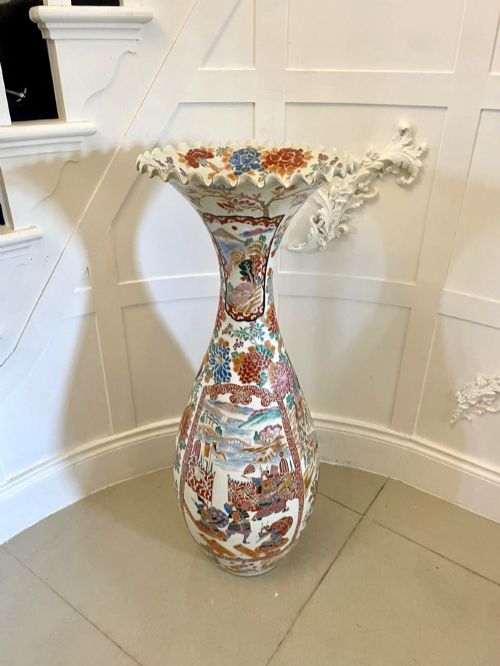
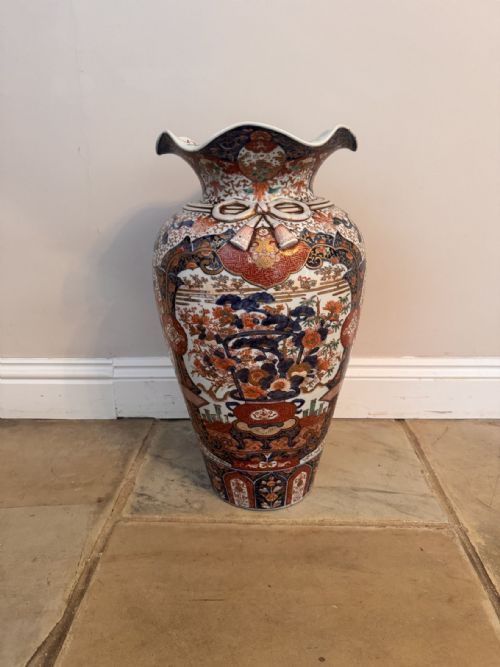
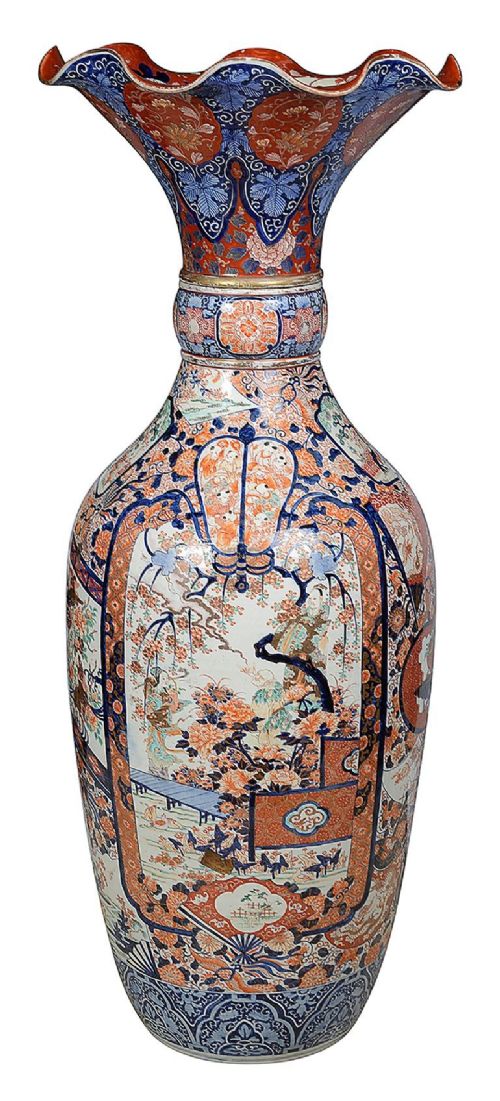
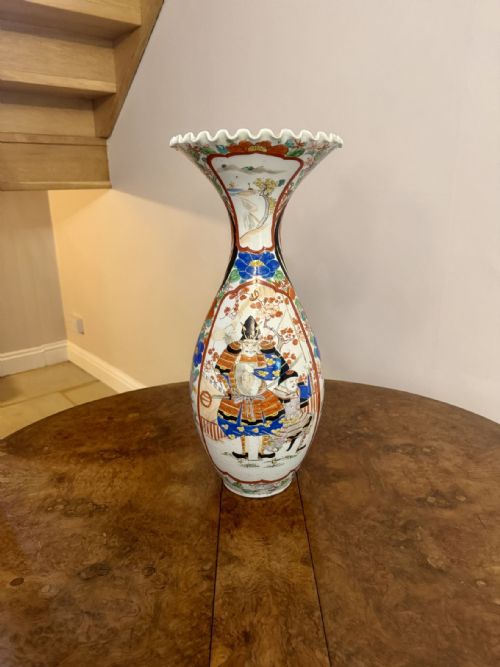


Imari Ceramic Floor Urn
These imari ceramic floor urn pieces bring bold iron-red and cobalt blue decorative impact to a large hallway or reception room.
Imari Ceramic Floor Urn
An imari ceramic floor urn brings substantial scale and traditional Japanese aesthetics to interior spaces, appearing in forms such as tall floor vases and large lidded vessels. These pieces originate predominantly from the nineteenth century and the Meiji period.
Buyers encounter single monumental vessels alongside matched pairs designed for symmetrical display. The decorative scheme relies on the classic imari palette of iron-red, cobalt blue, and gilt highlights applied to white porcelain.
Objects range from simple two-handle forms to towering floor-standing vases exceeding four feet in height. Each piece functions as a primary decorative focal point within a room.
Materials and construction
Potters shaped these large vessels from white porcelain, employing sturdy bodies capable of supporting considerable height and weight. Enamel colours and gold leaf were then applied over glaze to create intricate surface patterns.
Firing techniques allowed kilns to achieve the deep cobalt blue underglaze and contrasting iron-red overglaze details characteristic of the imari palette. Artisans finished select examples with gilt highlights to catch the light across the patterned panels.
Several towering examples reach past four feet in height, requiring careful navigation through standard doorways.
Quality differences
Execution of the painted palette separates standard decorative production from exceptional examples, with finer work showing crisp brushwork in the iron-red and cobalt pigments. The richness and application of gold leaf further distinguish superior pieces.
Physical scale and proportion dictate distinction, particularly among monumental floor-standing vases and balanced pairs. Condition of the underlying porcelain and stability of the glaze finish remain central to overall merit.
The Imari Ceramic Floor Urn Glossary
- Imari palette
- A decorative colour scheme featuring rich cobalt blue, iron-red, and gold highlights on a white porcelain base. This traditional palette originated in Japan and defines the visual character of these pieces.
- Meiji period
- The era in Japanese history spanning from eighteen sixty-eight to nineteen twelve, associated with significant export of decorative ceramics. Many large floor vases date from the later decades of this period.
- Spill vase
- A tall, slender cylindrical vessel historically used to hold wooden spills for lighting fires or candles. Several matching pairs appear in this tall ceramic format.
- Gilt
- A thin layer of gold applied to the surface of the porcelain as leaf or paint. It provides metallic accents that contrast with the blue and red enamel decorations.
Imari Ceramic Floor Urn: Frequently Asked Questions
Where should I place a floor urn?
These large vessels suit wide hallways, entrance foyers, or substantial reception rooms with high ceilings. Their height and colourful palette demand an open setting where they sit comfortably as standalone focal points.
Avoid confined corners or busy backgrounds that obscure the hand-painted details. Paired vases work effectively flanking a fireplace or framing a grand doorway.
How do I clean my ceramic urn?
Dust the porcelain surface gently using a soft, dry cloth to prevent accumulation within recessed glaze patterns. Avoid chemical cleaners or abrasive materials that might damage the overglaze enamels and gold leaf.
Take care when moving these tall vessels, as their porcelain bodies and significant height require two people for safe handling. Keep them away from direct sunlight to protect the iron-red and blue pigments over time.
How old are these ceramic urns?
The pieces available here date primarily from the nineteenth century, with strong representation from the Meiji period and the decades around eighteen eighty to nineteen ten. Makers utilised traditional porcelain methods during this era of intensive export.
Characteristics such as the specific iron-red palette and large floor-standing dimensions help identify this nineteenth-century production period. Examination of the glaze and base provides further context regarding their age.
Are these vases sold in pairs?
Many listings feature matching pairs of large floor vases, while others offer substantial single vessels intended for independent display. Matched pairs share identical decorative motifs and scale, designed for symmetrical placement.
Single pieces provide strong decorative impact on their own within smaller architectural spaces. Check individual listings to confirm whether a vessel forms part of a matched pair.