
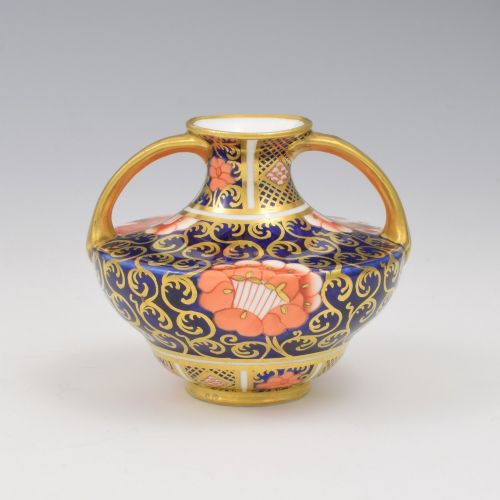
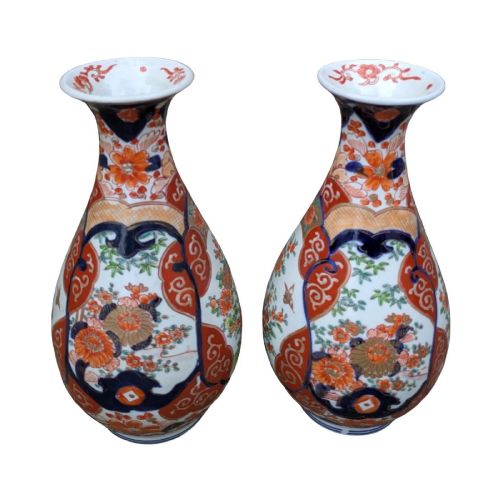


Gilded Imari Porcelain Vase
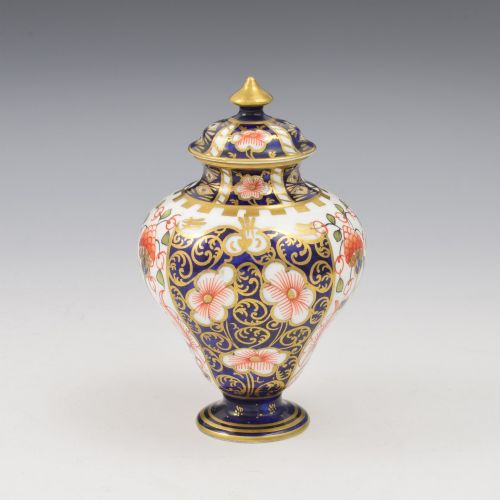
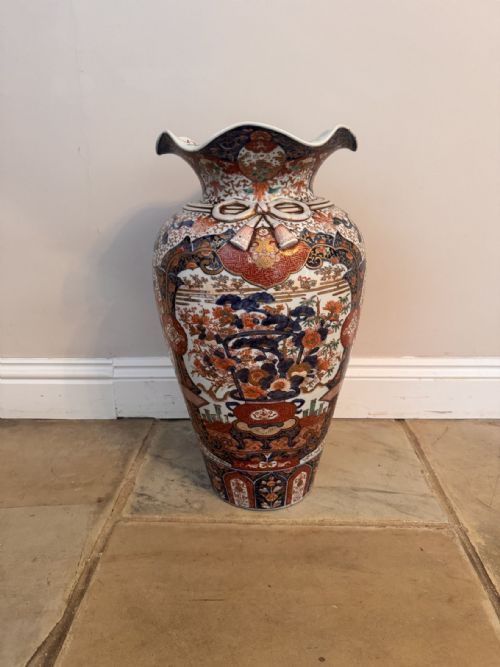
A gilded imari porcelain vase brings rich ironstone palettes, cobalt blue and gold leaf together in a single striking display piece for the home.
Gilded Imari Porcelain Vase
When someone searches for a gilded imari porcelain vase, they encounter distinct ceramic vessels drawing upon centuries of decorative tradition. The pieces span periods from the Edo and Meiji eras through the nineteenth century and the Edwardian epoch, originating from both Japanese kilns and European factories inspired by them.
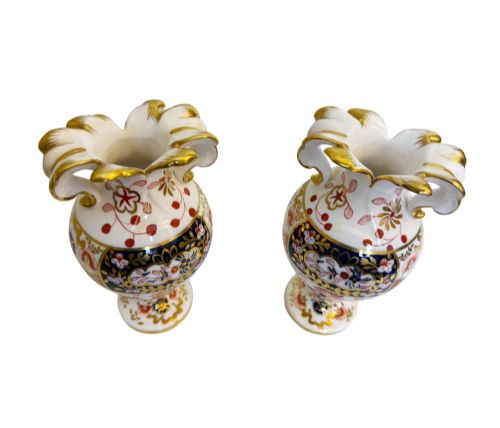
Most items met on this page take the form of traditional vases, lidded jars, slender neck vessels, or matched pairs and garniture sets. These objects combine hand-painted cobalt and enamel details with prominent gold gilding applied across various bulbous, baluster, and bottle shapes.
The aesthetic bridges Eastern motifs and Western domestic tastes, particularly through English interpretations produced by factories such as Derby and Mason's alongside authentic Japanese imports. Buyers find both monumental floor-standing examples and miniature mantle pieces within the current selection.
Materials and Technique
Makers shaped these vessels using fine porcelain, bone china, or heavy ironstone, forming the clay bodies on the wheel or in moulds before initial firing. Artisans then applied underglaze cobalt blue and vibrant enamel pigments by hand to build up intricate floral, panel, and landscape compositions.
Gold leaf and liquid gold gilding formed the final decorative layer, often highlighting key motifs or bordering geometric panels before a subsequent kiln fix. This combination of ironstone or porcelain bodies with layered enamel and gilt work created the durable, luminous surfaces characteristic of the imari palette.
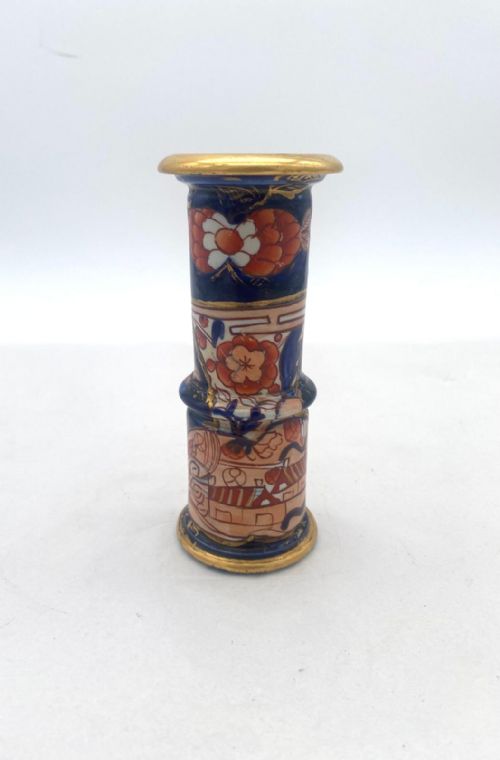
The selection includes individual bud vases, bottle-shaped vessels, and matched multi-piece garniture sets.
Assessing Quality
The standard of a piece rests upon the precision of the hand-painting and the generosity of the gilding. Finer examples display crisp cobalt definition and rich gold leaf that remains bright and intact across intricate surface patterns.
Proportion and form also dictate value, with balanced baluster silhouettes, matching garniture sets, and well-modelled covers commanding greater appreciation. The skill involved in translating traditional Japanese motifs onto European porcelain bodies further separates standard production from exceptional studio output.
Royal Crown Derby·Stevenson and Hancock·Mason's Patent Ironstone
The Gilded Imari Porcelain Vase Glossary
- Imari palette
- A traditional decorative colour scheme typically combining underglaze cobalt blue, iron red, and gilt over a white porcelain ground. This palette originated in Japanese export ware and was later adopted across European potteries.
- Garniture set
- A matched group of three or more vases or jars designed to be displayed together on a mantelpiece or sideboard. These sets frequently include both lidded and open vessels of graduating sizes.
- Baluster
- A vase shape characterised by a rounded lower body that tapers toward the neck, resembling an architectural baluster. This form provides a stable base and a wide surface area for detailed enamel decoration.
- Ironstone
- A heavy, durable type of ceramic developed in the nineteenth century as a robust alternative to porcelain. It readily accepts imari patterns and gold gilding while offering superior strength.
Gilded Imari Porcelain Vase: Frequently Asked Questions
What is a gilded imari porcelain vase?
A gilded imari porcelain vase is a ceramic vessel decorated in the distinctive imari palette of cobalt blue and red, accented with gold leaf or gilding. These pieces range from authentic Japanese imports to nineteenth-century English interpretations.
They serve primarily as decorative objects, often produced in matching pairs or larger garniture sets designed for prominent display.
How do I date an imari vase?
Dating relies on examining the ceramic body, maker's marks, and stylistic clues within the enamel work. Nineteenth-century examples often feature specific factory stamps or distinct ironstone weights.
Edo and Meiji period Japanese pieces display different brushwork nuances compared to Edwardian or Victorian English reproductions.
Where should I display a garniture set?
Garniture sets look best arranged symmetrically across a wide mantelpiece, sideboard, or dedicated display cabinet. The graduating sizes of the vases create a balanced visual focal point in a room.
Because these sets often include lids, placing them at a slight distance from heavy foot traffic protects the delicate gilded finials.
Are these vases suitable for fresh flowers?
Most antique imari vases are treated as decorative display objects rather than functional vessels for water. Historical glazes and interior structures may not withstand prolonged exposure to moisture.
Using them dry or with artificial stems preserves the delicate enamel and gold leaf on the interior rim and exterior body.