

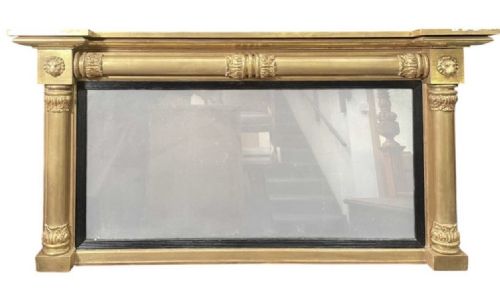
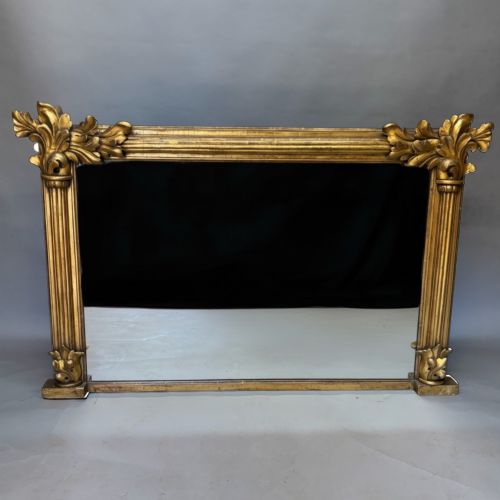
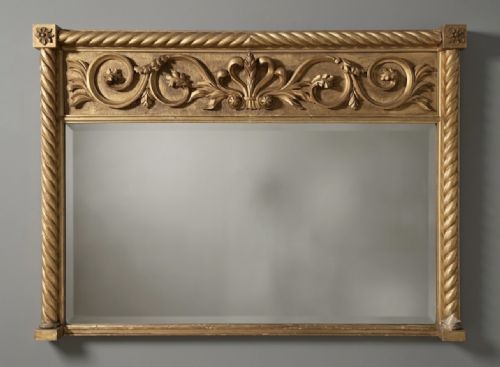
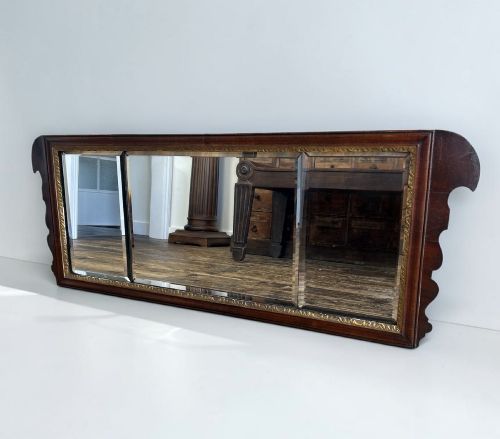

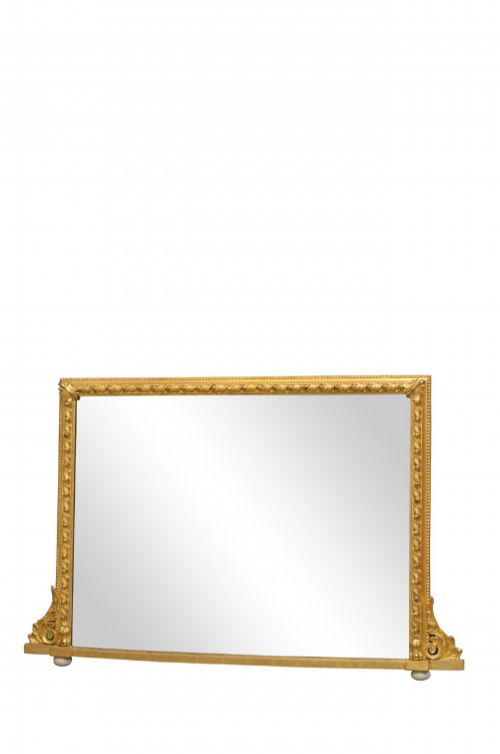


Horizontal Gilt Wall Mirror
A horizontal gilt wall mirror commands a room with its broad proportions, bringing light and presence above a fireplace or sideboard.
Horizontal Gilt Wall Mirror
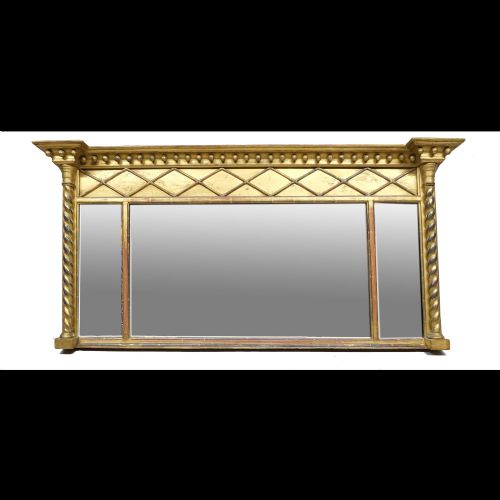
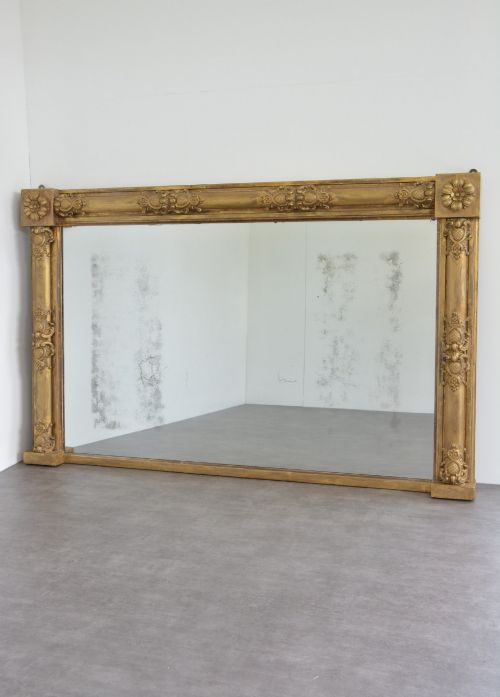
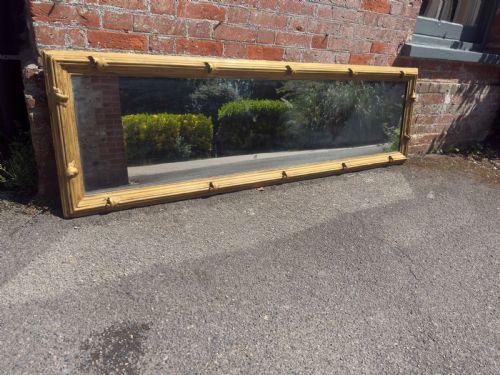
A horizontal gilt wall mirror most commonly appears here as an overmantel mirror designed to sit above a chimneypiece. These pieces span periods from the Georgian and Regency eras through the Victorian age and into Art Deco, presenting a landscape orientation.
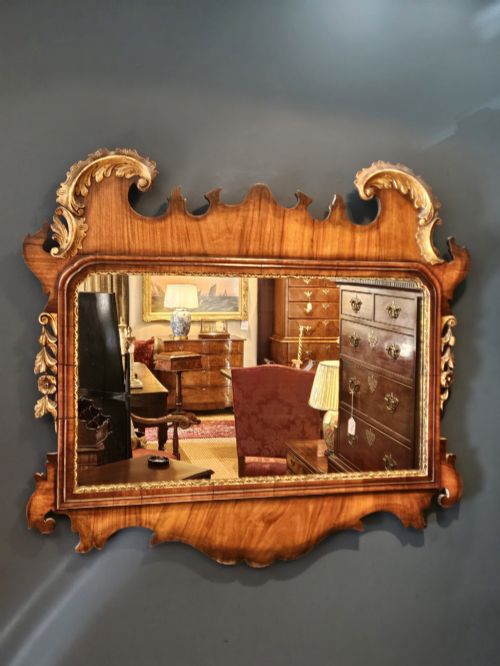
The selection includes triple plate and tryptic mirrors alongside simpler single-plate designs framed in walnut, mahogany, birds eye maple, or rosewood. Makers and craftsmen adapted these forms for grand reception rooms and smaller domestic spaces alike.
Origins stretch across nineteenth-century English workshops as well as specific periods like the Regency and the Art Deco era of nineteen-thirty. Buyers encounter everything from carved wood and gesso structures to metal frames and painted finishes.
Materials and Construction
Makers constructed these frames using timber foundations such as mahogany, walnut, and pine before applying layers of gesso to carve intricate surface details. Gold leaf or composition was then applied over the prepared ground to achieve the characteristic metallic sheen.
Glass plates were silvered by hand, a process that frequently results in foxing and age spots over the decades. Frames range from heavily carved giltwood to simpler parcel-gilt mouldings and birds eye maple veneers.
Horizontal Gilt Wall Mirror Retail Price Guide 2026
Typical asking prices for horizontal gilt wall mirror among the pieces listed under this phrase on Sellingantiques today, from the lower quarter to the upper quarter. They describe what is for sale here now, not the wider market.
Listings span the eighteenth to the twentieth centuries, featuring Georgian, Regency, Victorian, and Art Deco styles.
Assessing Quality and Execution
The depth and crispness of the wood carving distinguish finer examples from standard production, particularly where gesso ornaments meet the wooden substrate. Crisp relief work on nineteenth-century pieces reflects skilled hand tooling rather than quick moulding.
The condition of the original gilding and the preservation of the early mirror plate dictate the character of the piece. Subtle foxing on authentic glass indicates age, while the stability of the timber frame determines structural integrity.
The Horizontal Gilt Wall Mirror Glossary
- Overmantel mirror
- A large horizontal looking glass traditionally hung above a fireplace mantelpiece. These pieces often feature landscape proportions to match the width of the hearth below.
- Giltwood
- Timber, usually soft wood, covered with gold leaf applied over a prepared gesso ground. This technique creates a luminous metallic finish characteristic of period frames.
- Gesso
- A plaster mixture applied to wood frames to provide a smooth surface for carving and gilding. Artisans built up this layer before cutting intricate decorative motifs.
- Foxing
- Small dark spots and discoloration within the silvering of antique mirror glass caused by chemical reactions over time. Collectors often value this natural sign of age.
- Tryptic
- A mirror divided into three distinct vertical sections within a single frame. This format was especially popular during the Regency period.
- Parcel gilt
- A finish where only specific carved details or raised portions of a wooden frame are gilded while the rest shows exposed wood or paint.
Horizontal Gilt Wall Mirror: Frequently Asked Questions
Where should I hang a horizontal gilt wall mirror?
These pieces find their traditional home directly above a fireplace mantelpiece, where their broad proportions balance the hearth. They also sit effectively above low sideboards or large console tables in reception rooms.
Positioning the glass opposite a window maximises the reflection of natural light into the space. Ensure the wall structure can support the substantial weight of carved wood and glass frames.
How do I identify a Regency period mirror?
Regency pieces frequently display classical motifs such as ball ornaments, reeded columns, and architectural pediments. The frames often combine gilded surfaces with painted black details or parcel-gilt elements.
Proportions tend to be balanced and restrained, reflecting the neoclassical tastes of the early nineteenth century. Tryptic plates divided into three sections are also characteristic of this era.
What is foxed glass?
Foxing refers to the speckled dark patches and hazy areas that develop on antique mirror plates as the silvering deteriorates. This oxidation occurs naturally over many decades of exposure to atmospheric moisture.
Many collectors prize original foxed glass because it confirms the age of the looking glass. It provides a soft, atmospheric reflection rather than the stark clarity of modern mirrors.
Are these mirrors heavy?
Period frames incorporate dense hardwoods, thick gesso layers, and heavy glass plates that contribute to a significant overall weight. Large overmantel examples require robust wall fixings secured directly into studs or masonry.
Professional installation is recommended to ensure the security of the hanging wire and brackets. The weight varies depending on whether the core timber is mahogany, walnut, or pine.
How do I clean a giltwood frame?
Dust the carved surfaces gently with a soft, dry brush to remove particles without disturbing the delicate gesso and gold leaf. Avoid using water, liquid cleaners, or chemical solvents on gilded surfaces.
Harsh cleaning products can strip the historical finish and expose the underlying gesso or timber. Professional conservators should handle any major cleaning or repair work.