




Hop and Barley
These hop and barley glasses are historic English drinking vessels designed for ale, beer and wine, prized for their fine wheel-engraved botanical motifs.
Hop and Barley
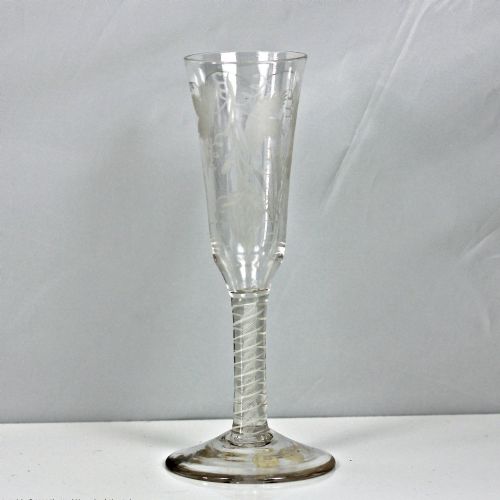
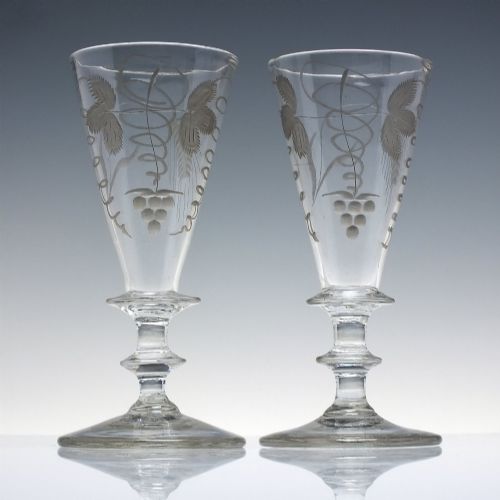
When you search for hop and barley, you encounter drinking vessels spanning the eighteenth century through to later revivals, predominantly featuring tall flutes, rummers and tumblers. The selection centres on Georgian forms created for grain-based brews, decorated with characteristic botanical stems.
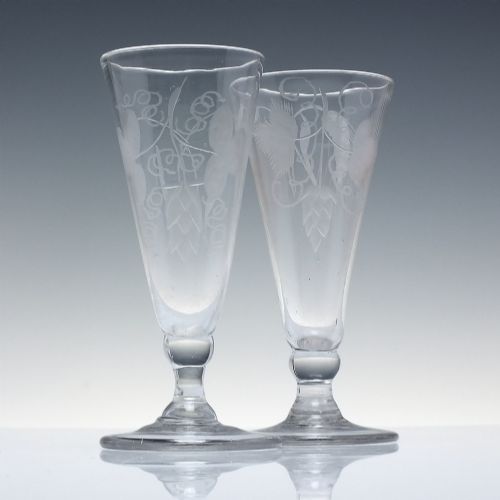
Most examples hail from English workshops, taking the shape of ale glasses, heavy rummers or small tumblers intended for daily consumption or tavern use. These pieces connect directly to the agrarian heritage of brewing through their precise wheel engraving.
The dominant forms on this page include tall flutes with facet-cut stems and robust rummers designed to hold generous portions of beer or ale. Each piece demonstrates the traditional association between the glass contents and its engraved decoration.
Materials and construction
The makers relied primarily on lead glass, lead crystal and flint glass to achieve clarity and weight, allowing intricate wheel engraving to catch the light. Clear glass provided a smooth canvas for depicting the botanical details of grain and hops.
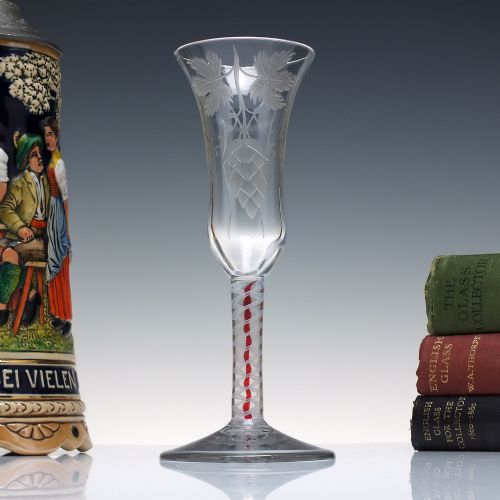
Stem formation required considerable skill, resulting in air twists, opaque twists and facet cutting that elevated simple drinking vessels into decorative objects. Enamel glass variants introduced opaque white or coloured tones to the medium.
Engravers utilised small copper wheels to cut the motifs of hop and barley directly into the vessel wall, achieving depth and texture through varying line thickness.
Hop and Barley Retail Price Guide 2026
Typical asking prices for hop and barley among the pieces listed under this phrase on Sellingantiques today, from the lower quarter to the upper quarter. They describe what is for sale here now, not the wider market.
Listings span the eighteenth century, 1800, Georgian eras and the 1920s, constructed from lead glass, flint glass and enamel.
Judging quality and craftsmanship
Quality rests on the crispness of the wheel engraving and the proportional balance of the vessel, where deeper cuts and clearer botanical detail distinguish superior items. The clarity of the lead glass or flint glass also dictates the visual appeal.
Stem complexity marks another tier of distinction, with multi-spiral air twists and double series opaque twists requiring greater mastery than plain or simple faceted stems. The integration of the bowl with the stem shows the hand of a confident maker.
Proportion and foot stability complete the assessment, as finer vessels maintain a delicate balance without feeling fragile or clumsy in the hand.
The Hop and Barley Glossary
- Ale glass
- A tall, slender drinking vessel specifically formed for serving ale or beer, usually featuring a narrow bowl to preserve effervescence.
- Rummer
- A heavy, large drinking glass with a short stem and a capacious bowl, frequently utilised for rum or strong beer during the eighteenth and nineteenth centuries.
- Air twist
- A decorative stem formation enclosing elongated spiral bubbles of air within the glass, created by drawing out twisted canes.
- Opaque twist
- A stem design incorporating white or coloured enamel threads twisted within the clear glass body.
- Facet cut
- Geometric surface cutting applied to stems or bowls to reflect light and enhance the decorative texture.
Hop and Barley: Frequently Asked Questions
What are hop and barley glasses?
These are historic drinking vessels, typically originating in the eighteenth and nineteenth centuries, decorated with wheel-engraved motifs of hops and barley.
They were produced in England for consuming ale, beer and grain-based spirits, reflecting the agricultural roots of brewing culture.
How were these glasses used?
People used them in domestic settings, inns and taverns for serving standard ales and stronger fermented drinks.
Their robust forms, particularly rummers and tumblers, suited regular communal dining and social gatherings.
How do I care for antique glass?
Wash antique glass by hand in warm water using a mild detergent, avoiding sudden temperature changes that can stress the material.
Dry them gently with a soft cloth and store them securely on stable surfaces away from edge hazards.
How can I tell the period?
Dating relies on examining the weight of the glass, the construction of the stem, and the style of the wheel engraving.
Eighteenth-century examples often feature air or opaque twists, whilst later nineteenth-century pieces lean towards heavier rummers and facet-cut stems.