





Engraved Ale Goblet
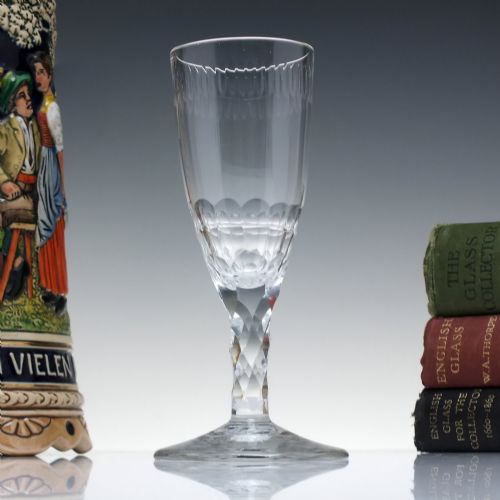
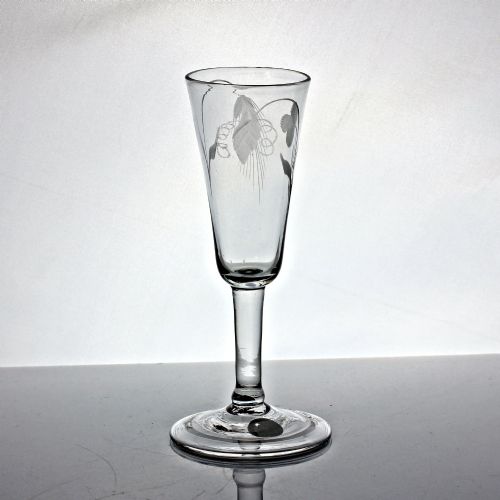
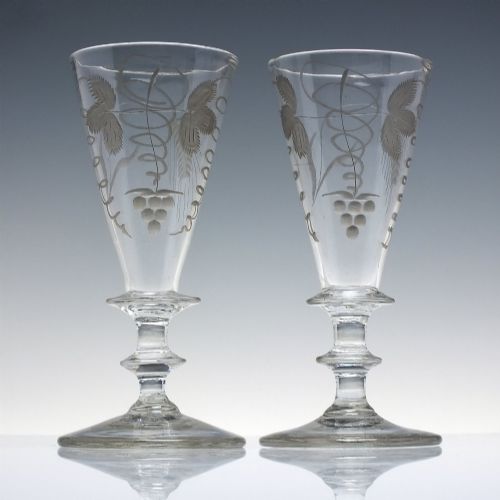
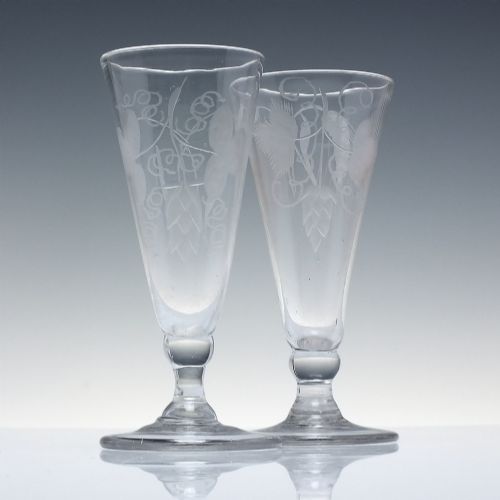
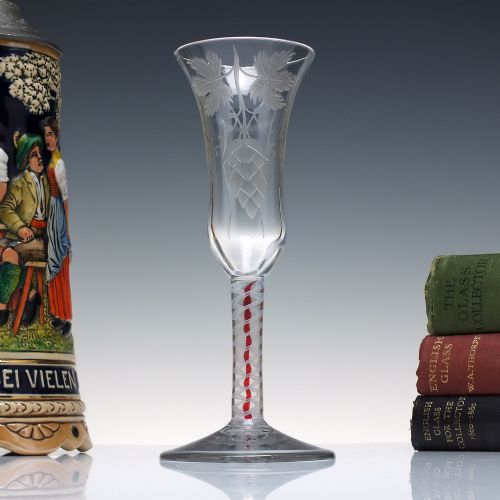
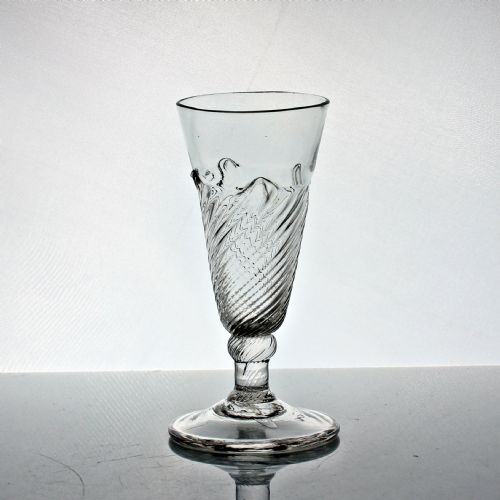
These engraved ale goblet examples combine traditional British drinking vessels with detailed wheel-engraved hop and barley motifs.
Engraved Ale Goblet
An engraved ale goblet is a drinking vessel designed for malt beverages, typically featuring wheel-engraved ornamentation of hops and barley that reflects its original tavern or domestic purpose. When you search for an engraved ale goblet, you find drinking glasses intended for functional service across the Georgian, Regency, and Edwardian eras.
The pieces on this page span several centuries, with a strong representation of 18th Century and Georgian examples alongside later Edwardian glassware. Forms range from tall stemware to dwarf ale glasses and large crystal rummers, each showing the characteristic tall bowl suited to holding ale.
Many items date from the mid-1700s to around 1820, capturing the period when British glasshouses produced specialised stemware for malt drinks. You also encounter pairs and larger drinking glasses that demonstrate the continuity of these traditional forms into the 20th century.
Materials and construction methods
These vessels are shaped from lead glass, clear glass, lead crystal, and flint glass, utilising traditional British glassmaking methods from the 18th century onwards. The molten material is blown and manipulated into stemware forms before artisans apply wheel-engraving to create the detailed botanical motifs.
Specialist techniques visible in the listings include air twist, red colour twist, and double series opaque twist stems, which require advanced manipulation of the glass canes during production. Enamel and enamel glass variants further demonstrate the decorative treatments applied to the surface of the vessels.
Engraved Ale Goblet Retail Price Guide 2026
Typical asking prices for engraved ale goblet among the pieces listed under this phrase on Sellingantiques today, from the lower quarter to the upper quarter. They describe what is for sale here now, not the wider market.
Some dwarf ale glasses were kept stout so tavern patrons could slam them down without breaking the stem.
Judging the quality of the glass
Quality in these drinking glasses depends on the clarity of the metal, the precision of the stem formation, and the depth of the wheel-engraving. Vessels with complex twist stems or crisp, well-defined hop and barley motifs represent the more accomplished end of the manufacturing spectrum.
Proportions also dictate the calibre of a piece, where balanced bowls and clean foot rims distinguish superior examples from standard tavern ware. The refinement of the engraving work on the bowl surface separates standard utilitarian vessels from highly finished cabinet pieces.
Richardson
The Engraved Ale Goblet Glossary
- Ale glass
- A tall drinking vessel specifically shaped for serving ale, typically featuring a narrow bowl designed to retain effervescence.
- Air twist
- A stem decoration formed by drawing out elongated air bubbles within the molten glass during the pulling and twisting process.
- Opaque twist
- A stem style created by incorporating white or coloured enamel glass rods into the clear metal to form intricate internal patterns.
- Flint glass
- A heavy, brilliant form of glass developed in Britain that contains lead oxide to improve clarity and refractive index.
- Rummer
- A large, sturdy drinking glass popular in the late Georgian and Regency periods, often used for serving rum or heavy ales.
- Dwarf ale glass
- A shorter, sturdier variant of the standard ale glass with a low centre of gravity, designed for robust everyday use.
Engraved Ale Goblet: Frequently Asked Questions
What is an engraved ale goblet?
An engraved ale goblet is a historical British drinking glass featuring wheel-engraved decoration, usually depicting hops and barley.
These vessels were produced in various forms from the eighteenth century into the twentieth century for serving malt beverages.
What drinks were served in an engraved ale goblet?
These glasses were specifically manufactured for consuming ale, beer, barley wine, and related malt drinks.
The tall bowl shape helped maintain the head and carbonation of the beverage during social consumption.
How do you care for antique glass?
Antique glass requires gentle hand washing in lukewarm water using mild detergent without harsh scrubbing.
Storing pieces securely away from temperature extremes protects the delicate lead crystal and historical surfaces from damage.