



Hongmu Marble Plant Stand
A hongmu marble plant stand is a heavy, beautifully carved wooden pedestal designed to elevate an urn or jardiniere.
Hongmu Marble Plant Stand
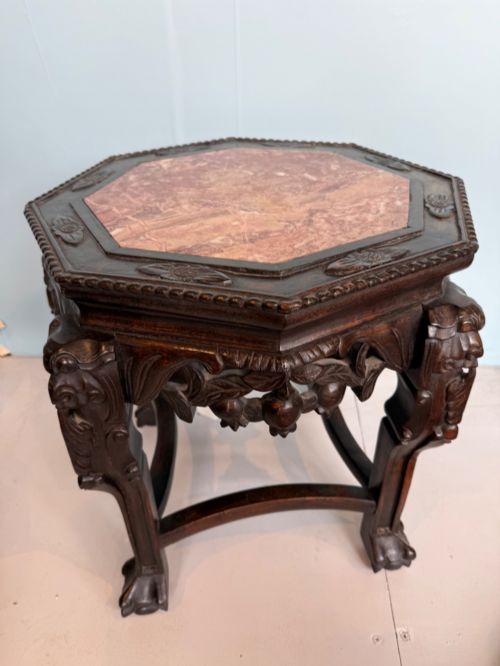
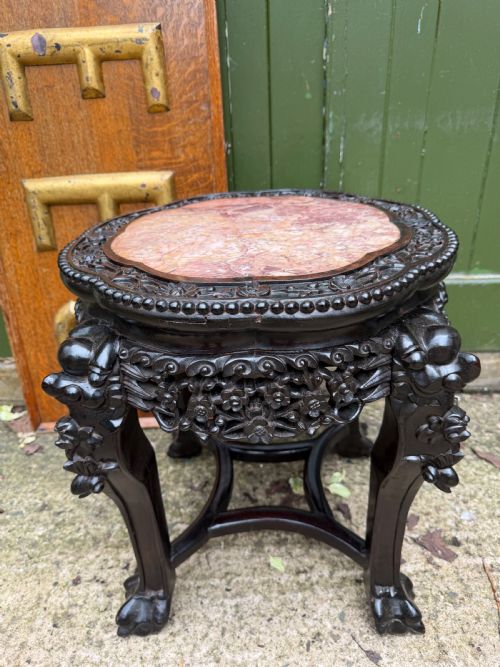
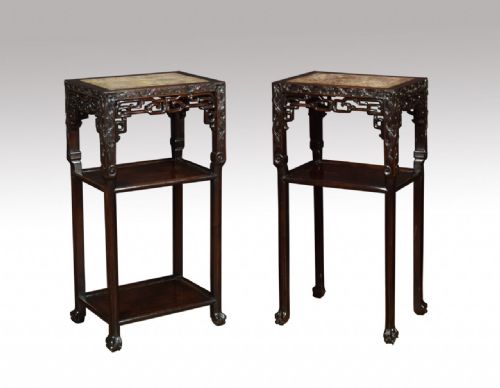
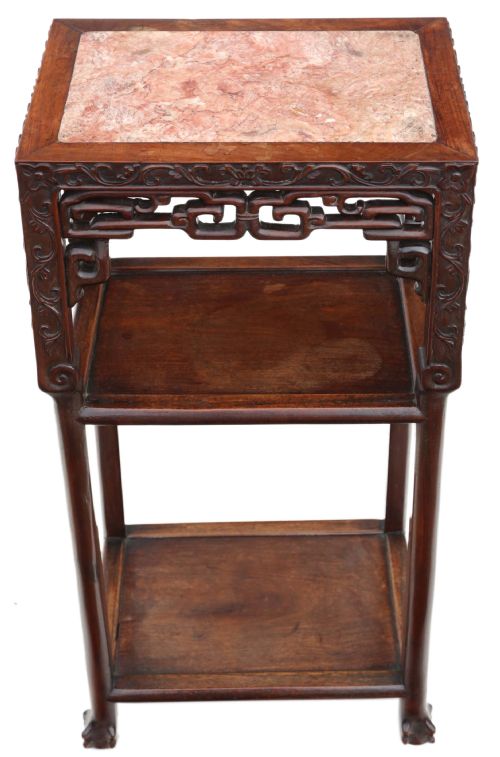
A hongmu marble plant stand brings together dense tropical hardwood and inset stone surfaces in forms designed for display. These pieces function equally well as low occasional tables, tall pedestals, or bedside side tables depending on their proportions.
Most examples encountered on this page date from the nineteenth century, including pieces made during the Qing Dynasty and the subsequent Republic period. Makers shaped these stands into diverse silhouettes, ranging from conventional barrel forms to multi-tiered occasional tables.
The combination of dark wood and veined stone creates a striking focal point in a room. Buyers seek these items for their robust construction and the distinct character that age imparts to the timber.
How They Were Made
Carpenters utilised dense timbers such as hongmu and rosewood, which allowed for deep, crisp carving without splitting. These tropical hardwoods possess natural weight and dark colouration that form the structural foundation of each stand.
Artisans set variegated rouge marble panels directly into the wooden top surface, creating a cool, smooth centre. Some elaborate examples incorporate mother-of-pearl inlay into the woodwork to provide subtle contrast against the dark timber.
Materials recorded across the inventory include rosewood, mother-of-pearl inlay, and variegated rouge marble.
What Varies in Quality
Depth and precision of the wood carving separate standard items from superior examples. Skilled carvers produced crisp foliage and geometric patterns that remain sharp, whereas simpler pieces show softer, shallower relief work.
The selection and fit of the marble insert also determine overall merit. A tightly fitted stone with lively natural veining commands greater attention than a plain or loosely seated panel.
The Hongmu Marble Plant Stand Glossary
- Hongmu
- A dense, heavy tropical hardwood used in traditional Chinese furniture making. This timber develops a rich patina with age and handling.
- Jardiniere
- An ornamental pot or stand for holding plants or flowers. These items often sit atop low wooden pedestals.
- Qing Dynasty
- The last imperial dynasty of China, spanning from the seventeenth to the early twentieth century. Many surviving plant stands date from the later decades of this period.
- Rouge marble
- A type of decorative stone with reddish or variegated colouration. It provides a smooth, contrasting surface inset into the wooden tops.
Hongmu Marble Plant Stand: Frequently Asked Questions
How do I clean the marble top?
Wipe the stone surface gently with a damp cloth and mild soap. Avoid harsh chemical cleaners that might dull the polish of the marble.
Dry the stone thoroughly afterwards to prevent water marks from settling into the natural grain.
Can these stands hold heavy plants?
These pieces were built from dense tropical hardwoods specifically to support heavy ceramic urns and large plants. Their sturdy construction handles substantial weight with ease.
Ensure the weight sits evenly over the centre of the stand to maintain proper balance on uneven floors.
Are these pieces strictly for plants?
While originally designed to elevate jardiniers and urns, buyers frequently utilise them as bedside tables or occasional side tables. Their compact footprints suit smaller display spaces.
Using them for lamps or decorative objects is common practice in contemporary interiors.
How do I identify nineteenth century pieces?
Look for hand-carved joinery details and the characteristic weight of dense hongmu or rosewood timbers. Nineteenth-century examples often display deep relief carving and natural wear patterns on the wood.
Examine the underside and joints for signs of traditional construction methods rather than modern fixings.