
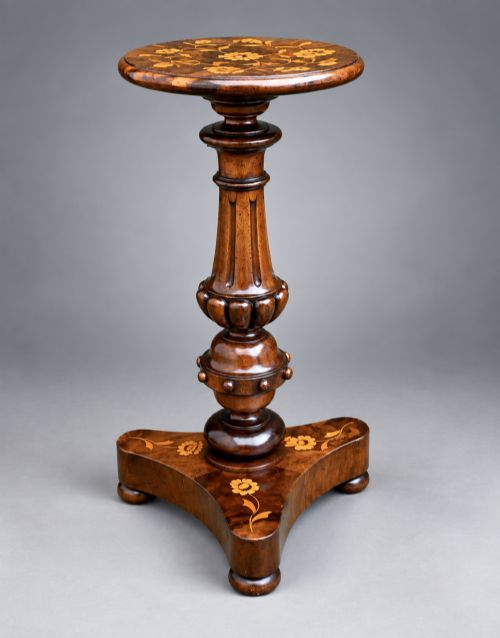
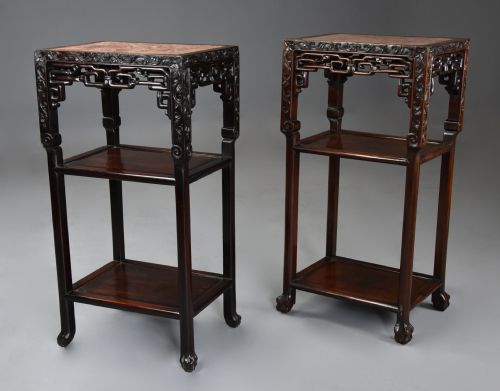


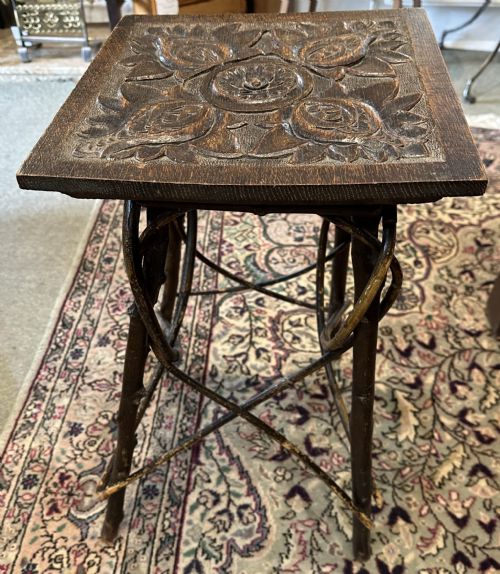


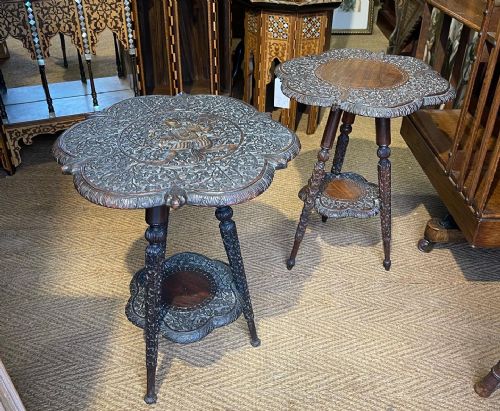


Carved Floral Pedestal Stand
A carved floral pedestal stand elevates pots and urns, bringing botanical displays into rooms with distinct architectural presence.
Carved Floral Pedestal Stand
A carved floral pedestal stand functions primarily as a plant stand, jardiniere stand, urn stand, or vase stand, raising decorative foliage and vessels above floor level. These furnishings serve domestic interiors by creating focal points for botanical displays in corners or beside seating arrangements.
The selections encountered here span the nineteenth century into the early twentieth century, taking the form of hardwood pot stands, marble top plant stands, and occasional tables with floral carved details. Origin points range across English workshops, Dutch marquetry traditions, and Chinese export production.
Materials and construction methods
Construction relies upon dense hardwoods such as mahogany, rosewood, walnut, and hongmu, often selected for their ability to support heavy stone inlays without warping. Artisans shaped these timbers using traditional joinery methods to build sturdy pedestals capable of bearing weighted planters.
Surface decoration incorporates intricate wood carving, fruitwood marquetry, cinnabar lacquer, and painted finishes to depict floral motifs and natural scenes. Inset marble tops provide a cool, durable surface resistant to water damage from potted plants.
Period origins span from Victorian England to Qing dynasty China and Dutch marquetry workshops.
Distinctions in craftsmanship
Quality reveals itself in the crispness of the floral carving and the precision of the joinery connecting the pillar to the base and top. Finer examples display deep, undercut botanical relief rather than shallow surface stamping.
The selection of materials dictates overall grade, with heavy exotic hardwoods and unblemished marble or lacquer insets marking superior workshop production. Matched pairs and balanced proportions further elevate the standing of individual pedestals within their historical category.
The Carved Floral Pedestal Stand Glossary
- Jardiniere stand
- A tall furniture piece specifically designed to hold a large ornamental flower pot or jardiniere. These stands protect interior flooring and elevate plants to eye level.
- Hongmu
- A dense, dark tropical hardwood traditionally utilised in fine Chinese furniture production. It translates to red wood and provides exceptional strength for carved pedestals.
- Marquetry
- The art of applying pieces of veneer to a structure to form decorative patterns and floral pictures. Dutch examples frequently employ this technique on occasional tables.
- Tripod table
- A small stand supported by a central pillar resting on three feet. This construction ensures stability on uneven historical flooring.
Carved Floral Pedestal Stand: Frequently Asked Questions
What is a pedestal stand used for?
These pieces primarily support heavy flower pots, decorative vases, urns, and lamps within domestic reception rooms. Their elevated platform protects floor surfaces from moisture while displaying botanical arrangements.
They also function as small occasional tables for books and decorative objects when plant displays are absent.
How do I date a nineteenth-century stand?
Dating relies upon examining timber species, tool marks, joinery techniques, and stylistic motifs associated with Victorian or Qing dynasty manufacturing. Comparing the piece to documented regional furniture styles clarifies its origin.
Secondary woods and hardware provide additional clues regarding the decade of creation.
Can these stands support heavy pots?
Most hardwood and marble-topped stands are engineered to bear considerable weight from large ceramic planters and damp soil. The dense timbers utilised by makers ensure structural integrity under heavy loads.
One should verify the stability of the central pillar and foot joints before placing exceptionally heavy vessels on top.
Where should I place a plant stand?
These stands suit room corners, empty wall spaces, or flanking positions beside windows and fireplaces. Their vertical profile makes efficient use of floor space while adding architectural height to an interior.
Matched pairs work effectively when positioned symmetrically on either side of a doorway or sideboard.