
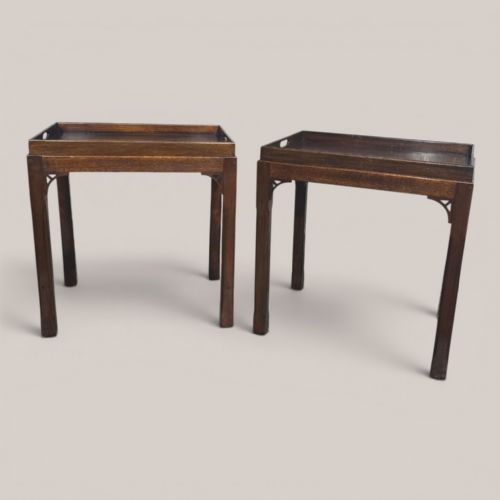


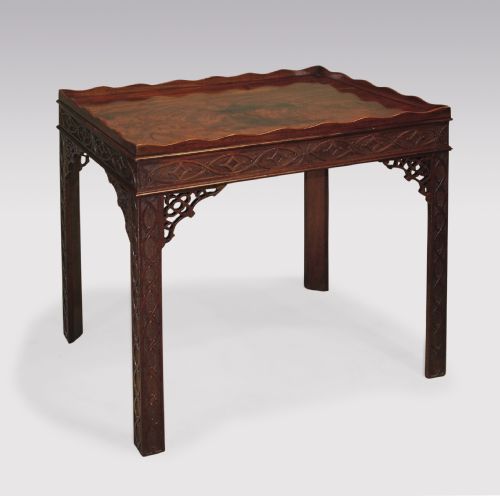

Chinese Mahogany Side Table
These Chinese mahogany side table examples span eighteenth-century export forms to Edwardian revivals, offering sturdy timber and carved detail for practical rooms.
Chinese Mahogany Side Table
A chinese mahogany side table encompasses everything from eighteenth-century George III silver tables and Pembroke tables to Victorian and Edwardian plant stands, console tables, and occasional tables. The pieces bridge British furniture forms and oriental aesthetic influences, emerging in periods spanning the eighteenth century through the early twentieth century.
On this page, buyers frequently encounter compact lamp tables, jardiniere stands, and rectangular writing or console tables created in mahogany, rosewood, and hardwood. These forms range from authentic export items produced during the Qing dynasty to British Chippendale revival interpretations.
The objects serve varied utilitarian purposes within domestic interiors, functioning as bedside cabinets, vase stands, and centre tables. Their origins reflect both British cabinet-making traditions and Asian craftsmanship, utilising dense timber alongside marble inserts and brass fittings.
Materials and construction
Makers constructed these pieces primarily from dense tropical timbers including mahogany, padouk, rosewood, and generic hardwood, often combining solid sections with lacquered finishes. Structural integrity relied on traditional joinery methods suited to heavy wood.
Surface decoration frequently incorporates intricate hand carving, showing up on plant stands and console tables alongside inset marble slabs for the tops of jardiniere and vase stands. Brass hardware appears on specific writing and silver tables from the eighteenth century onwards.
Some nineteenth-century makers evidently expected indoor plants to leak, giving heavy mahogany stands cool marble hearts so the timber stayed dry.
Assessing quality in construction and material
Quality reveals itself in the density of the timber and the crispness of the hand carving on the legs and aprons, distinguishing finely finished export pieces from simpler domestic workshop output. The selection of solid mahogany or padouk rather than secondary softwood provides greater structural longevity.
The integration of inset marble tops and the precision of joinery around the corners and stretchers mark the difference between standard production items and exceptional examples. Original surfaces and well-preserved lacquer finishes retain higher integrity than heavily restored pieces.
Butler
The Chinese Mahogany Side Table Glossary
- Chippendale
- A British furniture style originating in the eighteenth century, characterised by carved ribbon backs, cabriole legs, and claw-and-ball feet. Later revivals in the Victorian and Edwardian eras copied these proportions.
- Jardiniere stand
- A tall, narrow table specifically designed to hold a heavy plant container or porcelain jardiniere. These often feature inset marble tops to protect the wood from moisture.
- Silver table
- An eighteenth-century form featuring a raised gallery edge around the top designed to hold tea or silver services securely. They typically stand on slender cabriole or straight legs.
- Hongmu
- A category of dense, dark Chinese hardwood frequently utilised for traditional furniture and plant stands. It translates literally as red wood and exhibits significant weight.
- Pembroke table
- A drop-leaf table with hinged flaps on either side, introduced in the eighteenth century for breakfast or occasional writing use. They often include a single drawer beneath the top.
Chinese Mahogany Side Table: Frequently Asked Questions
How do I use a plant stand?
These tall stands function primarily to elevate heavy ceramic pots, vases, or table lamps within a room.
Their narrow footprints allow them to occupy corners or tight spaces beside seating furniture without obstructing movement.
Are marble top tables practical?
The stone inserts provide a durable, heat-resistant surface that handles moisture from plant pots or hot drinking vessels easily.
This makes them particularly suitable for use as jardiniere tables or lamp cabinets where spills might otherwise damage timber.
What is Chinese Export furniture?
This category includes pieces manufactured in Asia specifically for Western markets, blending traditional Chinese motifs with European furniture forms.
They reflect historical trade connections and adapt local cabinet-making skills to British room layouts.
How do I date a mahogany table?
Dating relies on examining the timber species, construction joinery, and stylistic markers such as cabriole legs or gallery edges.
Earlier eighteenth-century examples display different patination and framing techniques compared to late Victorian or Edwardian revival pieces.