


Historical Naval Art
Historical naval art captures centuries of maritime conflict, exploration, and portraiture through oil paintings, engravings, and prints.
Historical Naval Art
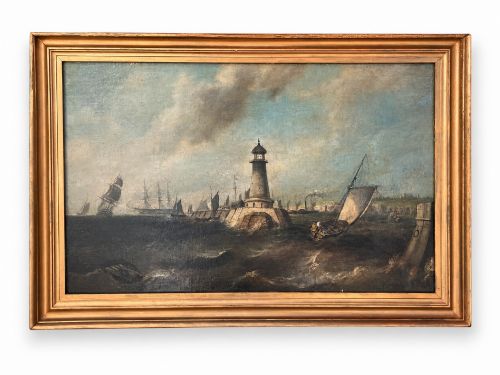
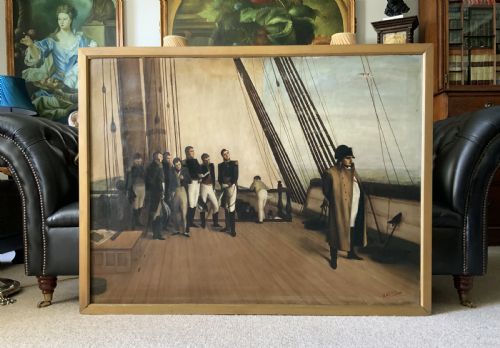
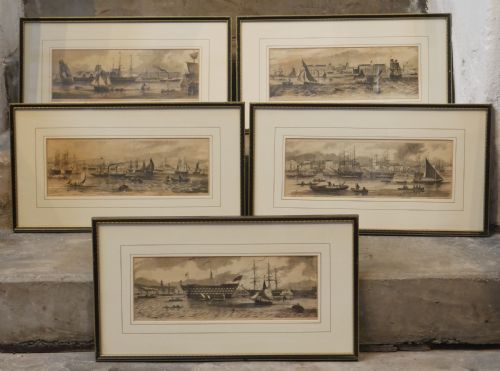
Historical naval art encompasses oil paintings, framed prints, and engravings depicting sea battles, harbour scenes, and warships. Buyers searching for historical naval art will find works ranging from the seventeenth century through to the early twentieth century.
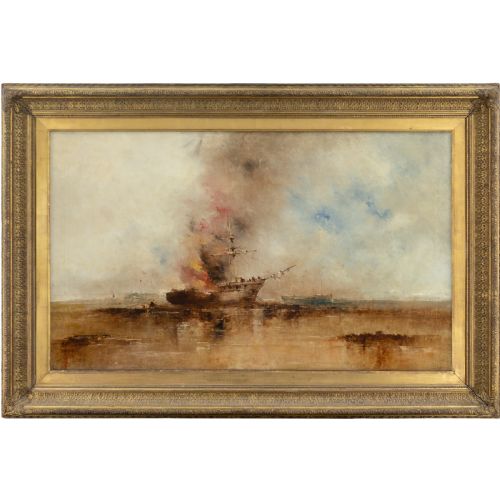
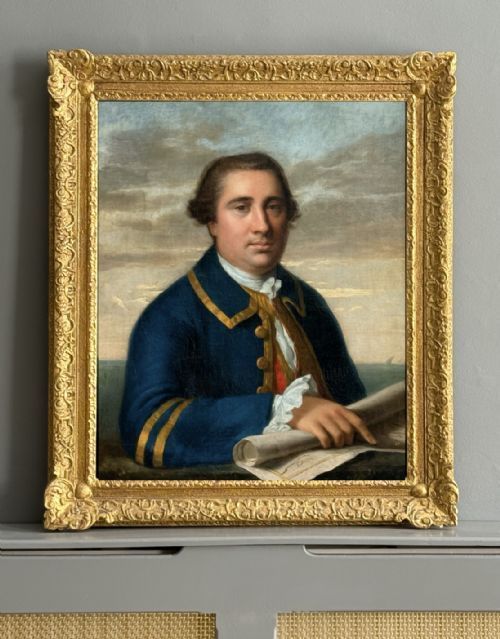
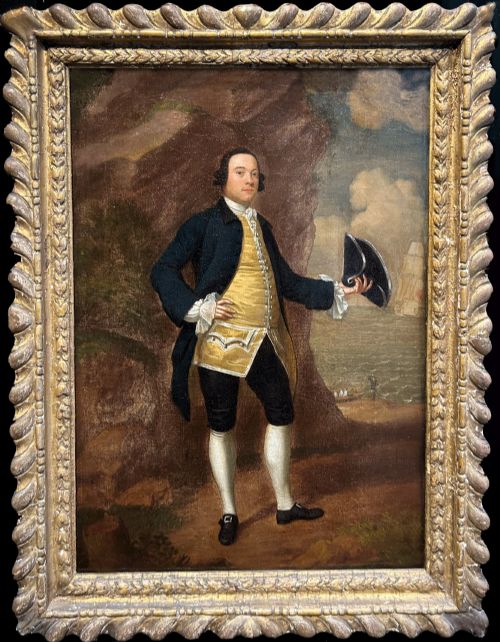
The selection on this page relies heavily on nineteenth-century oil paintings and eighteenth-century portraiture of naval officers and captains. Works span Georgian, Regency, and Victorian maritime styles.
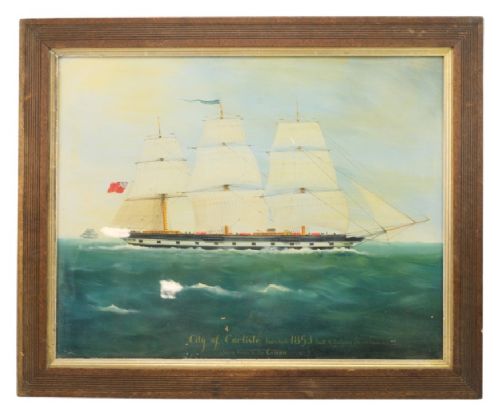
Subjects include specific vessels like the HMS Queen Charlotte and HMS Nairana, alongside broader engagements, shipyards, and fleet reviews. These pieces record maritime history through canvas, wood, and paper mediums.
Distinctions in quality
Quality rests upon the fidelity of the maritime detail, such as the correct rigging of warships and the convincing movement of water. Works attributed to named artists or distinct contemporary circles generally demonstrate superior brushwork and compositional command.
The condition of the canvas, the clarity of engraved lines, and the originality of the accompanying frame influence the standing of each piece. Portraiture quality varies according to the anatomical precision and psychological depth achieved in capturing naval figures.
One nineteenth-century canvas carries the explicit instruction 'For TLC', proving that even warships sometimes need a gentle retirement.
Lemuel Francis Abbott·Francis Hayman·Nicholas Condy·Vincenzo D’Esposito·Claude Lorrain·Richard Brydges Beechey·Sir Thomas Lawrence·Jacob Knyff·Abraham Storck·Robert Ker Porter
The Historical Naval Art Glossary
- Oil on Canvas
- Pigments bound in a drying oil applied to a stretched cloth support. This medium allowed artists to achieve rich tonal gradations in maritime scenes.
- Engraving
- An intaglio printmaking process where an image is cut into a metal plate with a burin. Prints produced this way yield fine, precise lines suitable for detailed depictions of shipping.
- Giltwood
- Wood carved and coated with gold leaf or metallic powder. It provides a reflective, decorative border for period frames.
- Lithography
- A planographic printing method based on the repulsion of oil and water. It enabled the production of multi-plate ship prints during the nineteenth century.
Historical Naval Art: Frequently Asked Questions
What periods do these artworks cover?
The pieces span from the seventeenth century through the Georgian and Regency eras into the Victorian period and early twentieth century. This timeline covers centuries of maritime expansion and naval warfare.
Earlier works often depict Dutch Golden Age vessels or seventeenth-century shipyards, while later pieces record nineteenth-century ironclads, steam vessels, and twentieth-century carriers.
How were these maritime scenes authenticated?
Attributions rely on recorded signatures, contemporary inscriptions on canvases or frames, and stylistic comparisons with known works by specific artists and schools. Documentation often references historical logs or naval rosters.
Subjects like named admirals or specific ship engagements help anchor dates and contexts within naval history.
Are the frames original to the pieces?
Frames vary between original period giltwood housings and later replacements fitted during conservation. Giltwood and gold leaf finishes reflect the framing styles popular during the eighteenth and nineteenth centuries.
Evaluating a piece involves looking at how harmoniously the frame complements the canvas or paper work.
What is the difference between an oil painting and an engraving?
Oil paintings utilise pigments suspended in oil on canvas or wood panels, offering layered colour, texture, and depth. Engravings are printed on paper from carved plates, presenting monochrome lines and fine detail.
Both formats were utilised historically to record naval battles, portraits of officers, and notable vessels.