
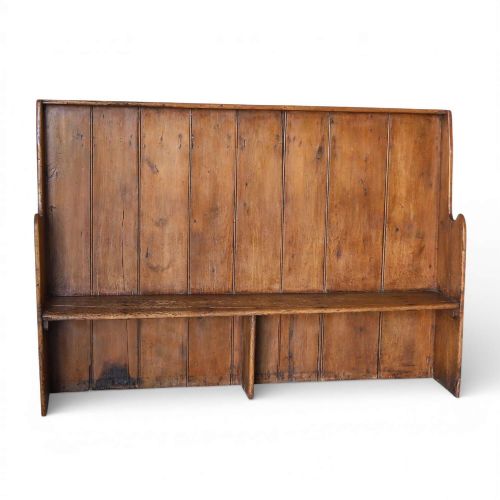


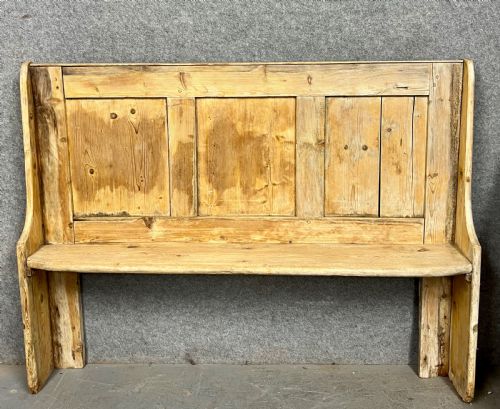


High Back Church Pew
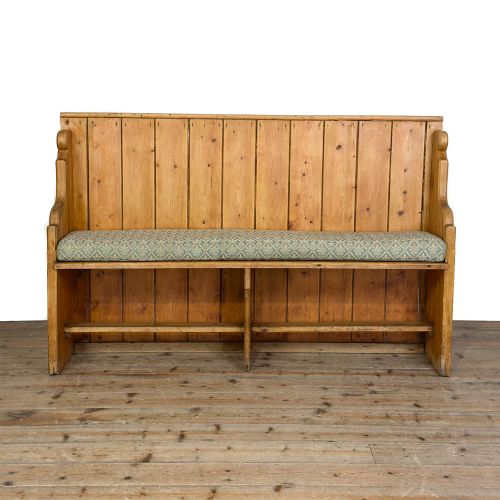
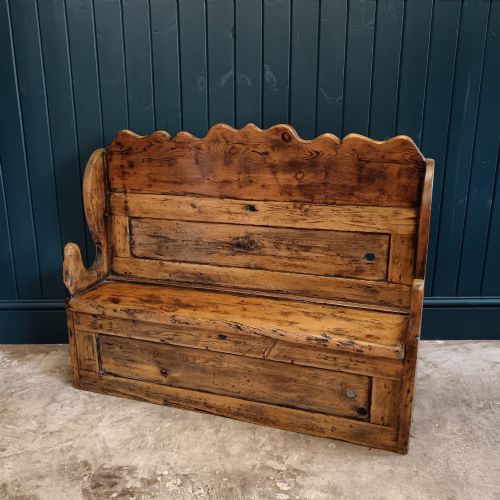
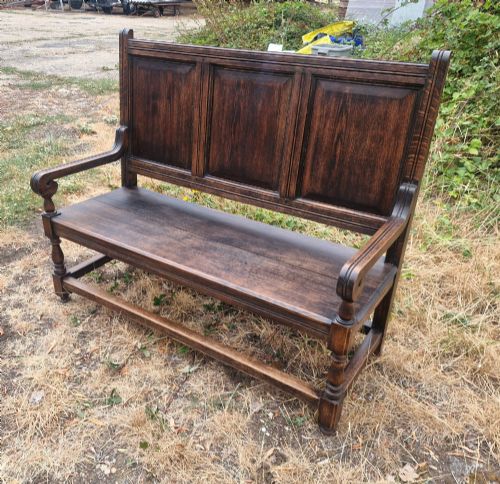
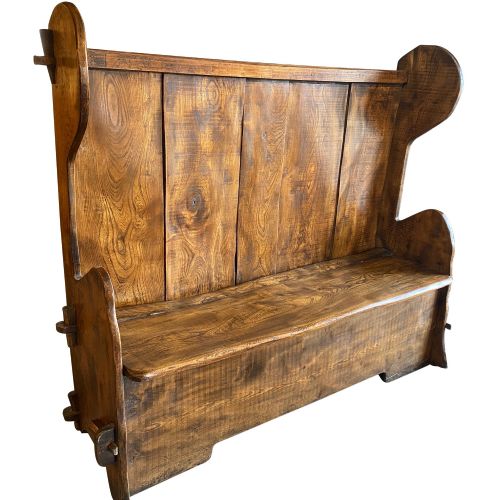
A high back church pew offers monumental presence and shelter, bringing historic architectural character and deep timber warmth directly into a hallway or kitchen.
High Back Church Pew
A high back church pew encompasses sturdy wooden settles and tavern benches designed with tall sheltering backs to block draughts in large rooms. These functional seats bridge domestic furniture and ecclesiastical or institutional seating.
The selections span the eighteenth century through the Edwardian period, drawing on rustic farmhouse, Victorian, and English country vernacular traditions. Most examples take the form of tall box settles or long hall benches intended to anchor a room.
Makers utilised resilient native timbers such as pine, oak, elm, chestnut, and walnut to build seating that would endure heavy daily use. Pieces frequently display deep patination accrued over centuries of domestic or public service.
Materials and construction methods
Carpenters constructed these benches using solid native hardwoods and softwoods including oak, pine, and elm, often combining timbers within a single frame. Panelled backs and enclosed box bases required traditional joinery techniques designed to withstand considerable lateral stress.
Surfaces were frequently finished with natural wax, honey brown patina, or historic paint layers that reveal decades of wear. Selected examples incorporate built-in storage boxes beneath the seat, adding structural rigidity alongside practical utility.
Many historic tavern benches still harbour faint ghost marks from centuries of spilled ale and restless elbows.
Distinguishing quality and character
Quality rests in the integrity of the timber and the depth of the natural patina developed across generations of use. Superior pieces retain their original proportional balance, structural joints, and unaltered surfaces without heavy modern intervention.
The choice of denser woods like oak or figured chestnut elevates a piece above standard utility pine. Finer examples display thoughtful joinery details in the panelled high backs and well-integrated storage compartments.
The High Back Church Pew Glossary
- Settle
- A wooden bench featuring a high solid back designed to keep out draughts, often incorporating enclosed storage beneath the seat. This form served as a primary seat near the hearth in older buildings.
- Patina
- The lustrous surface sheen developed on wood over long periods through handling, polishing, and natural ageing. It indicates genuine age and continuous use.
- Vernacular
- Furniture built by local tradesmen using regional traditions and readily available materials rather than following high-style academic designs. These pieces reflect practical local needs and straightforward construction.
- Box settle
- A specific variety of bench featuring a solid storage compartment enclosed beneath the lifting seat or panelled base. The enclosed lower section helped prevent cold air from circulating around the sitter's legs.
High Back Church Pew: Frequently Asked Questions
Where should I place a high back church pew?
These tall benches work particularly well anchored against a long wall in a spacious hallway, boot room, or large kitchen dining area. Their enclosed backs help create a distinct seating zone while offering practical utility.
Ensure the room has sufficient ceiling height and floor space to accommodate the imposing vertical presence without making the area feel cramped.
How do I care for antique pine and oak furniture?
Maintain timber surfaces by dusting regularly with a soft, dry cloth and applying natural beeswax sparingly to nourish the wood. Avoid placing antique seating near direct heat sources or in strong sunlight, which can dry out the timber and crack historic finishes.
Treat the surface gently to preserve the accumulated patina rather than attempting to strip away the evidence of age.
What is the difference between a pew and a settle?
Pews generally refer to fixed ecclesiastical seating designed for rows in churches, whereas settles are freestanding domestic or tavern benches with integrated high backs and sometimes box storage beneath. Settles were traditionally moved closer to fireplaces to block winter draughts.
Many antique listings use the terms interchangeably based on general appearance, but the presence of under-seat storage usually points to a settle.
How can I tell the age of these wooden benches?
Dating relies on examining the timber species, tool marks left by early saws or planes, and the construction methods used in the joinery. Hand-cut peg joints, timber shrinkage patterns, and the depth of the surface patina all provide clues to a piece's era.
Comparing the overall style to documented examples from eighteenth-century country workshops or Victorian vernacular traditions helps narrow down the period.