
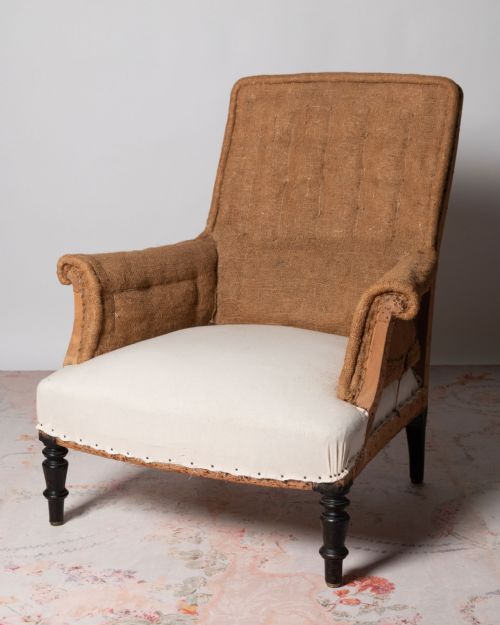
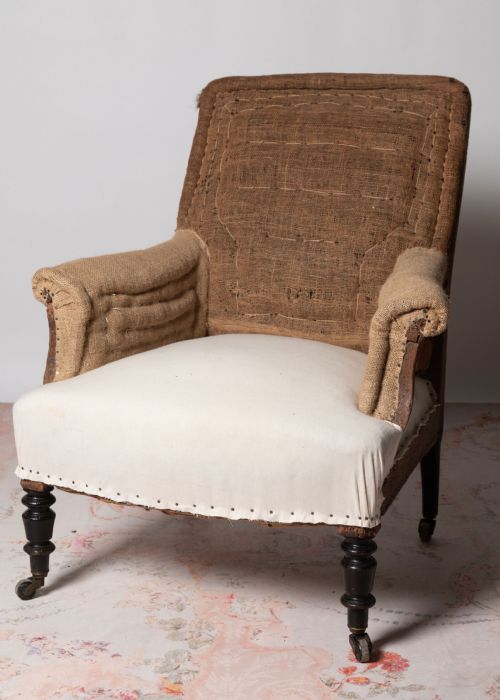
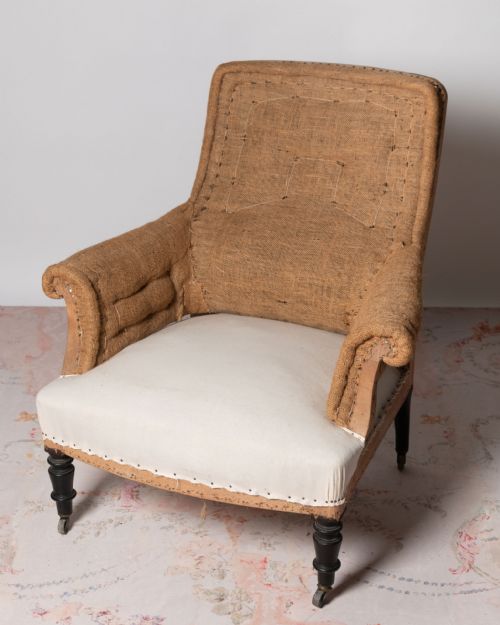
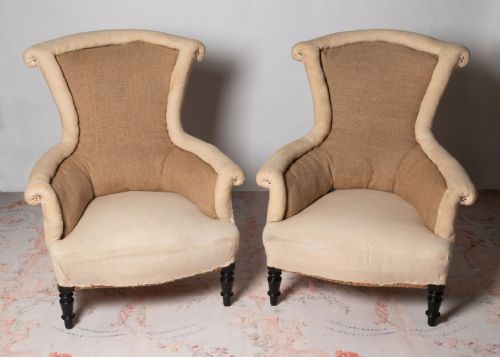
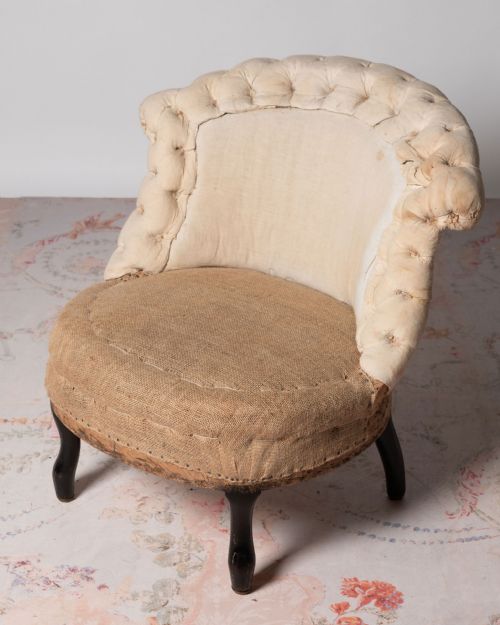
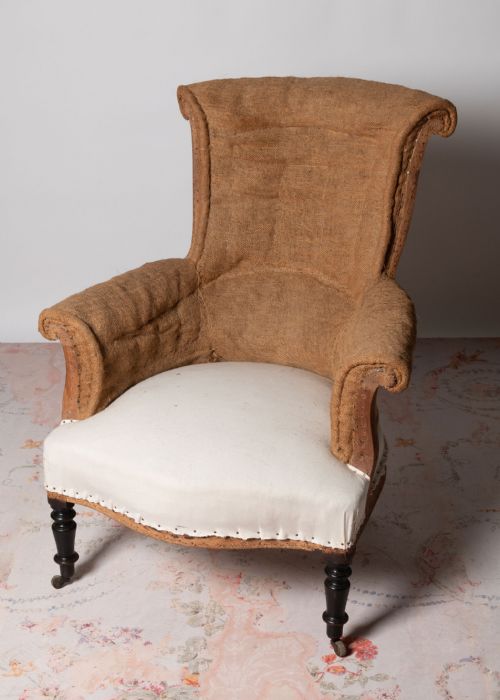


Hessian French Armchair
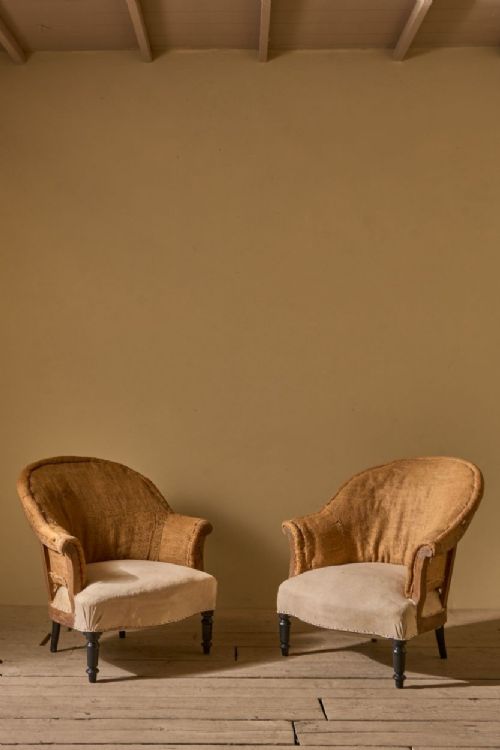
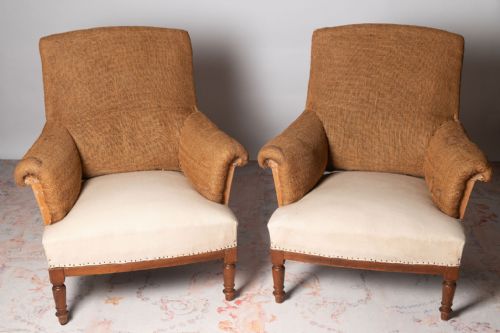
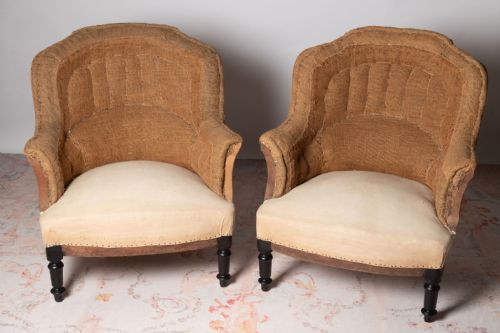
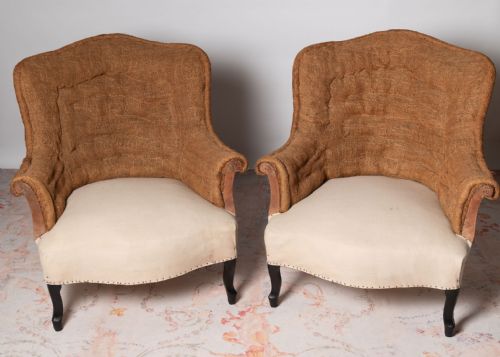
These hessian french armchair pieces bring authentic nineteenth-century seating into your home with exposed burlap upholstery and timber frames.
Hessian French Armchair
A hessian french armchair represents traditional seating rooted in nineteenth-century styles such as Napoleon III, Louis XVI, and French provincial designs. These armchairs typically arrive upholstered in raw burlap or calico, showing the foundational materials of traditional chair-making.
You will most frequently meet nineteenth-century examples alongside Edwardian salon armchairs and painted fauteuils on this page. The forms range from tub chairs to pairs of salon armchairs built for formal rooms.
Most pieces date to the nineteenth century, including specific years like eighteen-eighty and nineteen-hundred, capturing the essence of French country and provincial interiors. Buyers choose these chairs for their honest unpainted or painted wooden frames and structural simplicity.
How they were made
Craftsmen built these armchairs using sturdy timber frames of beech and hardwood, often finished with original painted surfaces. The underlying construction relies on traditional joinery designed to endure decades of daily use.
Upholstery traditionally begins with hessian, linen, and cotton webbings stretched across the frame to support inner padding. Exposed hessian and calico finishes reveal the raw, unadorned textile layers that give these chairs their distinctive industrial aesthetic.
Listings feature nineteenth-century and Edwardian pieces, incorporating beech, hardwood, brass, hessian, linen, and cotton across French provincial and Napoleon III styles.
What varies in quality
Quality in a hessian french armchair rests upon the integrity of the beech or hardwood frame and the authenticity of its period origins. Finer pieces maintain rigid structural joinery and retain their original painted surfaces without excessive modern intervention.
The choice of covering material and the neatness of the foundational hessian or calico application also distinguish superior examples. A well-balanced proportion and correct period styling, such as Napoleon III or Louis XVI details, elevate certain armchairs above standard provincial variants.
The Hessian French Armchair Glossary
- Hessian
- A coarse woven fabric typically made from jute fibres, utilised as a durable upholstery foundation or visible outer covering on antique chairs. It provides a neutral, tactile texture favoured in rustic and provincial designs.
- Fauteuil
- An open-armed upholstered armchair with a wooden frame, originating in France during the seventeenth century. These chairs feature exposed wood around the arms and back.
- Tub chair
- An armchair with a circular back that curves continuously down to form low arms. This form appears frequently in nineteenth-century Napoleon III seating.
- Calico
- A plain-woven cotton textile often employed as an under-upholstery layer or a simple neutral cover on antique seating. It offers a smooth surface beneath decorative fabrics or stands alone for a minimalist look.
- Napoleon III style
- A nineteenth-century design aesthetic characterised by eclectic revivals of earlier French monarchical styles mixed with comfortable domestic upholstery. Pieces from this era often incorporate turned wooden legs and robust frames.
Hessian French Armchair: Frequently Asked Questions
What is a hessian french armchair?
A hessian french armchair is a nineteenth-century seating piece featuring exposed burlap or coarse jute upholstery over a hardwood or beech frame.
These chairs reflect traditional French provincial and Napoleon III styles, offering an honest, unpretentious aesthetic built around natural textiles.
How were these armchairs used?
These armchairs served as comfortable seating in nineteenth-century salons, drawing rooms, and private chambers across France and Britain.
Pairs of salon armchairs were specifically arranged for conversation, while sturdy tub chairs provided cosy seating by the hearth.
How do I style a hessian french armchair?
You can integrate these chairs into modern interiors by placing them against neutral walls to highlight their raw burlap upholstery and wooden frames.
Pairing a nineteenth-century provincial armchair with contemporary furnishings creates a balanced rustic and refined atmosphere in living spaces.
How do I identify a Napoleon III armchair?
Napoleon III armchairs are typically identified by their nineteenth-century frames, robust proportions, and eclectic blend of earlier French design motifs.
They frequently feature turned wooden supports, exposed hessian or calico coverings, and comfortable padded seats suited for formal nineteenth-century salons.