
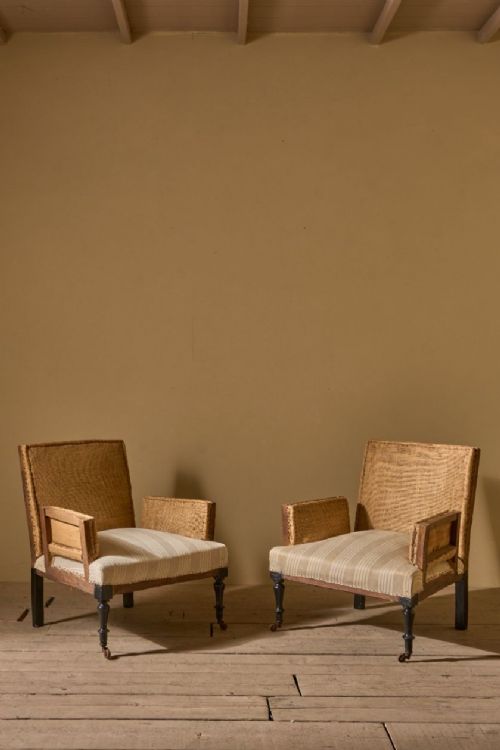
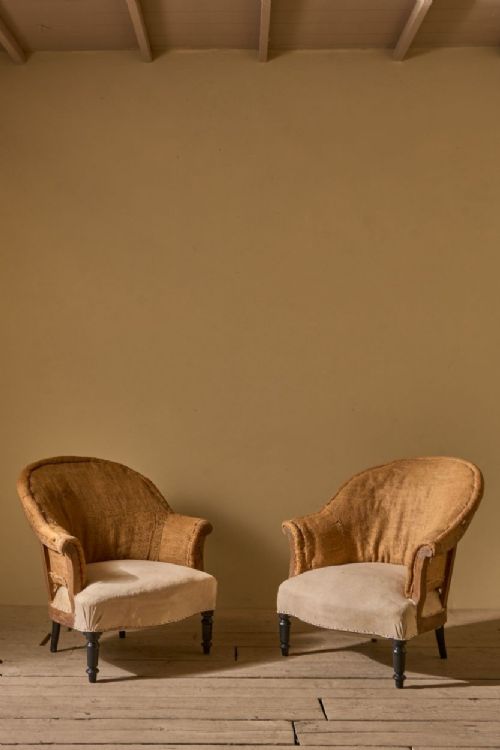
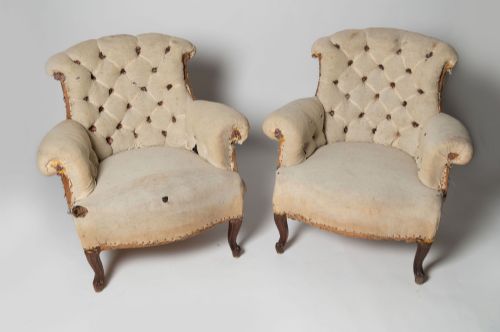
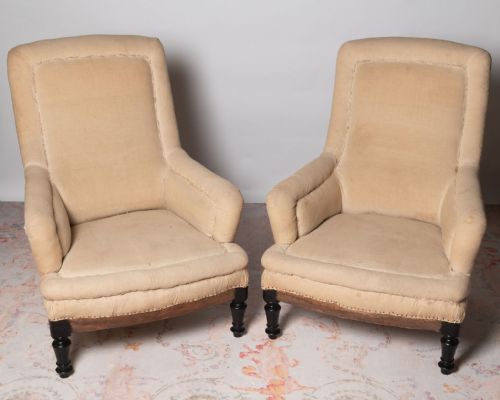
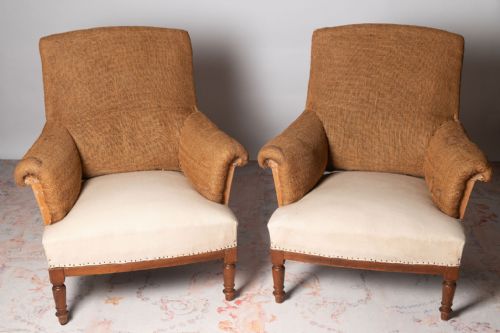
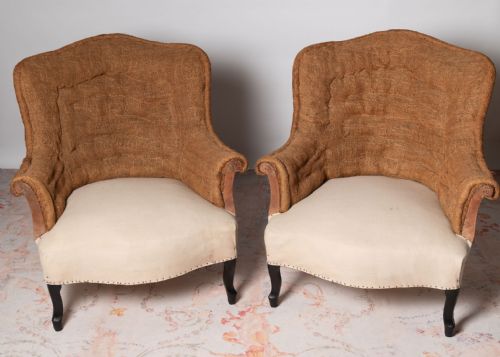
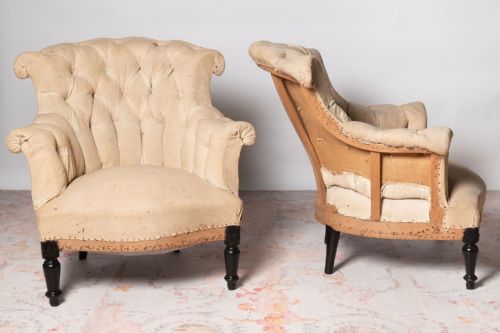
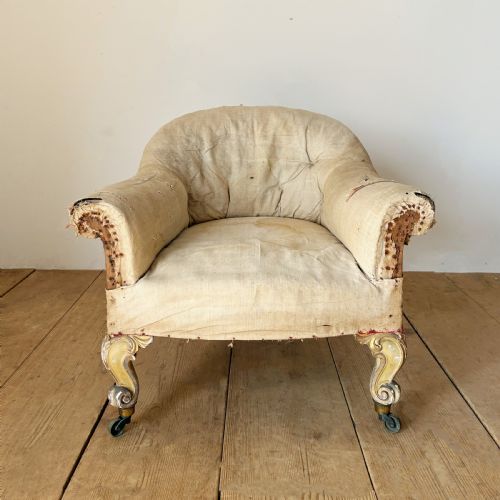
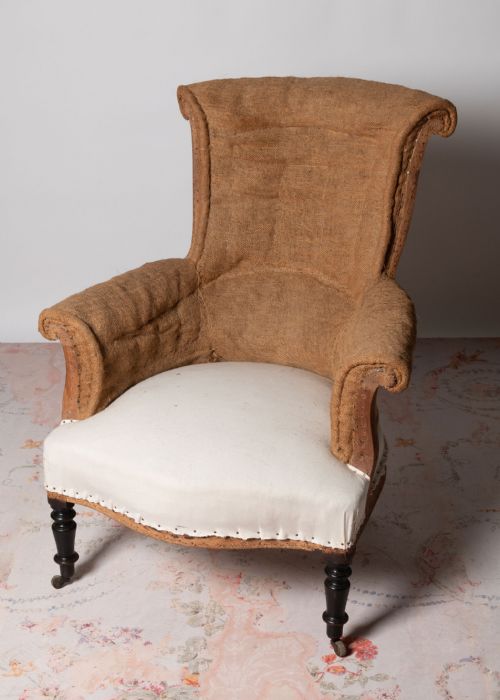


Deconstructed French Armchair
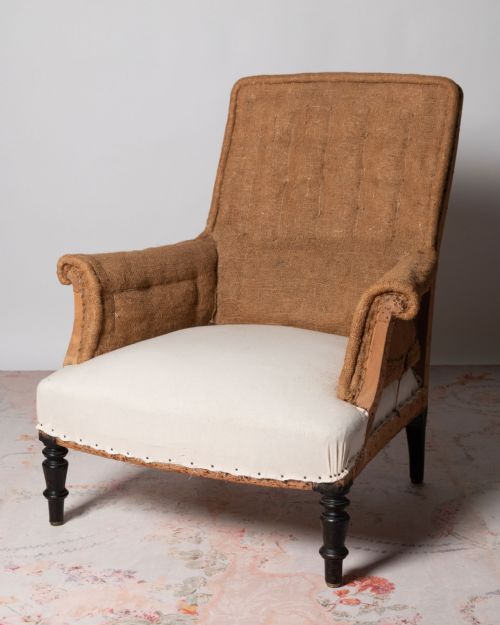
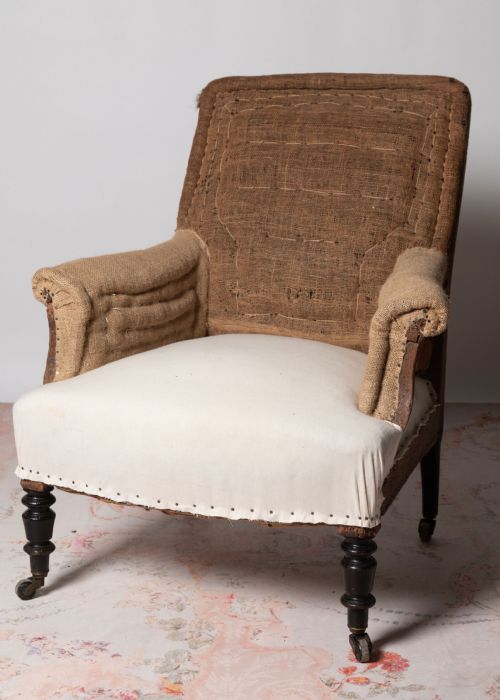
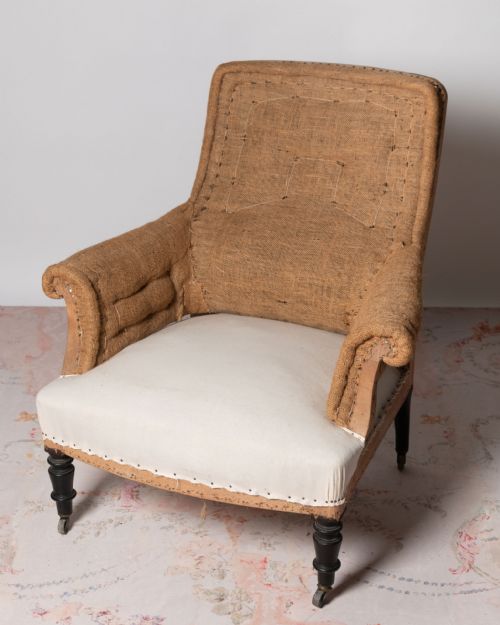
A deconstructed french armchair strips back centuries of upholstery to reveal the raw frame, hessian webbing, and working stitches underneath.
Deconstructed French Armchair
A deconstructed french armchair reveals the bare internal anatomy of seating, stripping away top fabrics to expose the underlying hessian, calico, and webbing. These pieces typically originate from the nineteenth century, encompassing Napoleon III, Edwardian, and Louis XVI styles.
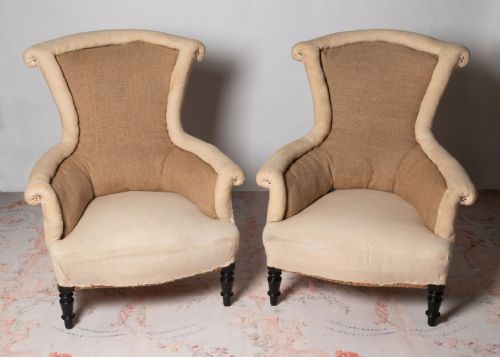
The form ranges from square-sided armchairs and tub chairs to salon armchairs, reflecting French country and provincial aesthetics. Most examples appear as matched pairs rather than single seats, showing the wood frames and metal tacks left intentionally bare.
How they were made
Makers constructed these frames from beech and other dense woods, shaping them in distinct nineteenth-century silhouettes before applying the initial upholstery layers. Raw cotton, linen, and coarse hessian provide the structural support and padding beneath visible calico linings.
Brass tacks and metal fixings secure the exposed fabric edges directly to the wooden structure without decorative gimps or outer trims. This stripping process exposes the hand-stitched rolls and traditional stuffing materials that typically remain hidden.
The inventory records multiple pairs of Napoleon III tub chairs and square-sided armchairs originating from French provincial workshops.
What varies in quality
Quality rests primarily in the architectural integrity of the wooden frame and the tightness of the surviving internal webbing. Finer examples retain robust beech joinery and well-balanced proportions that hold their shape without traditional top covers.
The character of the exposed hessian and calico dictates the visual appeal, where an even, time-worn patina across the fabric surpasses patchy or heavily frayed textiles. Original brass tacks and intact stuffing layers separate sturdier survival pieces from those with compromised internal support.
The Deconstructed French Armchair Glossary
- Hessian
- A coarse woven fabric made from jute fibres, used as the foundational layer for internal upholstery stuffing and webbing. It provides the characteristic raw texture seen on stripped frames.
- Calico
- A plain-woven cotton fabric applied over the stuffing to create a smooth, tight base before top covers are attached. In stripped pieces, this inner lining remains visible.
- Napoleon III
- A nineteenth-century French design style spanning the Second Empire, known for eclectic revivals of earlier court aesthetics combined with sturdy comfort. Chairs from this period form a core part of these selections.
- Tub chair
- An armchair featuring a rounded back that curves continuously into low arms, offering a compact and enclosed seating form. This shape appears frequently in nineteenth-century workshops.
- Webbing
- Interwoven strips of strong fabric stretched tightly across the chair frame to support the seat springs and padding. Its exposed grid pattern defines the deconstructed look.
Deconstructed French Armchair: Frequently Asked Questions
What is a deconstructed french armchair?
A deconstructed french armchair is a seating piece stripped of its final decorative upholstery to display the internal hessian, webbing, and wooden frame. This style highlights the raw materials and structural craftsmanship usually hidden beneath top fabrics.
Most examples date from the nineteenth century and originate from French provincial or salon traditions. They combine historical wood frames with industrial-looking textile layers.
Are these chairs comfortable to use daily?
Yes, the underlying stuffing, calico linings, and spring systems remain intact beneath the hessian surface to provide proper support. They function as regular seating while offering a distinct, textured aesthetic.
Pairs of salon and tub chairs suit living spaces where their exposed frames add an architectural element. Their comfort depends on the firmness of the original internal padding.
How do I identify a Napoleon III armchair?
Napoleon III armchairs from the nineteenth century feature distinct period silhouettes, often with square sides or curved tub backs. They reflect the eclectic design preferences of the French Second Empire.
Look for robust beech frames and traditional joinery beneath the stripped fabric. These pieces often arrive as matching pairs rather than isolated items.
What materials are exposed on these frames?
The primary exposed materials include coarse hessian, plain calico, and structural beech wood secured with brass or metal tacks. Cotton and linen elements also appear within the internal padding layers.
Each material shows the natural ageing of nineteenth-century upholstery techniques. The absence of top fabric reveals the raw construction methods of the period.
Do these chairs come as pairs?
A significant portion of the available pieces consists of matched pairs rather than single armchairs. These sets share identical nineteenth-century frames and similar upholstery wear.
Finding pairs allows for balanced placement in larger rooms or formal spaces. Each pair shares common materials like hessian, beech, and calico.