

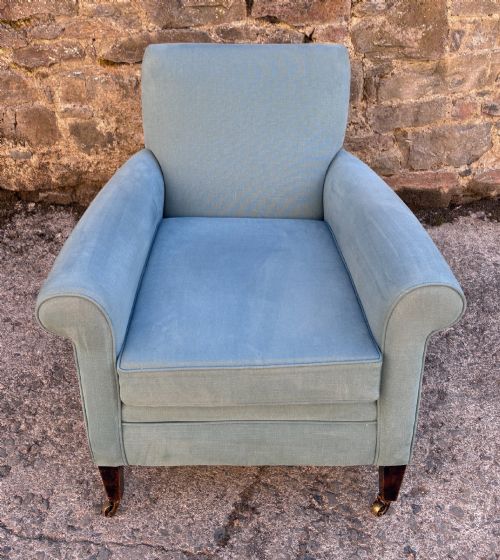
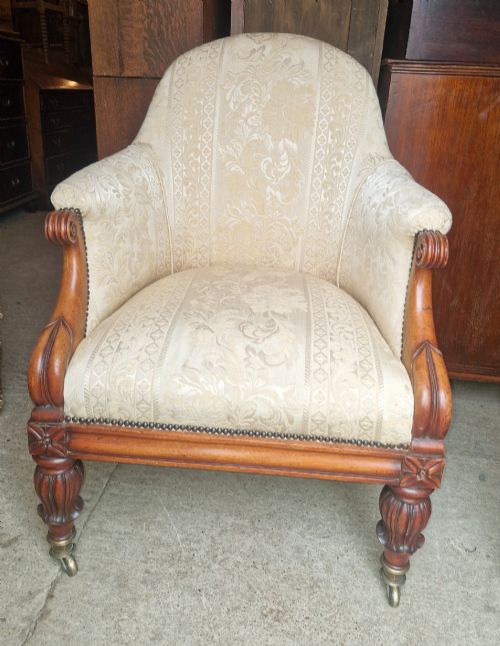
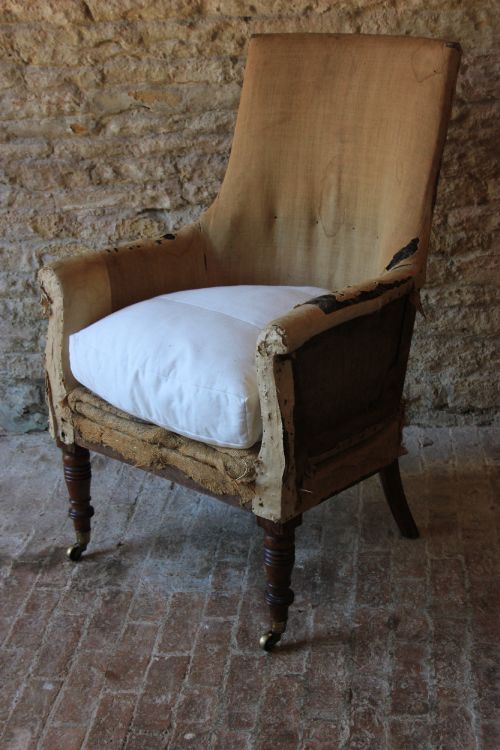
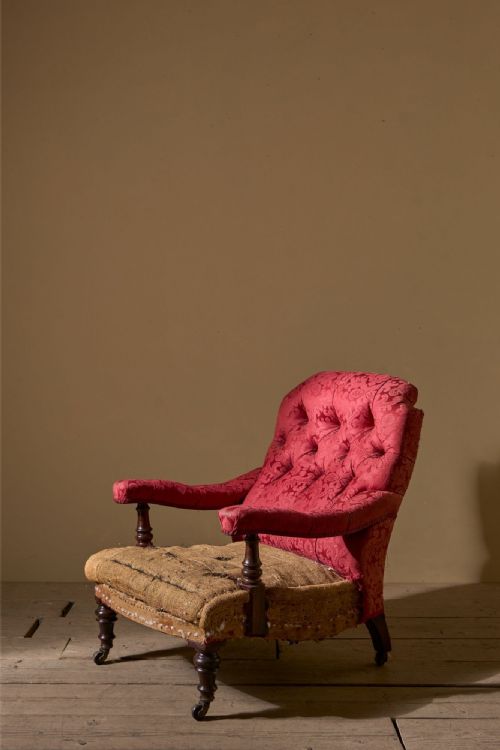
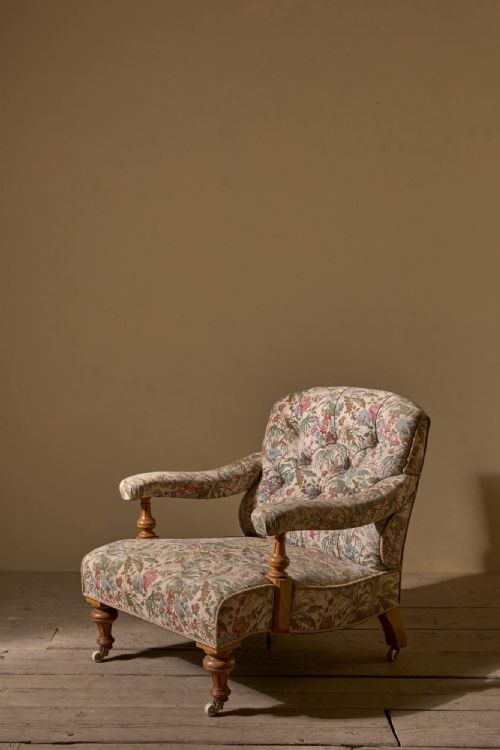
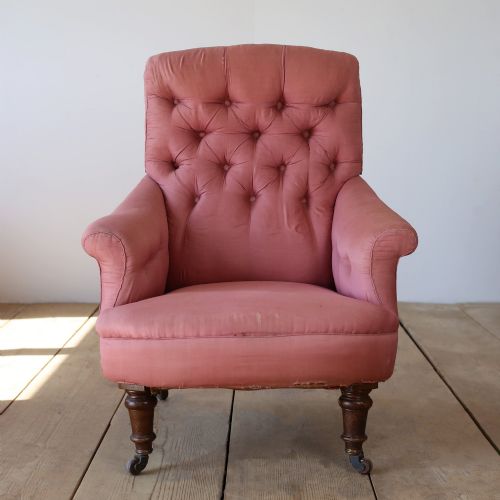
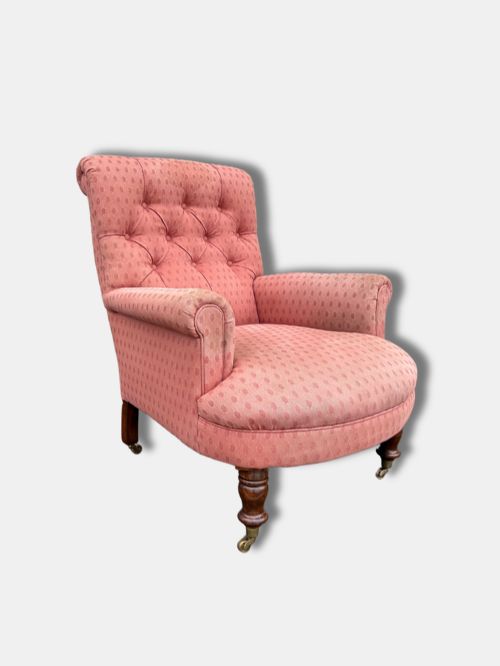
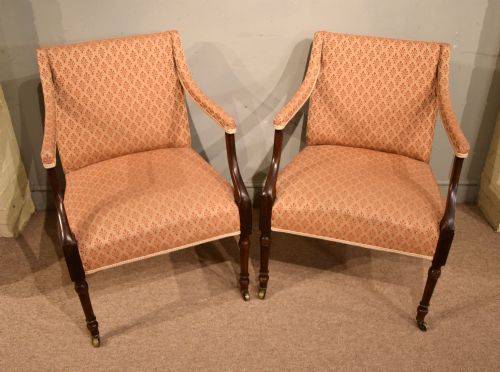
Antique Castored Armchair
An antique castored armchair brings mobility and historic comfort to a room, moving smoothly on small wheels while anchoring the space with period presence.
Antique Castored Armchair
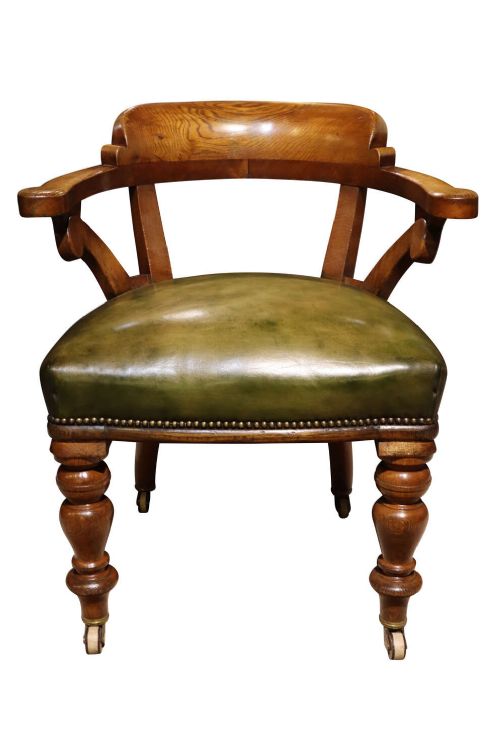
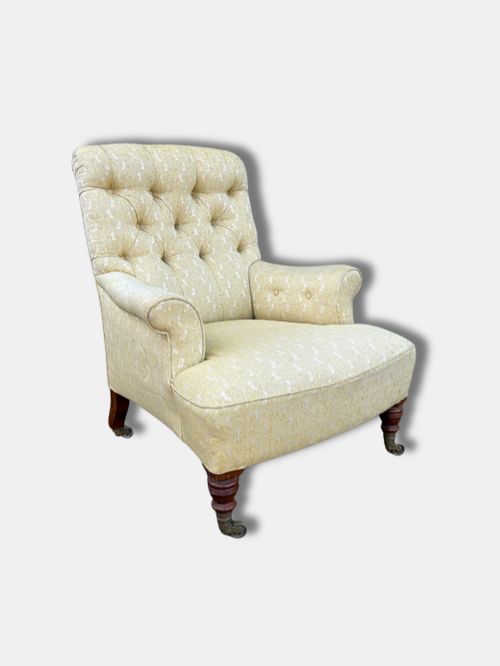
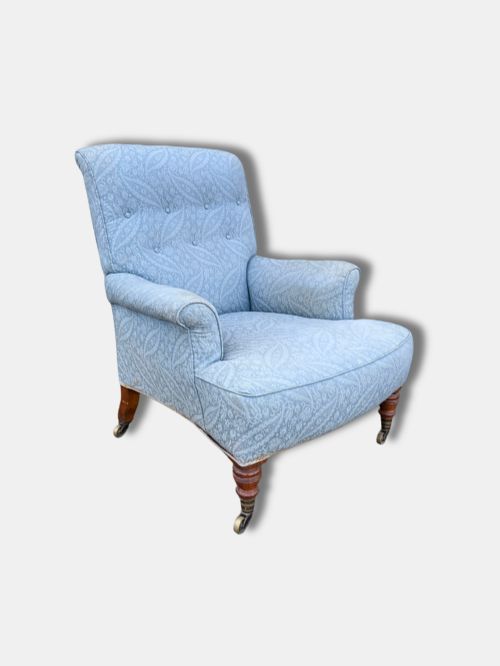
When you search for an antique castored armchair, you encounter seating designed for libraries, country houses, and drawing rooms across the Georgian, Regency, Victorian, and Edwardian periods. These pieces range from substantial library chairs in mahogany, oak, or walnut to deep-seated country house designs built for relaxation.
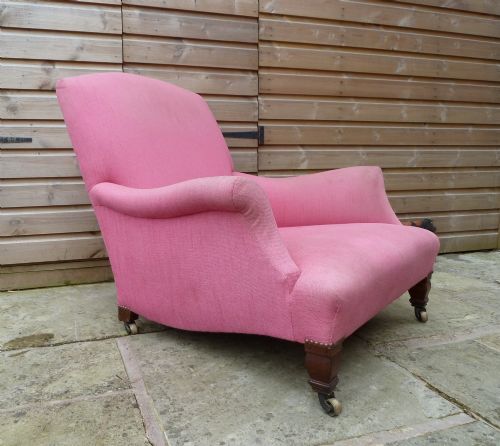
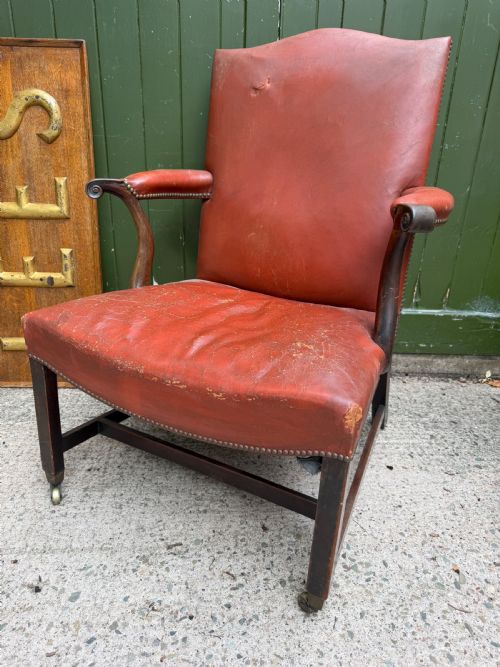
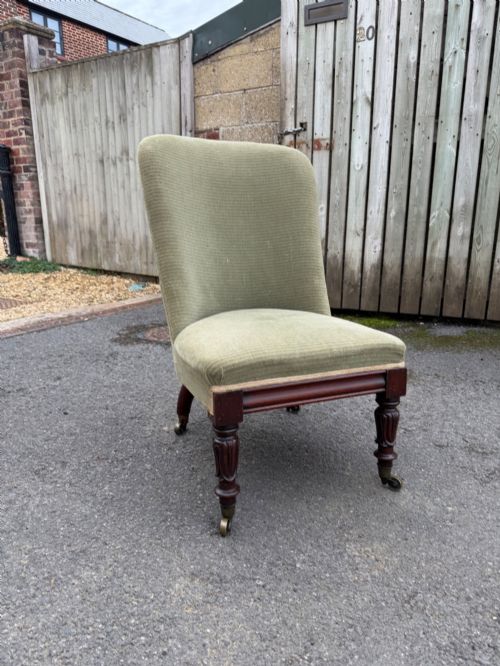
You meet armchairs, desk chairs, and slipper chairs, often featuring upholstered bodies covered in leather, fabric, calico, or hessian. Many examples follow specific stylistic lineages such as the Gainsborough library type or the low-slung profiles associated with Howard and Sons.
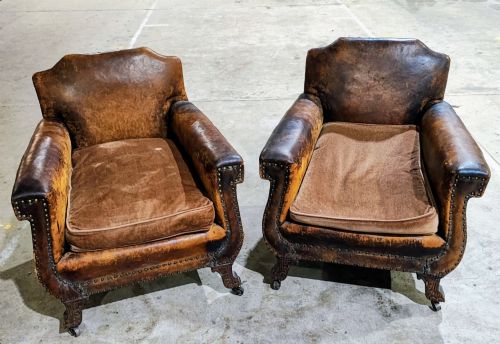
The most common versions on this page date from the nineteenth century, spanning Victorian and Edwardian interpretations alongside earlier Georgian and Regency forms. Their defining characteristic remains the set of small wheels fitted beneath the legs, allowing easy movement across heavy carpets.
Measures of quality
Quality rests in the architectural proportions of the wooden frame and the crispness of any carved or turned elements. Timber selection plays a major role, with finely figured mahogany or golden oak marking out superior examples.
The integrity of the internal stuffing and the original placement of the castors distinguish higher grades of manufacture. Pieces bearing maker attributions or retaining their initial configuration hold a distinct status over later adaptations.
Listings feature frames constructed from mahogany, walnut, oak, and satinwood, spanning the Georgian, Victorian, and Edwardian periods.
Howard and Sons·Gillows·Morris and Co·Morison and Co
The Antique Castored Armchair Glossary
- Castor
- A small wheel attached to the base of a leg to allow smooth rolling across floors. These fittings are commonly made of brass and mounted on ceramic or metal sockets.
- Bergère
- An enclosed upholstered armchair with wooden framing visible around the sides and back. This French-inspired form often incorporates cane panels or tight upholstery.
- Library chair
- A substantial, sturdy armchair designed for reading rooms and studies, frequently upholstered in dark leather. They prioritize deep seating support and solid arm rests.
- Reeding
- A decorative parallel projection carved into wood resembling a bundle of rods. It appears frequently on the legs of nineteenth-century seating.
- Button back
- An upholstery technique where depressions are formed in the padding by pulling thread through to the frame in a diamond grid. This secures the filling and adds texture.
Antique Castored Armchair: Frequently Asked Questions
What periods do these armchairs span?
The pieces range from Georgian and Regency eras through the Victorian and Edwardian decades, extending into early twentieth-century interpretations.
Craftsmanship evolves across these periods from formal mahogany library seating toward deep-sprung country house comfort.
How do I identify a library chair?
Library chairs are typically heavier frames built from oak or mahogany, frequently upholstered in durable leather designed for study use.
They offer firm, upright support compared to low-slung drawing room or slipper chairs.
What materials cover the frames?
Upholstery materials include traditional leather, woven fabrics, calico, and coarse hessian supporting internal stuffing.
Exposed frames display hardwoods such as walnut, mahogany, satinwood, and oak.
Are castors always made of brass?
Brass is the predominant metal used for these fittings, often paired with small ceramic or wooden wheels.
They are secured directly into the base of the wooden legs to facilitate movement.