


Carved Lion Accent Chair
A carved lion accent chair brings sculptural presence to a room through powerful woodwork and classical form.
Carved Lion Accent Chair
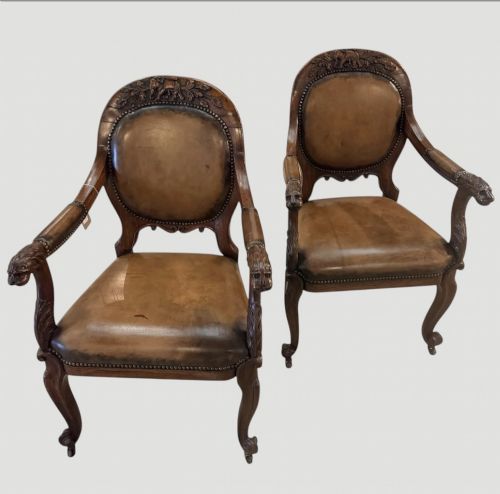
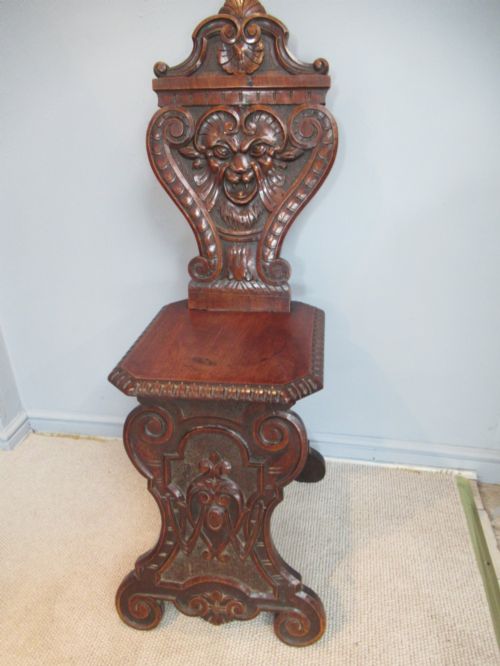
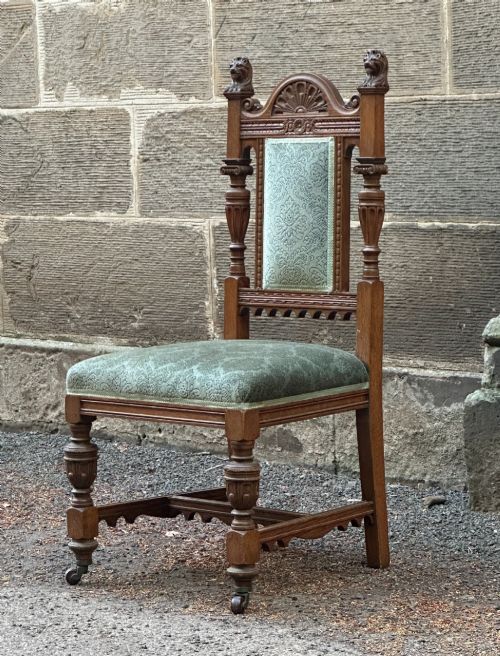
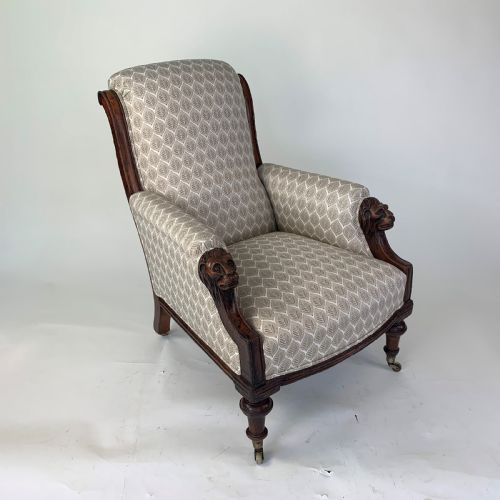
A carved lion accent chair combines robust seating with bold animalier woodwork, drawing on periods from the eighteenth century to the late Victorian era. These pieces appear in forms ranging from hall chairs and library seating to heavy throne armchairs and rocking chairs.
The versions most frequently met on this page span the nineteenth century, including Victorian, Renaissance Revival, and Anglo-Indian colonial styles. Makers drew upon Gothic Revival, Neoclassical, and Jacobean motifs to frame the carved leonine details.
Seating formats include matched pairs of side chairs, open armchairs, and X-framed stools with gilded or polished finishes. The structural forms emphasise architectural presence and heavy timber construction suited to prominent interior spaces.
Materials and construction methods
Carpenters utilised dense hardwoods such as mahogany, oak, walnut, rosewood, and occasional exotic timbers to withstand deep chiselling and sculptural relief work. These woods provided the structural integrity required for heavy armrests, scrolled legs, and projecting animal heads.
Upholstery involved traditional stuffing techniques paired with leather, patterned fabric, or plain textiles fixed with brass tacks. Inlay work and gilt highlights frequently accented the dark polished timber surfaces.
Listings feature oak, walnut, mahogany, and rosewood across Victorian, Georgian, and Renaissance Revival periods.
Assessing craftsmanship and finish
Timber selection and the integration of secondary woods influence the structural balance of the frame. Superior items maintain tight joinery across complex elements like X-frames and heavy backrests without reliance on modern adhesives.
Bruce Talbert·Gillows
The Carved Lion Accent Chair Glossary
- Anglo-Indian
- Furniture produced in the Indian subcontinent under British colonial rule, often featuring dense carved rosewood and local botanical motifs. These pieces frequently blend British seating forms with indigenous carving traditions.
- Curule stool
- An ancient Roman magistrate chair shape featuring intersecting curved legs that form an X-form base. This classical form reappears in nineteenth-century revival seating.
- Fauteuil
- An open-armed French armchair with upholstered back and seat, exposing wood around the arms and frame. Walnut versions appear in farmhouse and formal styles.
- X-framed
- A structural design where the base supports cross in an X shape beneath the seat. This configuration offers both stability and strong visual geometry in stools and armchairs.
- Throne armchair
- A tall, imposing seat with an elevated backrest designed to convey status and authority. These large wooden chairs often incorporate prominent carved embellishments.
Carved Lion Accent Chair: Frequently Asked Questions
What periods do these chairs come from?
The pieces span the eighteenth and nineteenth centuries, taking in Georgian origins and Victorian revivals. Makers drew on Neoclassical, Gothic, and Jacobean design vocabularies across these decades.
Dates cluster heavily around the mid-to-late nineteenth century, reflecting industrial and colonial trade expansion that favoured revivalist aesthetics.
Where were these chairs used historically?
Heavy armchairs and throne seats belonged in libraries, halls, and formal reception rooms where furniture projected status. Smaller side chairs and hall chairs lined grand entryways or corridors.
Stools and rocking chairs provided supplementary seating in domestic parlours and private chambers.
How do I care for antique wooden frames?
Maintain stable indoor humidity levels to prevent timber from drying out or splitting. Keep polished wood surfaces away from direct sunlight and heat sources.
Dust regularly with a soft, dry cloth and avoid silicone-based polishes that can degrade historic finishes over time.
How do I distinguish Anglo-Indian pieces?
Anglo-Indian seating relies heavily on dense tropical hardwoods like rosewood combined with deep, intricate floral and animal carving. The construction merges British chair proportions with local craftsmanship.
These pieces often arrived via trade routes during the nineteenth century, reflecting colonial interior tastes.