




Victorian Lion Head Chair
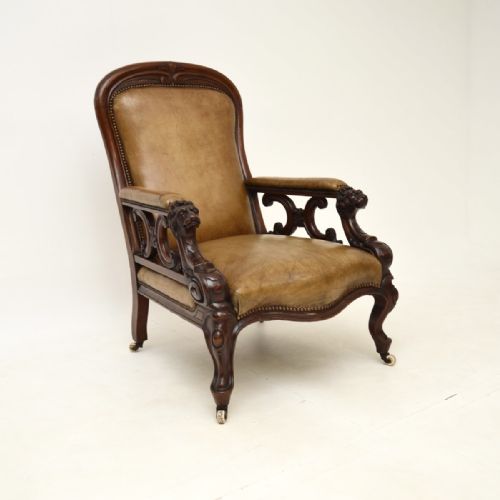
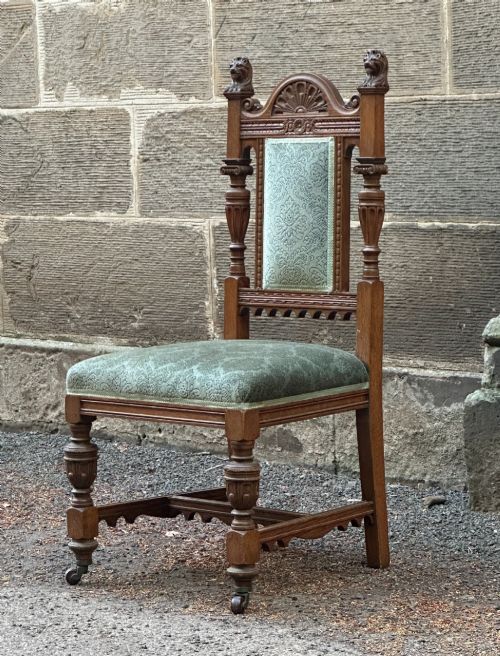
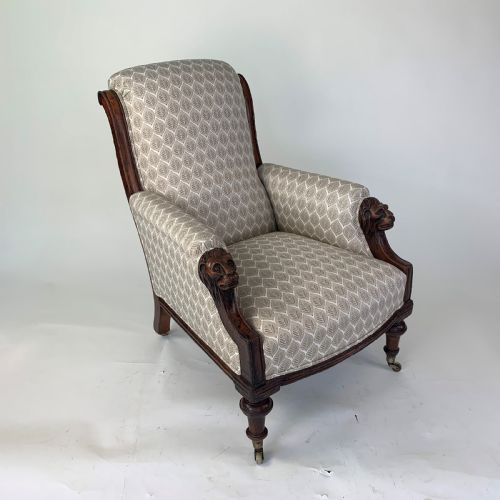
These Victorian lion head chair pieces are robust nineteenth-century seating featuring carved terminals, combining imposing presence with traditional workshop craftsmanship.
Victorian Lion Head Chair
A victorian lion head chair brings distinct nineteenth-century character into a room, drawing on revivalist tastes that favoured bold sculptural carving. Buyers searching for a victorian lion head chair typically encounter library armchairs, hall chairs, and club seating rendered in dark woods with prominent animal mask arm terminals.
The surviving pieces span several decades of the nineteenth century, reflecting varied interpretations from Gothic Revival to Arts and Crafts and Renaissance Revival movements. Oak and mahogany dominate the offerings, frequently paired with buttoned leather or heavy woven fabric upholstery.
Materials and construction methods
The frame construction relies heavily on dense timbers such as oak, mahogany, and walnut, shaped through traditional joinery and hand carving. Wood inlay and careful turning appear alongside deep relief carving that brings the lion mask arms and crest rails into sharp relief.
Upholstery methods utilise traditional stuffing materials secured beneath leather, velvet, or fabric covers, often finished with brass nailing. Structural integrity depends on the seasoned weight of the timber and the depth of the mortise and tenon joints holding the heavy frames together.
Some nineteenth-century makers evidently believed that staring down a carved lion arm made paying bills at a library desk feel slightly more majestic.
Markers of fine execution
The choice of covering material, whether supple hide or heavy textile, alongside the precision of the joinery determines the overall refinement of the piece. Untouched patination on the timber surface and traditional upholstery materials further separate the best examples.
Bruce Talbert·Gillows
The Victorian Lion Head Chair Glossary
- Gothic Revival
- A nineteenth-century design movement drawing inspiration from medieval architecture, often featuring pointed arches, tracery, and heavy carved elements. This style heavily influenced many domestic seating designs of the period.
- Library armchair
- A substantial, comfortable seat designed for reading rooms and studies, typically upholstered in leather and constructed from mahogany or oak. These pieces frequently incorporate padded arms and supportive high backs.
- Hall chair
- A relatively rigid wooden seat intended for entrance halls, usually lacking upholstered arms and featuring a high carved back displaying heraldry or ornament. Oak examples are particularly common in nineteenth-century interiors.
- Arts and Crafts
- A design movement valuing handcraftsmanship, simple forms, and traditional materials over mass production. Pieces from this tradition show straightforward construction alongside deliberate artistic carving.
- Patina
- The surface sheen and colour acquired by wood and leather through age, handling, and regular polishing. A desirable surface shows deep tonal variation developed over decades of use.
Victorian Lion Head Chair: Frequently Asked Questions
How do I identify a genuine nineteenth-century lion head chair?
Examine the timber underneath and behind the carving for hand tool marks, dry grain, and appropriate construction methods like pegged joints. The wear patterns on the wood and leather should look consistent with age.
Check whether the lion head terminals are integrated directly into the structural wooden arm supports rather than being applied separately as cast ornaments. Genuine period examples display consistent ageing across the entire frame.
What woods were commonly used for these chairs?
Cabinet makers relied primarily on oak and mahogany for these substantial seating forms, occasionally utilising walnut or incorporating decorative wood inlay. These dense hardwoods provided the necessary strength to support heavy carving.
Lighter secondary woods may appear in internal frame components, but the primary show woods were selected for their rich grain and ability to hold crisp sculptural detail.
Are these chairs suitable for daily use?
Most library armchairs and club chairs from this era are built on robust frames designed for comfort and durability. Their solid timber construction and traditional upholstery support regular seating when structurally sound.
Stiff hall chairs and decorative stools are better suited for occasional seating or display due to their rigid backs and lack of padding. Proper placement away from direct heat sources protects both the wood and the leather.
What is Victorian Grotto Revival style?
This specialised nineteenth-century style drew inspiration from natural shell and marine motifs, translating organic forms into carved wood furniture. Pieces often incorporate fantastical elements like dolphins, shells, and stylized rockwork.
In the context of seating, this aesthetic manifested as highly sculptural stools and chairs with unconventional supports and heavily textured wooden surfaces.