


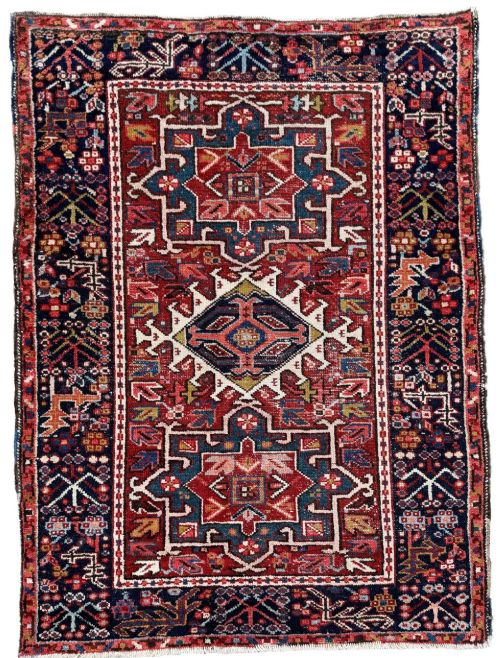
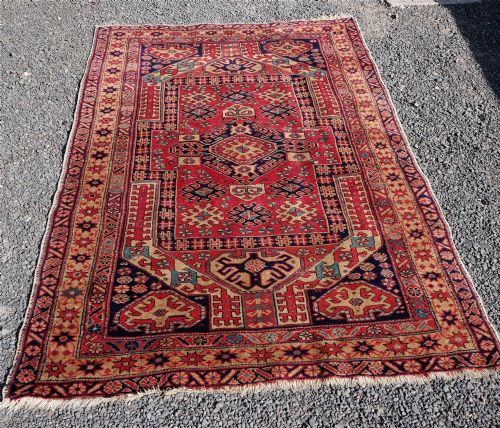

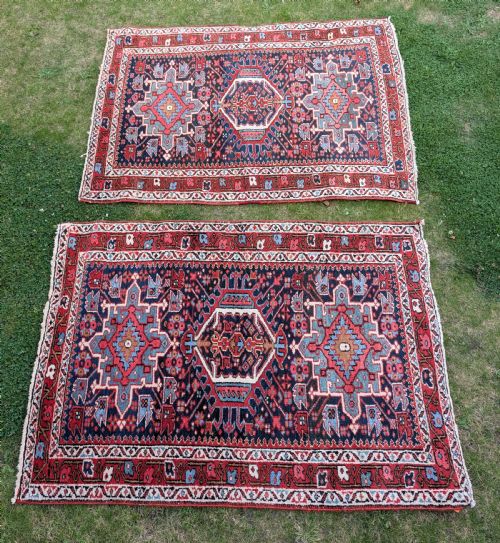
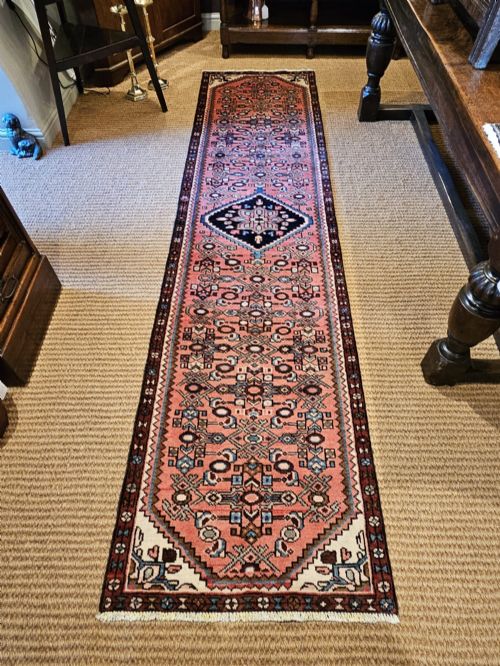


Heriz Wool Rug
A heriz wool rug brings robust North-West Persian geometry and enduring floor presence to a room.
Heriz Wool Rug
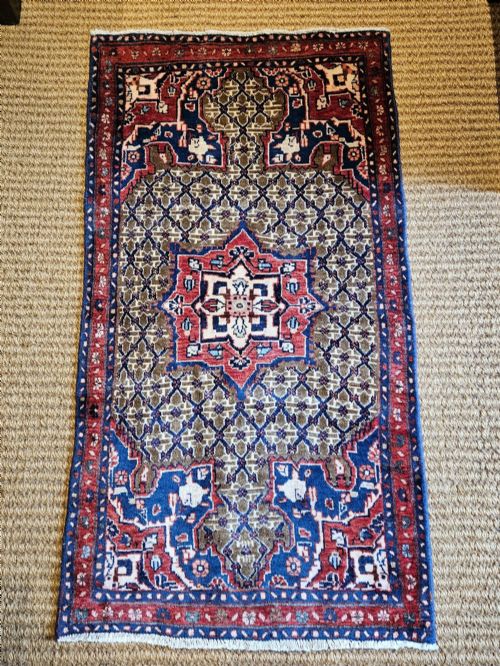
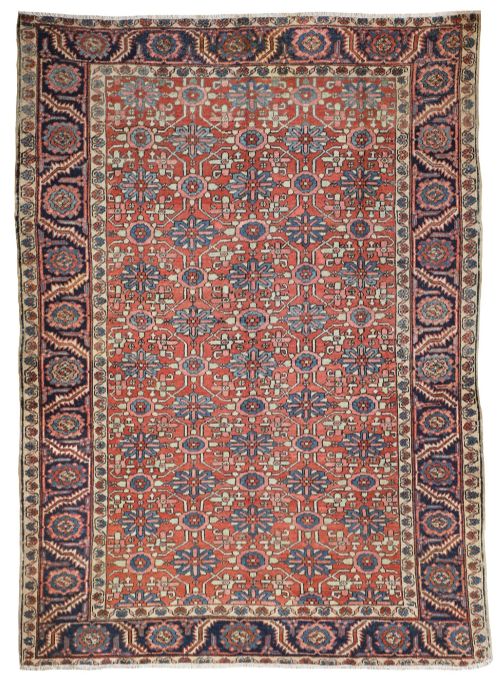
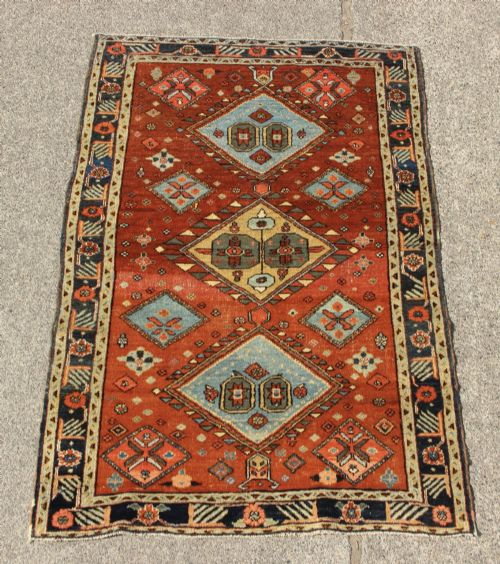
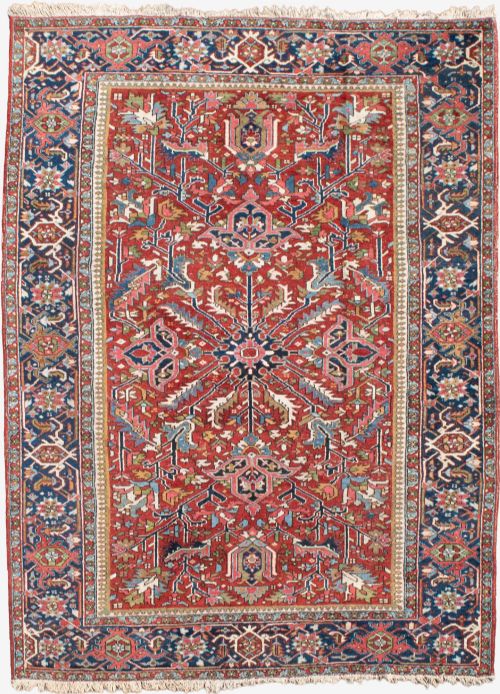
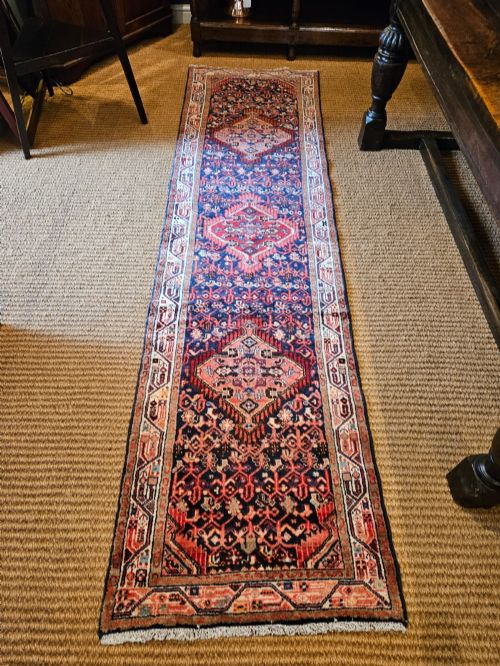
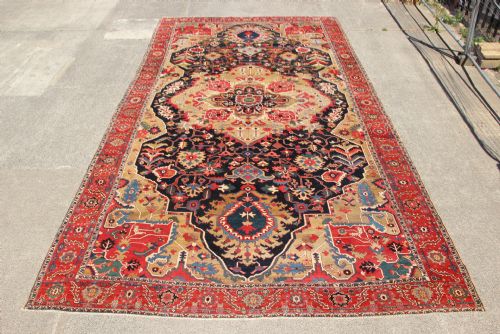
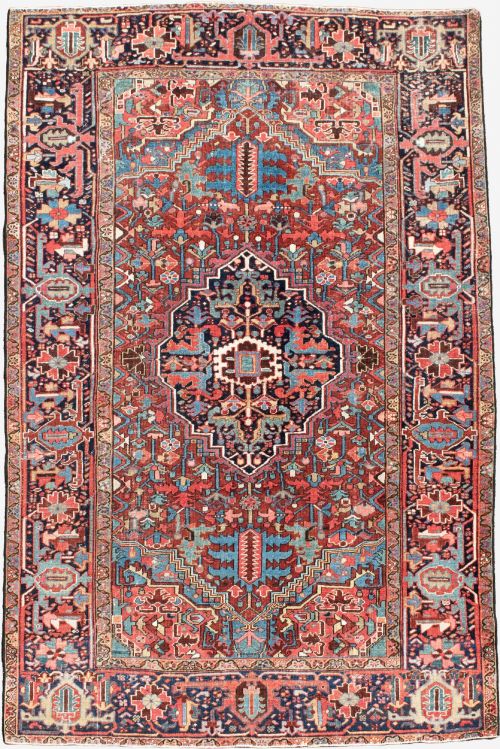
A heriz wool rug is a woven floor covering originating from the villages and workshops of North-West Persia. These pieces arrive in various formats, including large carpets, smaller rugs, hearth sizes, and long hallway runners.
Most examples found here date from the late nineteenth century through to the early decades of the twentieth century. Buyers encounter classic regional styles alongside related village pieces from nearby centres such as Karaja, Bakshaish, and Ahar.
The aesthetic relies on bold, monumental medallions and architectural motifs rather than delicate curves. This gives each carpet a commanding structural layout suited to substantial reception spaces and high-traffic floors.
How they were made
These floor coverings are constructed using durable wool piles knotted onto sturdy cotton foundations. The resilient nature of the pile wool ensures the heavy structures withstand generations of foot traffic.
Weavers employed traditional hand-knotting techniques, fixing the yarn securely across the cotton warps and wefts. Vegetable and natural dyes produced the characteristic deep red, ivory, and sky-blue grounds recorded in the inventory.
One determined hearth-sized rug from nineteen-twenty proves that even the smallest hearth deserved its own grand medallion.
What varies in quality
The distinction between standard village production and the finest workshop pieces rests in the drawing precision and knot density. Serapi-grade weaves and extremely fine large carpets demonstrate sharper geometric articulation and more complex field proportions.
Colour saturation and the vibrancy of the background palette alter the visual impact significantly. Pieces retaining rich, unblemished natural dyes and intact original borders command greater appreciation than heavily worn or faded examples.
The Heriz Wool Rug Glossary
- Heriz
- A region in North-West Persia known for producing large-scale geometric carpets with distinctive central medallions. These rugs utilise sturdy wool and robust cotton foundations.
- Serapi
- A sub-category of carpets from the Heriz district distinguished by more open designs and finer knotting. They often date from the nineteenth century.
- Karaja
- A village weaving origin close to Heriz producing smaller rugs and runners with distinct tribal geometric patterns. The palette frequently incorporates rich reds and blues.
- Bakshaish
- An older village weaving style from North-West Persia featuring spacious, abstract interpretations of traditional medallion layouts. These rugs often display muted, earthy tones.
- Runner
- A long, narrow carpet format designed specifically for corridors, hallways, and staircases. They preserve the structural motifs of larger carpets in a linear proportion.
Heriz Wool Rug: Frequently Asked Questions
Where should I place a heriz wool rug?
These robust floor coverings suit high-traffic areas such as hallways, living rooms, and dining spaces. Their heavy wool pile provides insulation and stability underfoot.
Ensure the room dimensions allow the bold geometric borders to remain visible rather than hidden beneath heavy furniture.
How do I care for an antique wool carpet?
Regular gentle vacuuming without a rotating brush roll prevents dust accumulation within the wool pile. Professional cleaning suited to antique textiles maintains the integrity of the natural dyes.
Keep the rug away from direct, prolonged sunlight to prevent uneven fading of the red and ivory grounds.
How do I distinguish a Serapi from a standard Heriz?
Serapi carpets typically display a more open, spacious field design with finer knot counts and softer palettes. They often date from the earlier nineteenth century.
Standard Heriz pieces tend to feature denser, more rigid geometric filling within the central medallion and corners.
What is the difference between a Heriz and a Karaja?
Karaja rugs are generally smaller in scale, produced as scatter rugs or narrow runners rather than grand salon carpets. Their geometric motifs often adopt more compact, tribal arrangements.
Heriz carpets focus on monumental medallion structures designed for expansive floor spaces.