
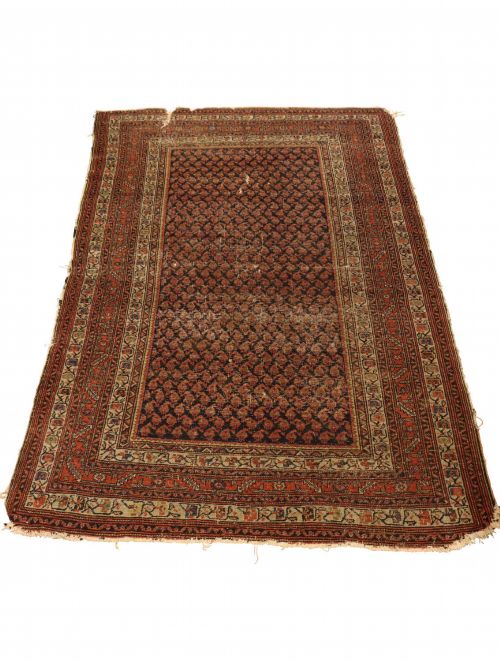


Rust Red Oriental Rug
A rust red oriental rug anchors a room with deep madder tones and tribal geometry woven across centuries of nomadic and village workshops.
Rust Red Oriental Rug
A rust red oriental rug encompasses hand-knotted village and tribal floor coverings originating from Persia, Central Asia, and surrounding regions between the early nineteenth century and the early twentieth century. These textiles span various formats from small scatter mats and narrow runners to massive country house carpets woven for utilitarian warmth and decorative distinction.
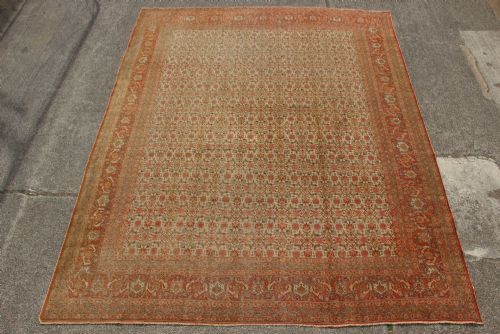
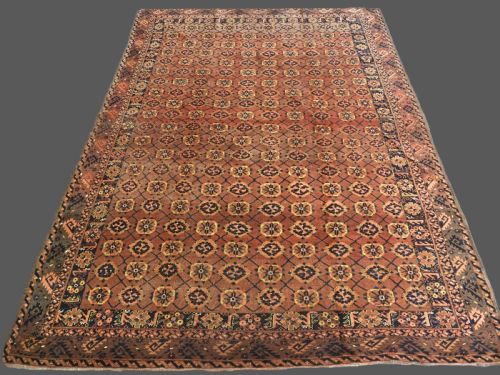
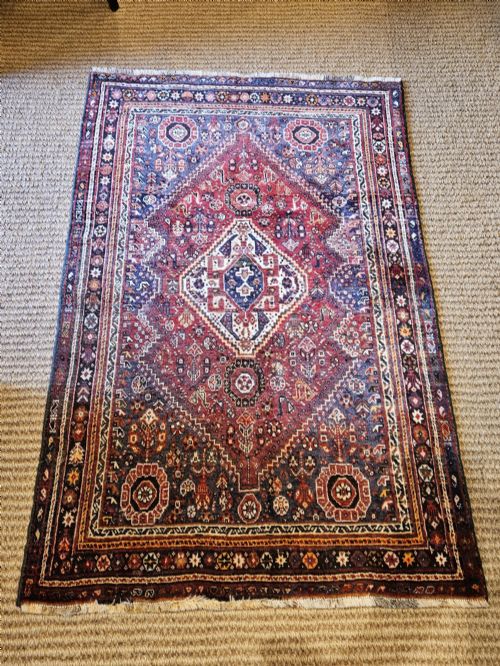
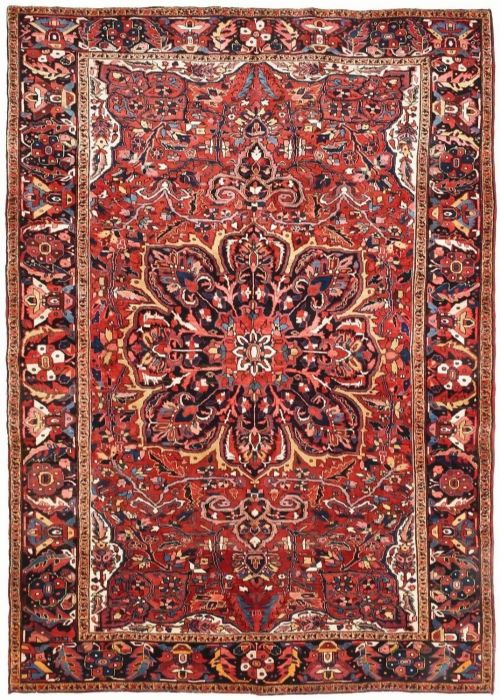
The pieces appearing on this page lean heavily into specific Persian and Turkmen weaving traditions, notably Heriz, Tabriz, Baluch, and Tekke styles. Buyers will encounter both room-sized town carpets featuring balanced medallion layouts and smaller tribal pieces displaying repeating geometric guls or boteh motifs.
How They Were Made
These textiles rely on a foundation of spun cotton or sturdy wool warp and weft threads, upon which dense wool pile is hand-knotted by individual weavers. Certain regional pieces incorporate goat hair into the outer selvedges or foundation to increase structural durability along the margins.
Natural dye stuffs extracted from local plants and minerals create the characteristic rust and madder red grounds, often paired with contrasting indigo blues and ivory highlights. The tightness of the knotting and the weight of the pile vary directly according to whether the rug was produced in a sedentary town workshop or a nomadic tent.
Listings feature antique wool and cotton floor coverings spanning multiple decades from the early nineteenth century through the nineteen-thirties.
What Varies in Quality
The finesse of a rust red oriental rug rests in the precision of the knot density and the crispness of the drawn motif. Finer town carpets demonstrate intricate curves and subtle tonal shifts, whereas robust village weaves trade meticulous geometry for a heavier, rustic handle.
Material selection also dictates the hierarchy of quality, with tightly spun wool yielding a resilient, lustrous pile that ages gracefully under foot. The integrity of the original side cords and end finishes preserves the structural framework of the carpet over generations of use.
The Rust Red Oriental Rug Glossary
- Boteh
- A traditional almond or pear-shaped motif filled with floral or Paisley-derived patterns. It appears frequently in repeating rows across field designs.
- Gul
- A repeating octagonal medallion or crest used extensively in Turkmen and Baluch tribal weaving. Each tribe utilised distinct variations to signify ancestry.
- Warp
- The vertical foundation threads stretched tightly on the loom before knotting begins. The exposed ends often terminate in visible fringes.
- Weft
- The horizontal threads passed alternately over and under the warp threads after each row of knots. They bind the structure together firmly from side to side.
- Selvedge
- The reinforced outer edge binding of a rug parallel to the warp threads. It prevents the sides from fraying or curling during daily use.
Rust Red Oriental Rug: Frequently Asked Questions
Where were these rugs made?
These floor coverings were produced across Persia and Central Asia in various town workshops, village communities, and nomadic tribal encampments. Each region developed distinct weaving structures and stylistic vocabularies.
Towns like Tabriz and Heriz created grand architectural carpets, while nomadic groups such as the Baluch and Tekke Turkmen wove smaller, portable rugs for daily encampment life.
What is a runner rug used for?
Narrow runner formats were traditionally woven to span long corridors, hallways, and staircases within large homes. Their elongated proportions guide movement through domestic spaces.
Today, they serve the same architectural function while adding warmth and intense colour to transitional flooring areas.
How do I identify tribal designs?
Tribal rugs display geometric motifs, repeating octagons, and asymmetrical layouts passed down through family or clan traditions rather than drawn cartoons. The palette often relies on deep madder reds, browns, and dark blues.
These pieces typically feel heavier and more pliable than formal city carpets, reflecting their nomadic origins and utilitarian purpose.