



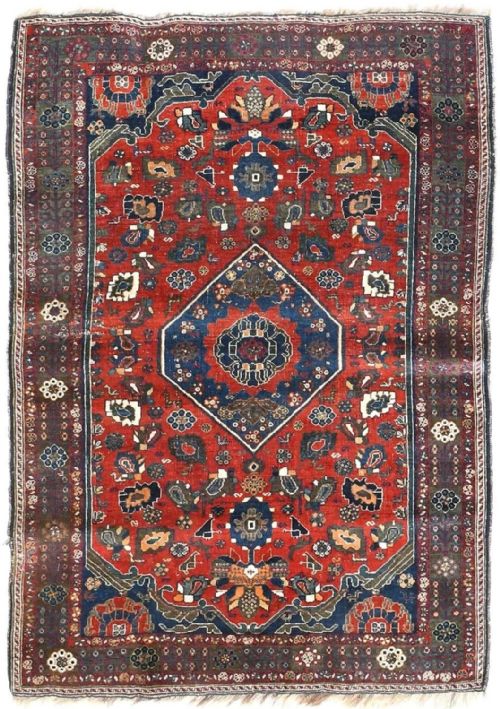
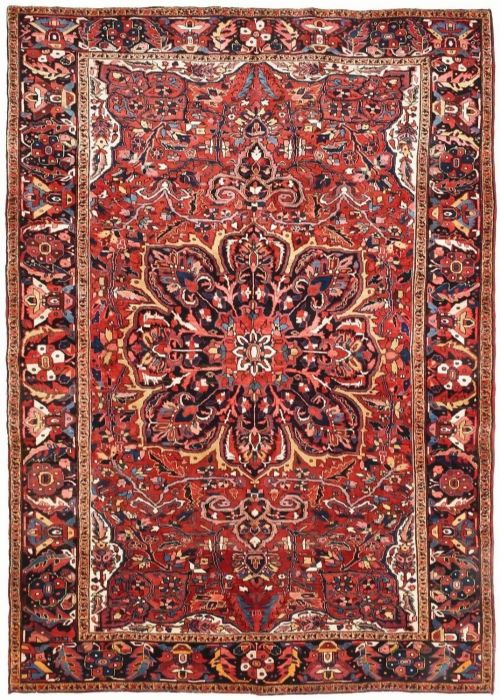


Large Heriz Wool Rug
A large heriz wool rug brings robust North-West Persian geometry and enduring floor-covering strength into substantial rooms.
Large Heriz Wool Rug
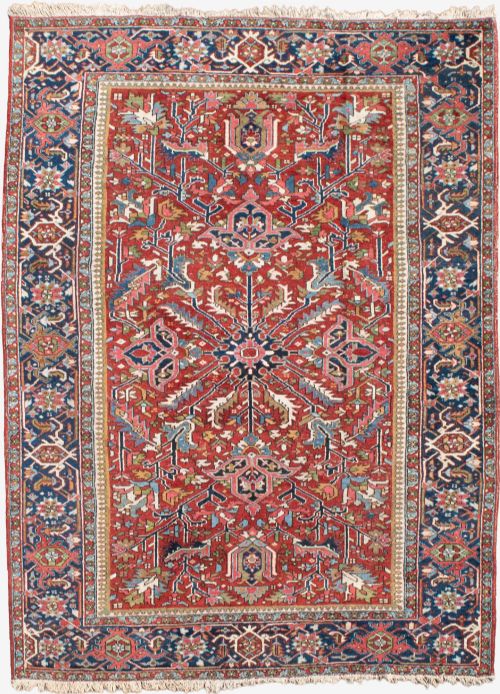
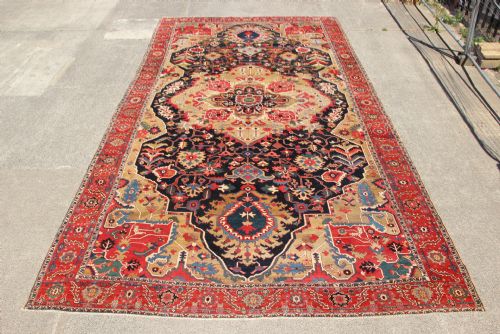
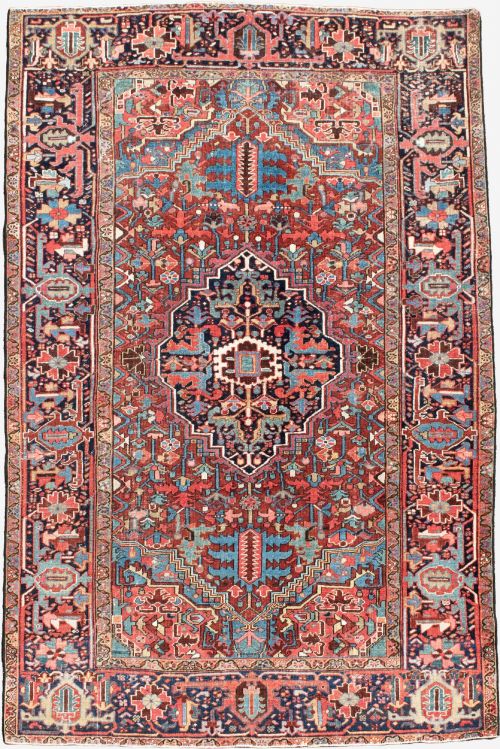
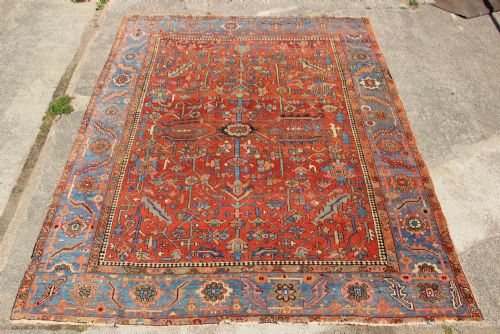
A large heriz wool rug originates from the Heriz region and surrounding villages in North-West Persia, produced primarily across the nineteenth and early twentieth centuries. These floor coverings emerge from towns and workshops known for robust geometric designs rather than the fluid curvilinear motifs seen in urban Persian weaving.
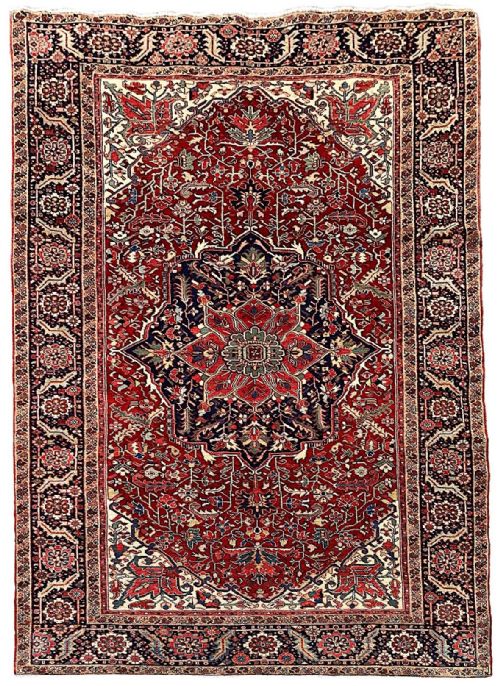
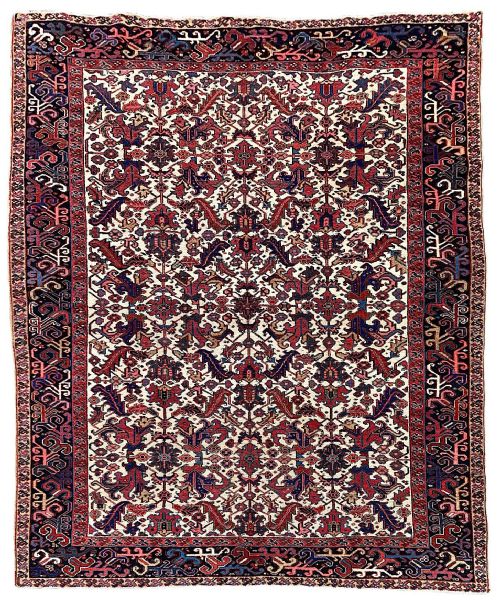
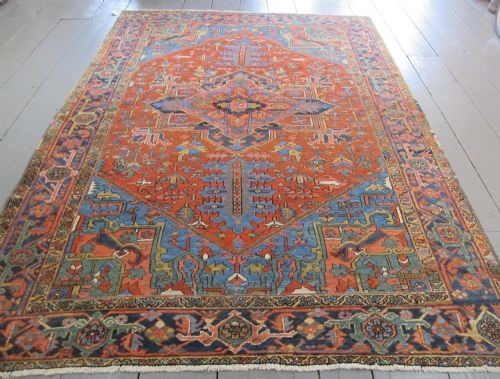
The most common pieces on this page are room-sized antique carpets dating from the late nineteenth century up to the 1930s. Buyers encounter traditional formats featuring grand central medallions, corner spandrels, and strong primary borders executed in saturated terracotta, indigo, and ivory grounds.
How they were made
These carpets combine hand-spun wool pile knotted onto sturdy cotton foundation warps and wefts. The dense wool provides the heavy handle and resilience necessary for enduring generations of foot traffic in country houses and large reception rooms.
Weavers utilised strong natural dyes sourced from local plants and minerals, creating rich terracotta, sky blue, and ivory tones that mellow gracefully over decades. The knotting is typically bold and robust, contributing to the distinct graphic clarity of the geometric patterns.
Listings span production dates from 1850 through to 1930, utilising wool pile on cotton foundations.
What varies in quality
Quality rests in the crispness of the geometric drawing, the harmony and saturation of the palette, and the fineness of the knotting. Finer examples exhibit meticulously drawn medallions and balanced proportions that elevate them beyond standard village utility weaving.
The integrity of the wool pile and the survival of the original outer borders also distinguish superior pieces. A balanced dye palette with clear sky blue or ivory contrasts indicates careful preparation and superior materials.
The Large Heriz Wool Rug Glossary
- Medallion
- The central ornamental motif dominating the field of the carpet. In Heriz rugs, this is frequently a large geometric octagonal or six-sided form.
- Spandrels
- The triangular corner ornaments situated in the four corners of the main field outside the central medallion. They visually anchor the central design to the surrounding borders.
- Warps
- The vertical foundation threads running the length of the rug onto which the knots are tied. In these carpets, they are predominantly made of cotton.
- Wefts
- The horizontal threads passed back and forth across the warps between rows of knots to secure the pile. They bind the structure laterally.
- Serapi
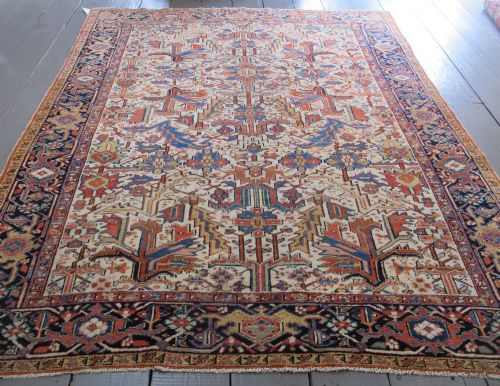
- A sub-category of Heriz carpets associated with earlier nineteenth-century production, typically displaying more open designs, finer knotting, and delicate pastel or pale terracotta tones.
Large Heriz Wool Rug: Frequently Asked Questions
Where were these rugs made?
These carpets are woven in the Heriz district of North-West Persia, situated near Tabriz. The local villages utilised abundant regional wool and distinct geometric traditions.
The high mountain iron content in the water and soil contributed to the durability and specific character of the wool used in these village workshops.
How do I care for a large wool carpet?
Regular gentle vacuuming without a rotating brush roll prevents dust accumulation within the thick wool pile. Professional specialist cleaning ensures the natural dyes remain stable.
Positioning the carpet away from direct, harsh sunlight protects the saturated terracotta and indigo dyes from fading unevenly over time.
What is the difference between Heriz and Serapi carpets?
Serapi carpets represent an earlier, finer group usually dated to the nineteenth century, featuring more spacious and relaxed geometric field compositions. Standard Heriz carpets tend to have slightly denser patterns and robust medallion structures.
Both share the same geographical origin and sturdy cotton-and-wool construction methods, though Serapi examples are often prized for their open drawing.
How do I date an antique Persian carpet?
Dating relies on stylistic shifts, structural evidence, and dye characteristics observed across pieces from the nineteenth and early twentieth centuries. Earlier pieces often display more expansive geometry and softer vegetable dye palettes.
Examining the weave density, edge finishes, and wear patterns alongside known historical comparables provides a reliable window into the period of manufacture.