

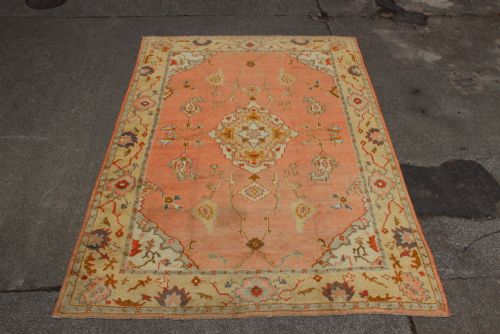
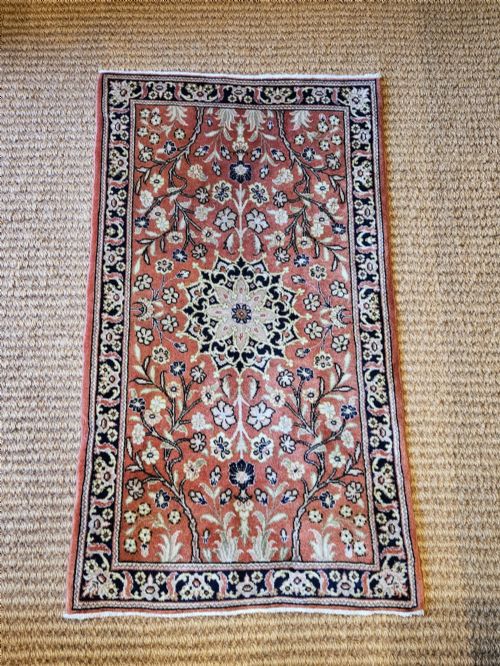
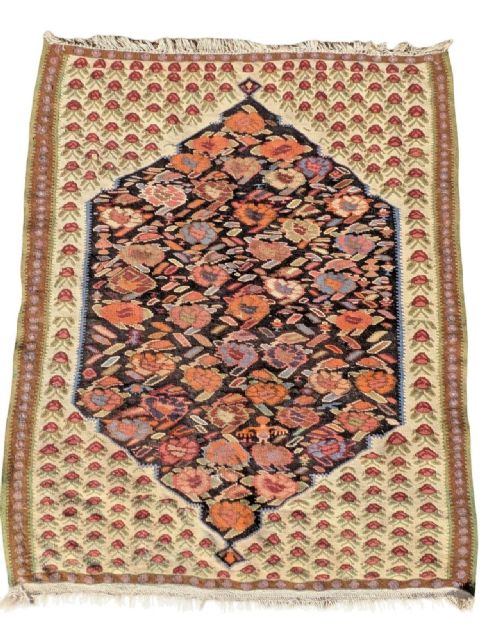
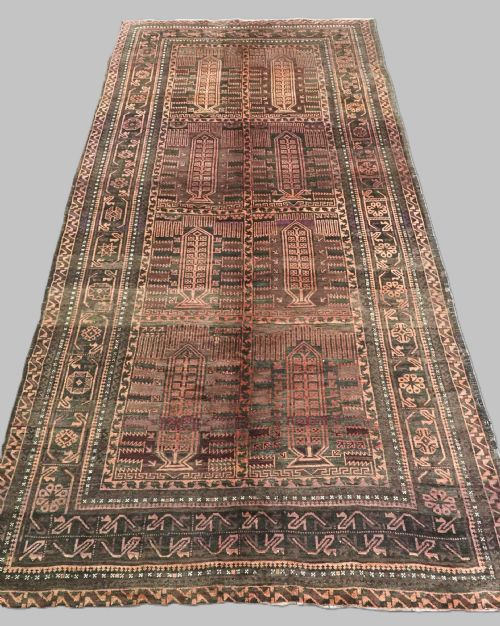
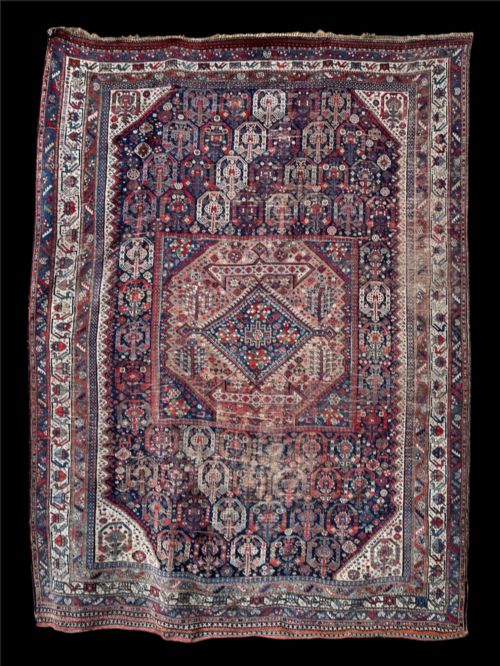
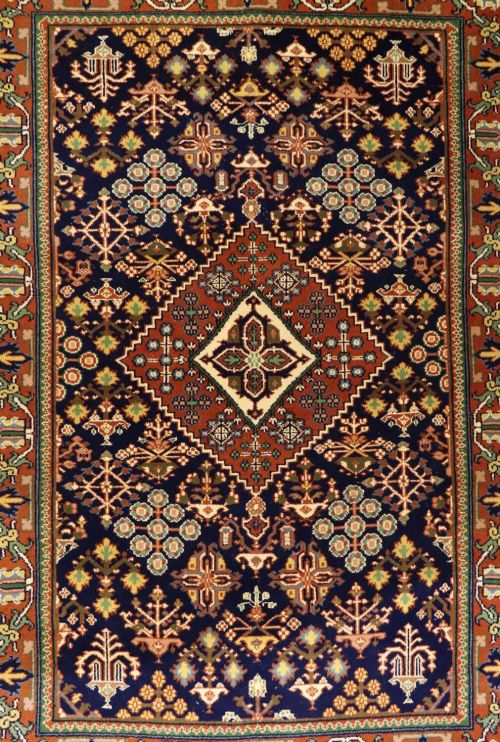
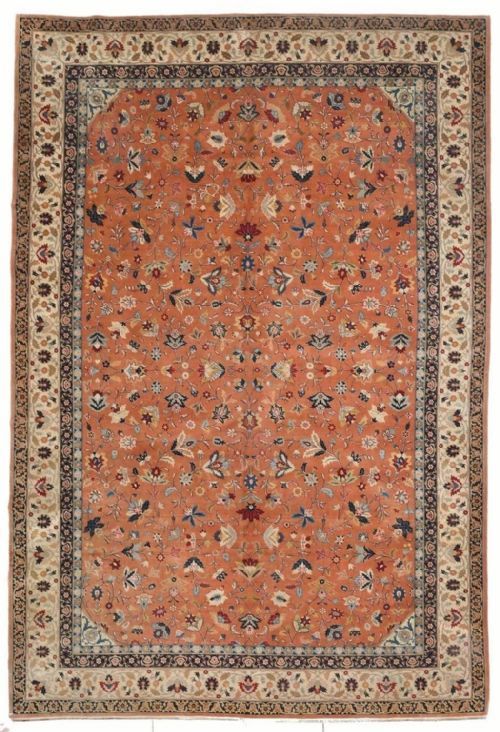
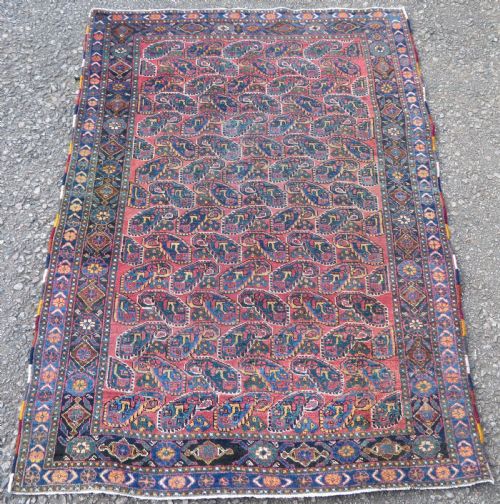
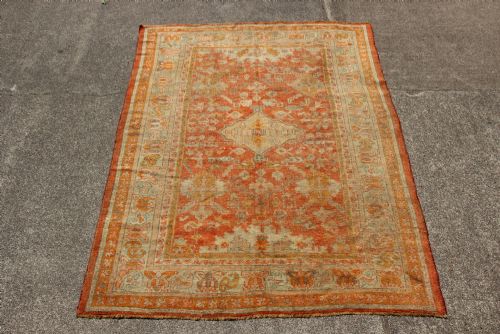
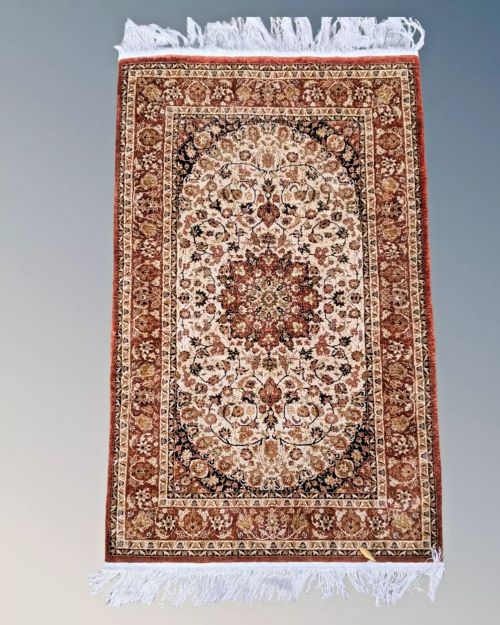
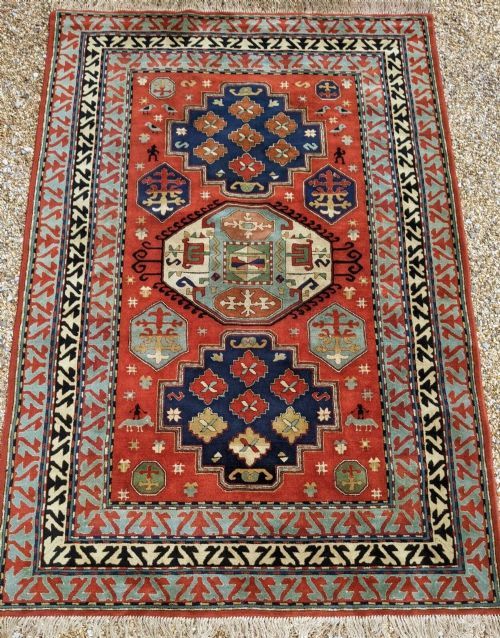
Terracotta Woven Area Rug
These antique hand-knotted rugs and carpets gathered under terracotta woven area rug bring warmth and deep earthy tones into a room.
Terracotta Woven Area Rug
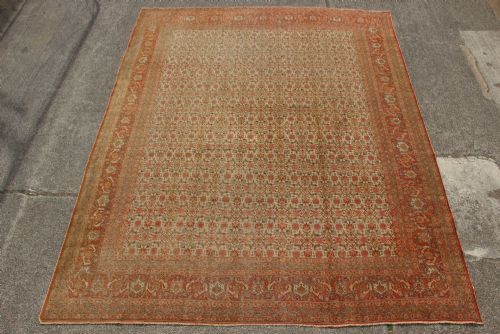
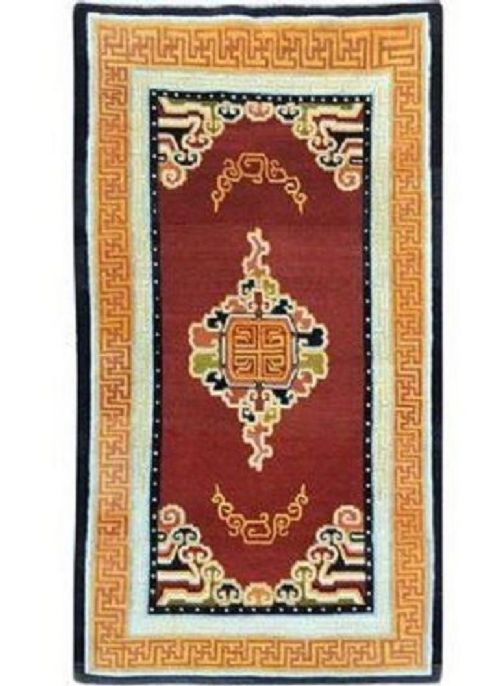
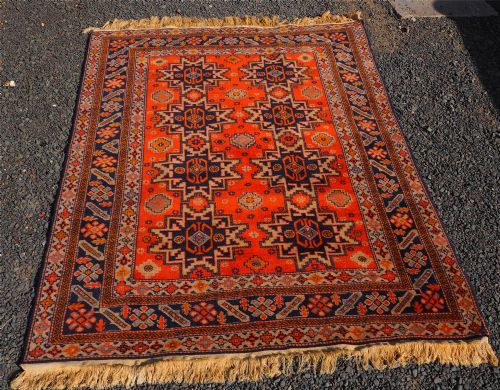
A terracotta woven area rug encompasses hand-knotted wool, cotton, and silk floor coverings originating from Persian, Caucasian, and tribal workshops. Buyers find formats ranging from small hearth rugs and runner rugs up to large carpets dating from the mid-nineteenth century through the early twentieth century.
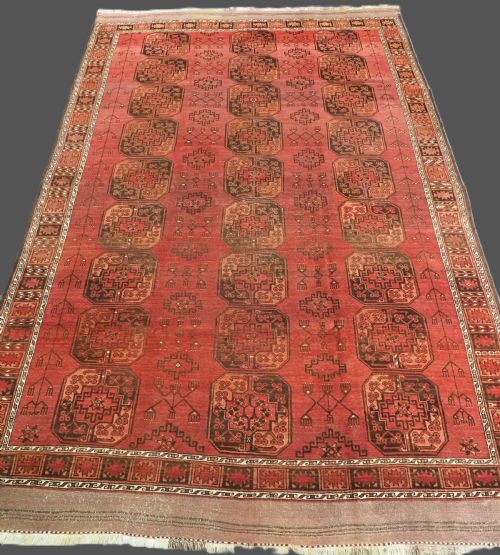
The selection reflects traditional designs such as Heriz, Ghiordes Oushak, Bidjar, Afshar, and Ersari Turkmen patterns. These pieces demonstrate regional weaving traditions executed in wool and natural dyes.
Materials and construction
Weavers constructed these pieces using hand-knotted wool, cotton foundations, and occasionally silk, employing natural dyes to achieve rich terracotta and mellow colour palettes. The density of the knotting and the quality of the wool determine the weight and drape of each textile.
Tribal and village workshops utilised local materials and traditional looms, resulting in durable carpets and rugs with distinctive geometric medallions, boteh motifs, and all-over field patterns.
Several carpets retain minor wool irregularities that reveal the hand of an individual weaver working away from commercial workshops.
Judging the range
Quality rests upon the fineness of the knotting, the clarity of the design, and the stability of the natural dyes used across the field. Finer town carpets show precise curvilinear drafting, whereas tribal pieces rely on expressive geometry and robust wool piles.
Condition and integrity of the edges, foundations, and pile dictate the standing of an individual rug within its type. Pieces retaining their original selvedges and balanced proportions demonstrate superior preservation.
The Terracotta Woven Area Rug Glossary
- Boteh
- A stylised almond or pear-shaped motif representing a shrub or palm leaf. It appears frequently in Persian and regional tribal rug designs.
- Guls
- Octagonal or medallion-like motifs used as primary recurring elements in Turkmen carpet design. They distinguish specific tribal groups and weaving traditions.
- Kilim
- A flat-woven carpet or rug produced without a pile. These pieces rely on interlocking weft threads to create geometric patterns.
- Medallion
- A central ornamental design element placed in the middle of the rug field. It dominates the compositional layout of many Persian carpets.
- Selvedge
- The reinforced finishing edges along the sides of a rug that prevent the weft threads from unravelling. Original selvedges indicate careful preservation.
Terracotta Woven Area Rug: Frequently Asked Questions
How do I clean an antique rug?
Professional specialist cleaning is essential for antique wool and silk textiles to protect natural dyes and fragile foundations.
Regular gentle vacuuming without a beater bar removes surface dust safely between professional washes.
Where were these rugs made?
The pieces originate from regions across Persia, the Caucasus, and Central Asia, including Heriz, Tabriz, Oushak, and tribal territories.
Local weavers produced them in villages, nomadic camps, and established urban workshops.
What is a tribal rug?
Tribal rugs are woven by nomadic or village groups using memory patterns and local materials rather than rigid factory cartoons.
They often display bold geometric motifs and rich natural terracotta colouring.
How do I date an old rug?
Dating relies on examining the types of wool, the chemical or natural composition of the dyes, and structural weaving characteristics.
Stylistic conventions and regional design shifts also help narrow down the period of production.