


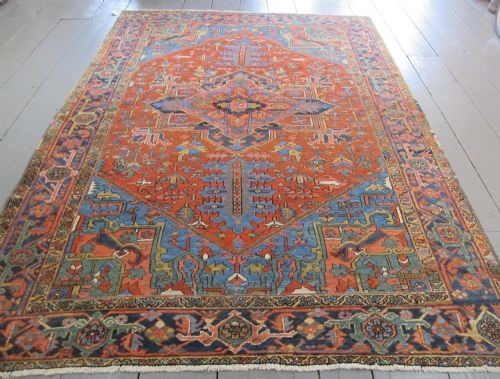
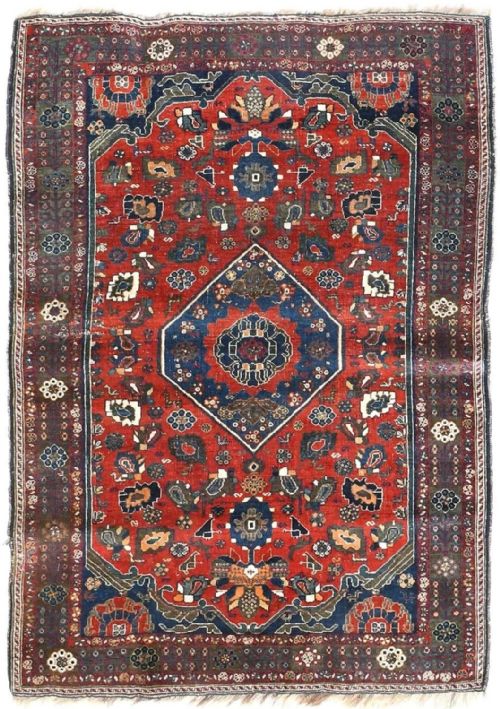
Heriz Medallion Rug
A heriz medallion rug brings geometric structure and rich colour to a room through traditional Persian craftsmanship.
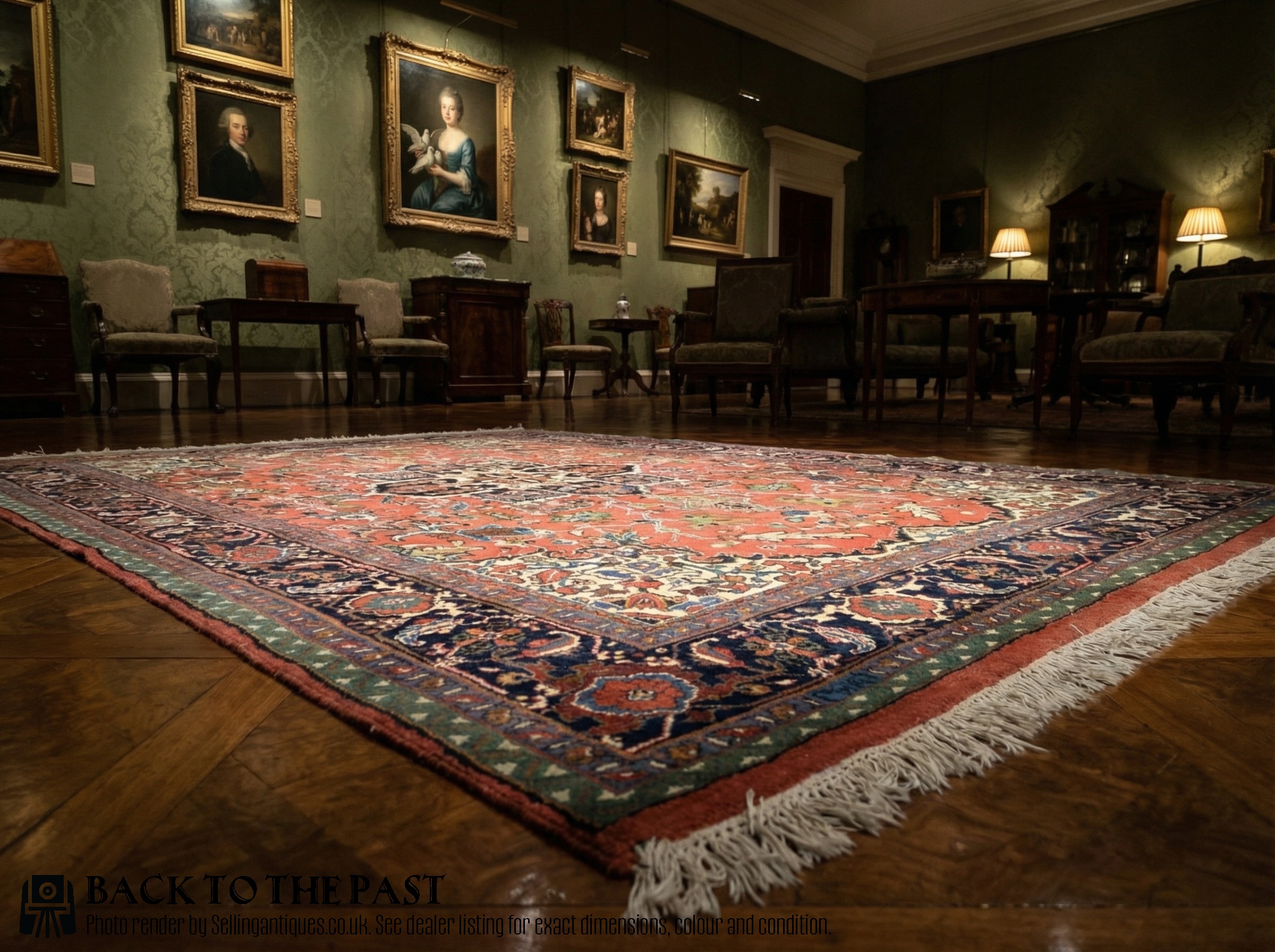
Heriz Medallion Rug
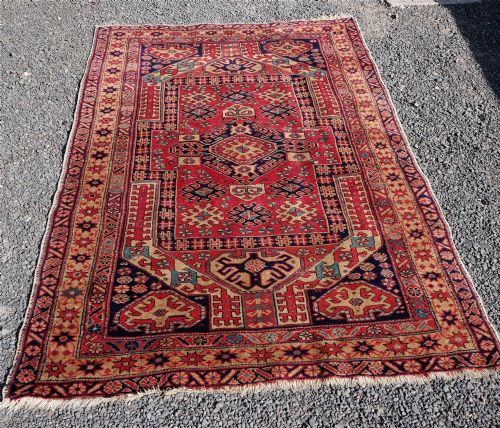
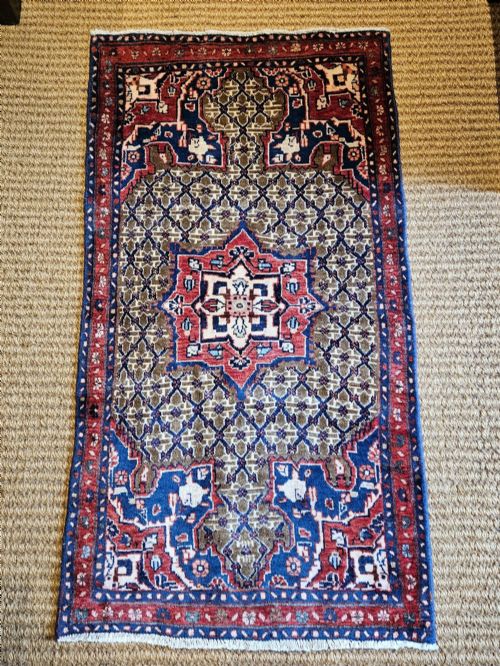
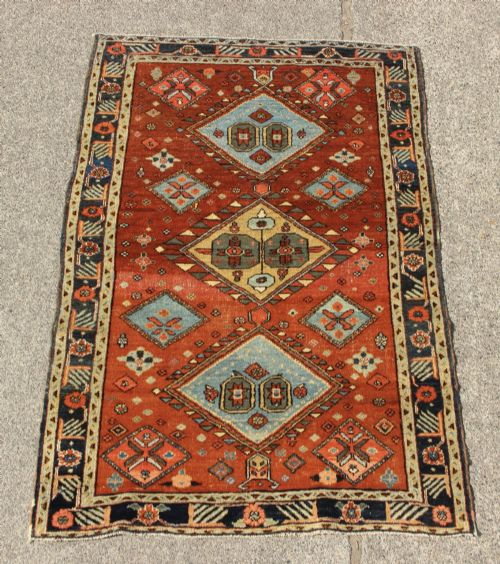
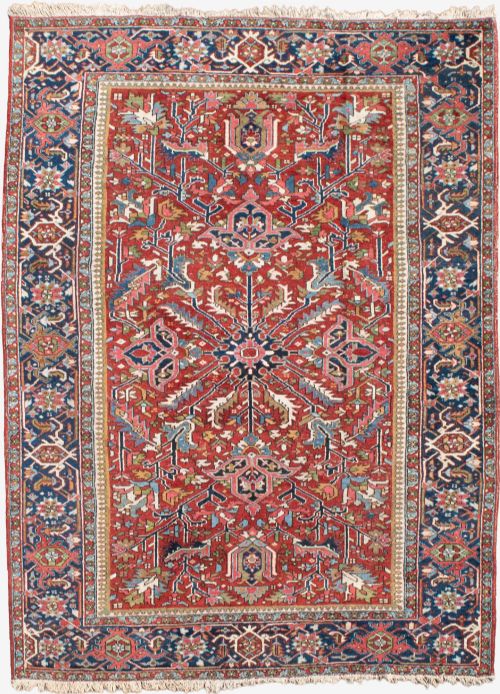
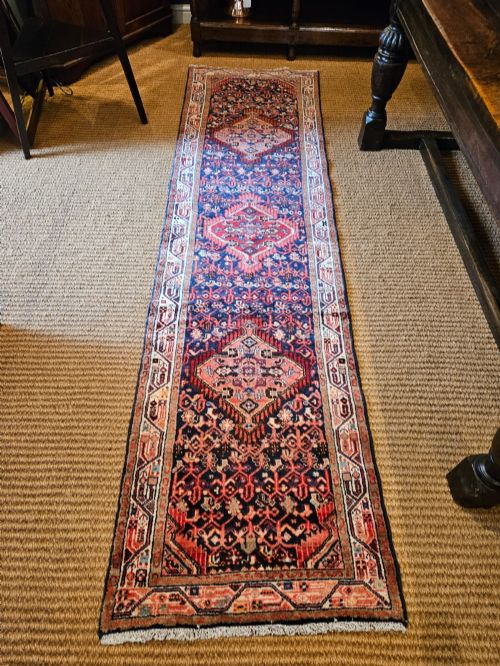
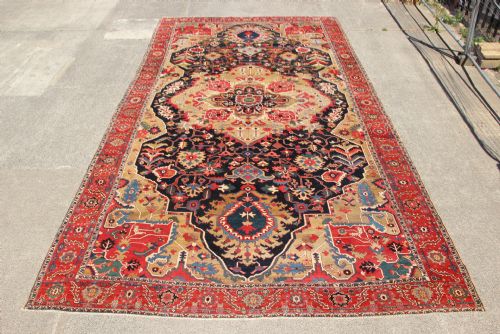
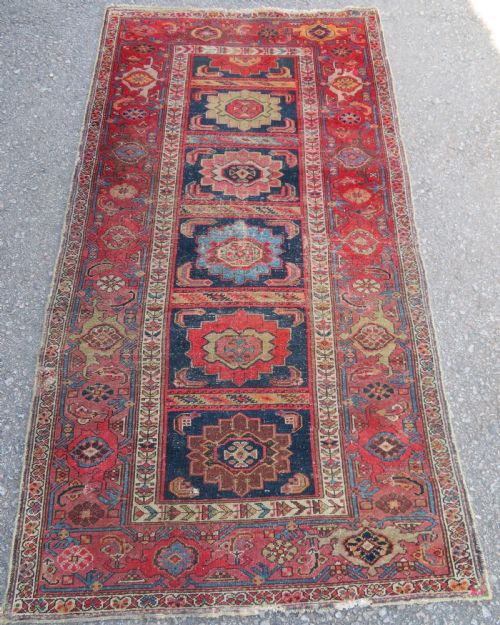
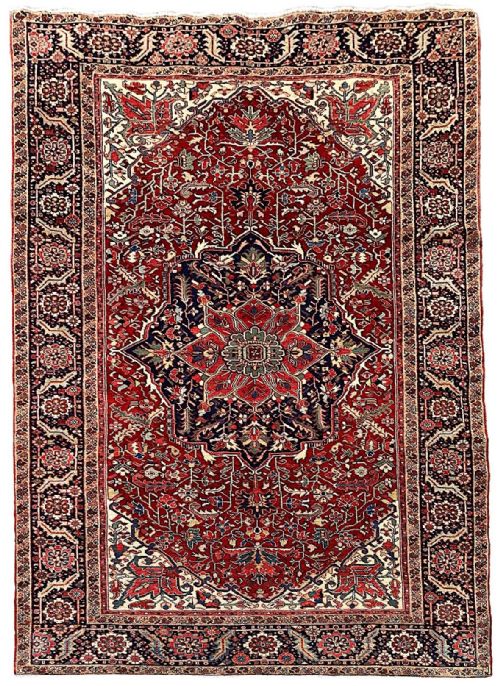
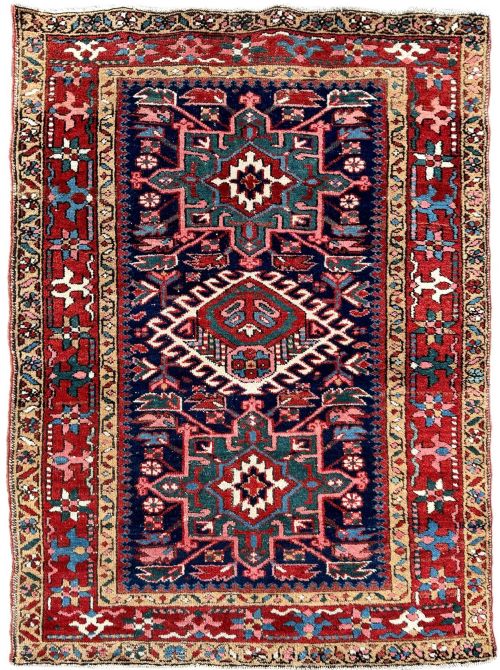
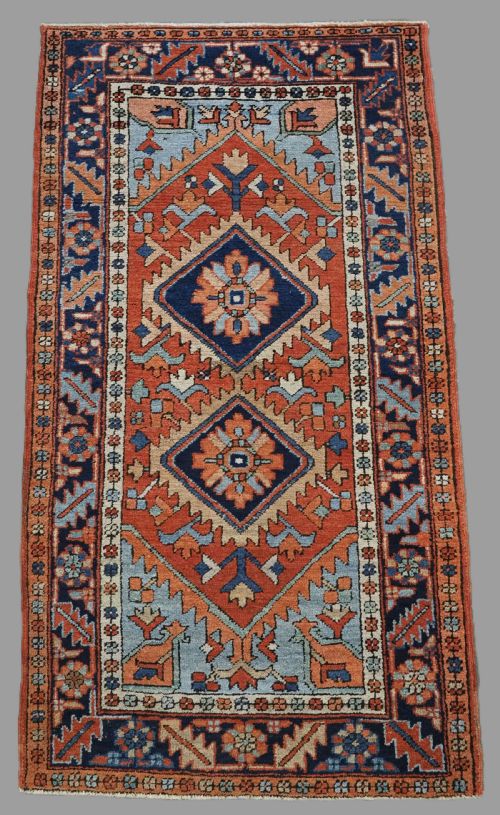
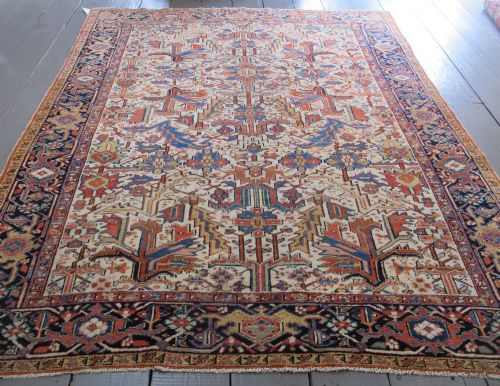
When searching for a heriz medallion rug, you are looking at floor coverings originating from North-West Persia, typically spanning from the late nineteenth century into the early twentieth century. These pieces appear as large carpets, small area rugs, hearth-sized formats, and narrow runners.
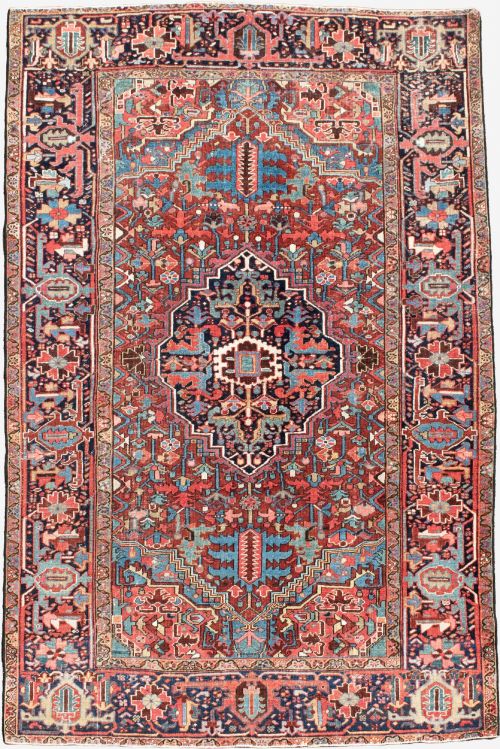
The version most commonly met on this page is an antique wool piece featuring a distinct central medallion set against a patterned field. These rugs emerge from village workshops and regional weaving traditions associated with Heriz, Serapi, Karadja, and Bakshaish.
How they were made
These textiles rely on hand-spun wool knotted onto cotton warps, combining natural resilience with firm structural integrity. The materials are worked by hand to create durable pile surfaces designed to withstand heavy daily use.
Weavers employ traditional regional techniques, utilising dyed wool yarns to build geometric motifs and large-scale central medallions. The construction relies on sturdy foundations that allow these carpets and runners to survive across generations.
Heriz Medallion Rug Retail Price Guide 2026
Typical asking prices for heriz medallion rug among the pieces listed under this phrase on Sellingantiques today, from the lower quarter to the upper quarter. They describe what is for sale here now, not the wider market.
Some runners are so narrow they make a hallway look like a very grand tightrope.
What varies in quality
The distinction between tiers of these rugs rests upon the precision of the geometric drawing and the vibrancy of the dye palette. Finer examples display crisper execution of the central medallion and greater harmony among secondary motifs.
Variations also emerge in the choice of materials, such as the use of hand-spun wool, and the overall balance of the composition. Better pieces maintain structural integrity alongside bold, clear patterning across the field.
The Heriz Medallion Rug Glossary
- Medallion
- A large central ornamental design set into the middle of the rug field. This geometric focal point defines the typical visual layout of the region.
- Warp
- The vertical threads stretched tightly on the loom that form the foundational skeleton of the rug. Cotton warp threads provide stability to the finished textile.
- Pile
- The dense, soft surface of looped or cut wool yarn standing up from the foundation. This layer absorbs wear and displays the woven pattern.
- Runner
- A long, narrow format of rug designed for hallways, corridors, or staircases. These pieces measure significantly longer than they are wide.
- Serapi
- A sub-style of Heriz carpet often associated with slightly earlier weaving periods and broader, more open geometric designs. These pieces are prized for their spacious artistic composition.
Heriz Medallion Rug: Frequently Asked Questions
Where were these rugs made?
These rugs were produced in North-West Persia, specifically within the town of Heriz and the surrounding villages and districts including Karadja, Serapi, and Bakshaish. Local weavers utilised traditional designs passed down through generations.
Each village contributed distinct regional variations to the standard geometric formats while maintaining the characteristic central medallion layout found across the area.
How do I clean an old rug?
Antique wool rugs require gentle care, starting with regular light vacuuming without a rotating brush attachment to remove surface dust. Professional specialist cleaning is recommended for deep washing.
Avoid harsh chemical detergents and excessive moisture, which can damage the natural wool pile and the cotton foundation threads beneath.
Can I use a runner in a hallway?
These narrow formats function well in hallways, corridors, and entryways where their elongated dimensions fit the floor space. The durable wool pile and cotton warp construction withstands regular foot traffic.
Using a suitable underlay helps keep the runner secure on smooth floors and reduces friction against the foundation.
How are different periods told apart?
Distinguishing between periods involves examining the wool quality, dye shades, and structural tightness of the weave. Earlier examples from the nineteenth century often exhibit broader geometric drawing and specific regional colour palettes.
Twentieth-century pieces tend to show tighter knotting and sharper lines in the central medallion and surrounding corner spandrels.