
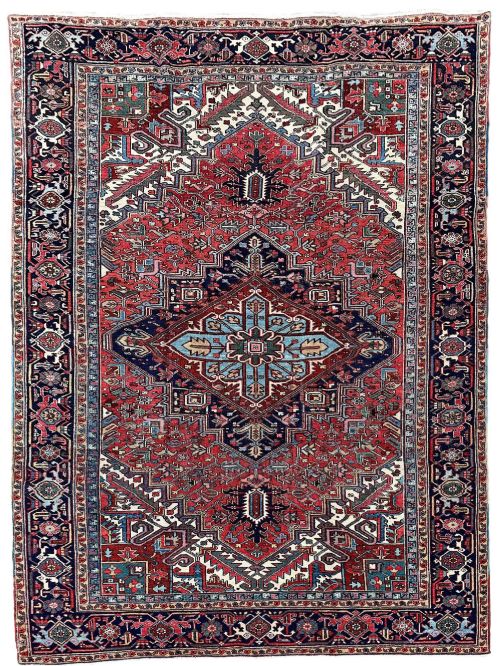
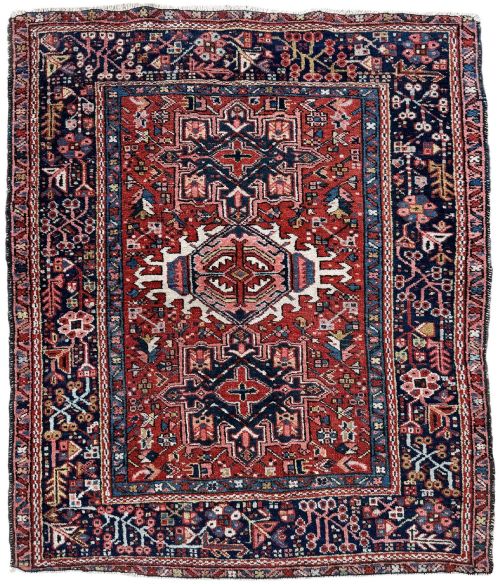
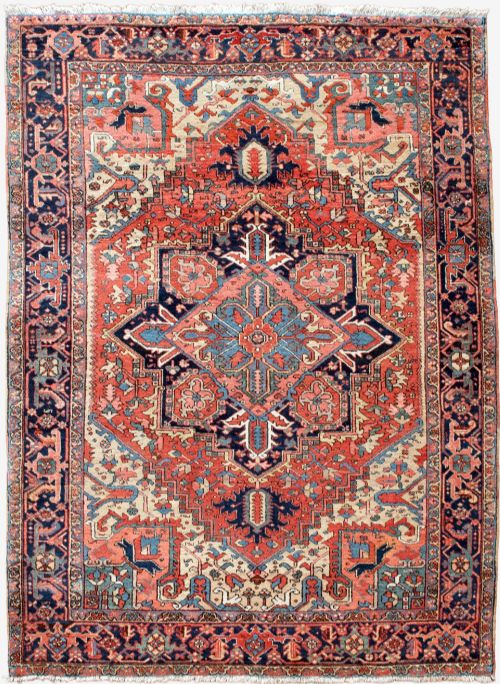

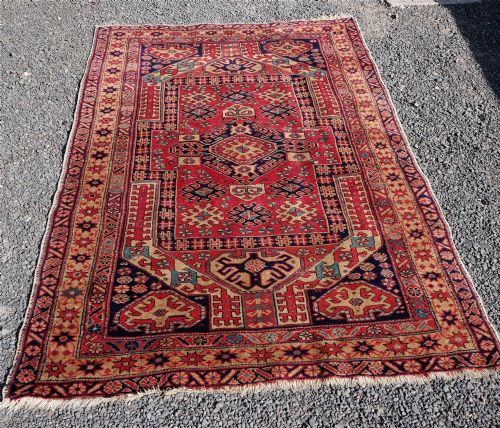

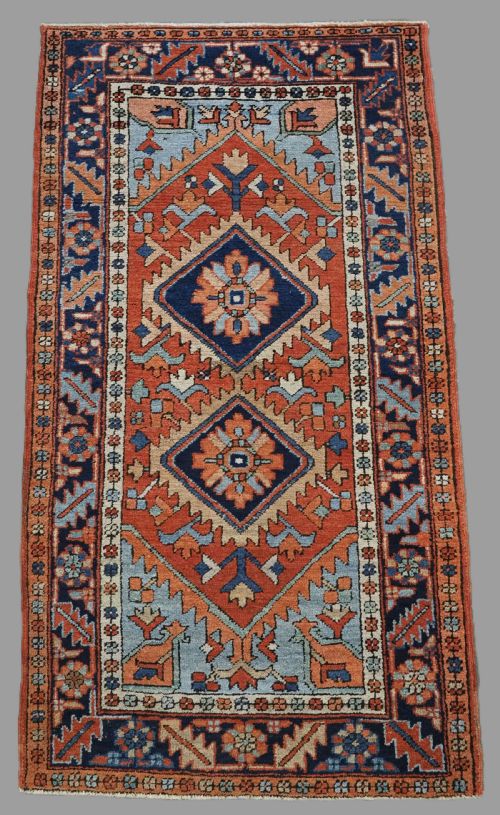
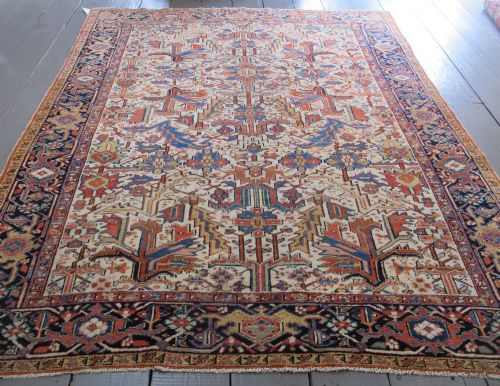
Heriz Medallion Area Rug
A heriz medallion area rug brings distinct Northwest Persian geometry and sturdy village weaving directly to a room.
Heriz Medallion Area Rug
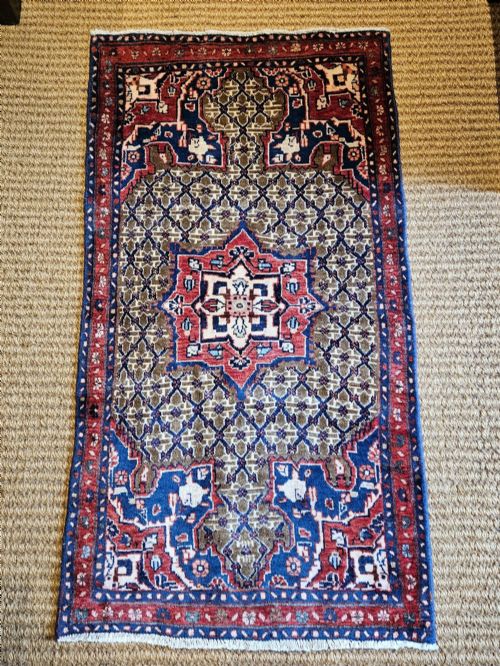
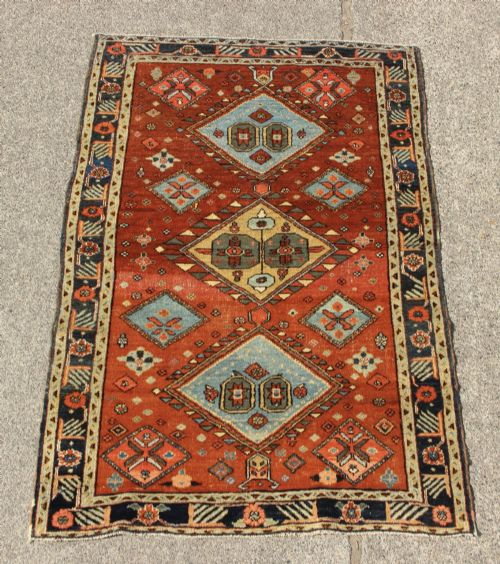
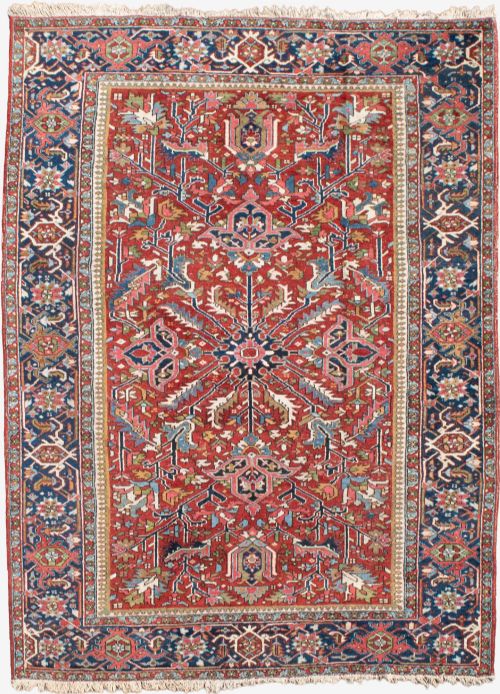
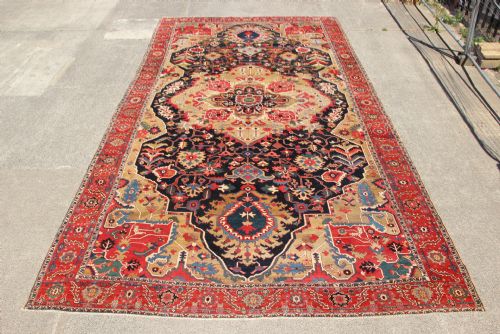
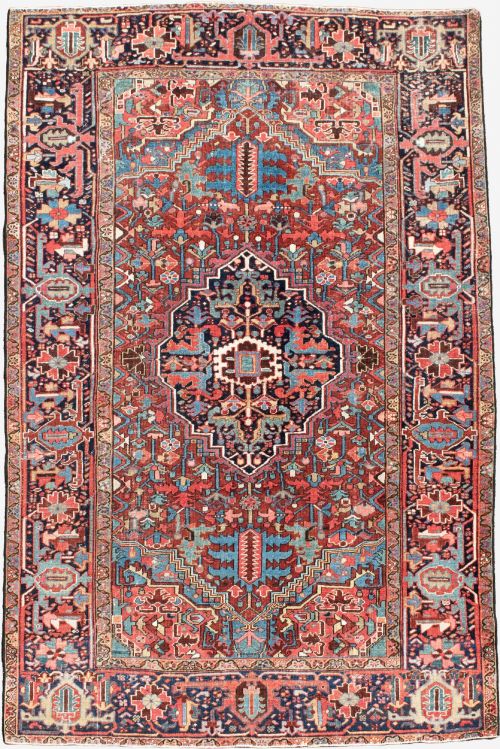
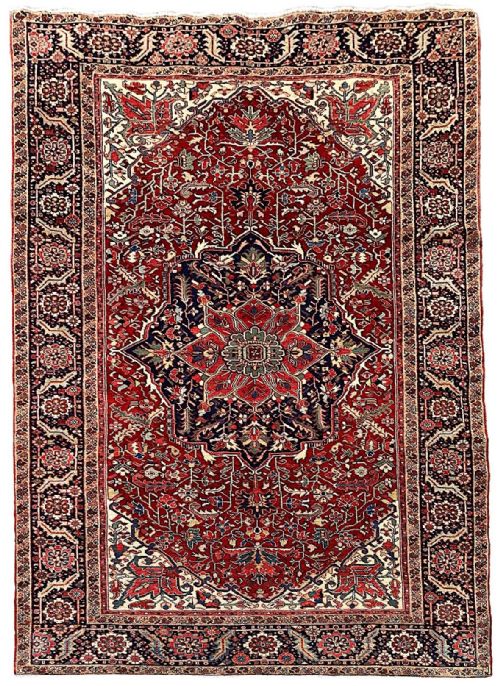
When searching for a heriz medallion area rug, buyers encounter floor coverings originating from Northwest Persia, specifically the town of Heriz and its surrounding villages. These textiles typically display bold, geometric central medallions set against contrasting fields, anchored by substantial corner spandrels.
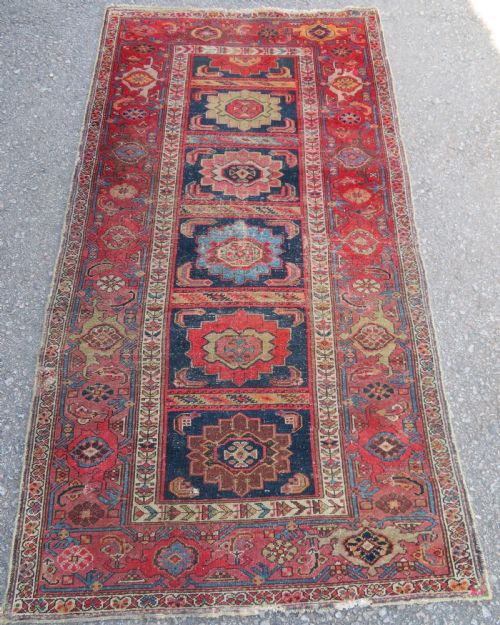
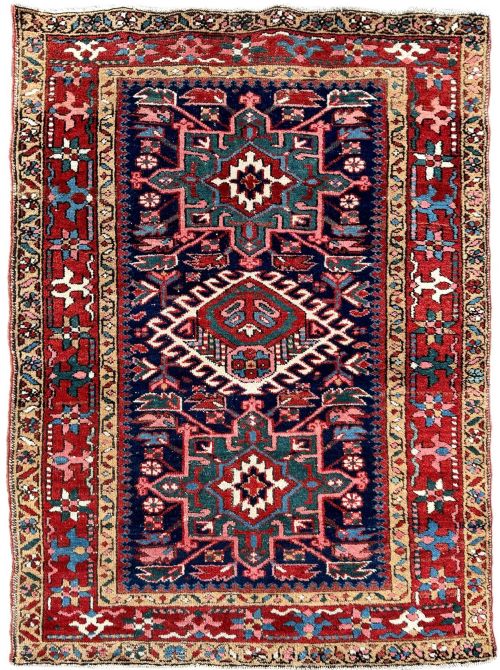
The pieces on this page span from the mid-nineteenth century through the early twentieth century, taking the form of area rugs, hearth-sized formats, and larger carpets. Village weavers produced these floor coverings using traditional geometric vocabulary passed down through generations, distinct from city-workshop floral designs.
Most examples met here date around nineteen hundred to nineteen twenty, reflecting the traditional weaving output of the region. Buyers also encounter related regional village styles such as Serapi, Karadja, and Bakshaish within the selections.
How they were made
The construction relies on durable wool pile knotted onto sturdy cotton warps, providing the structural integrity required for heavy floor use. Village weavers also utilised hand-spun wool for the pile, which absorbs natural dyes with subtle variations in tone.
The distinctive geometric drawing stems from a knotted-pile technique where weavers followed traditional memory patterns rather than precise paper cartoons. This method yields the characteristic angular lines and rectilinear medallion structures that define the region.
Listings span production dates from eighteen fifty to nineteen thirty, showcasing traditional wool and cotton warp construction.
What varies in quality
Quality rests primarily in the clarity of the drawing and the visual balance of the geometric medallion against the field. Stronger examples display crisp, bold lines in the central design and well-proportioned corner spandrels.
The depth and nuance of the natural dyes create another layer of distinction, with certain pieces showing rich, varied tones across the wool pile. The fineness of the knotting and the stability of the cotton foundation also influence the overall character of the weave.
The Heriz Medallion Area Rug Glossary
- Medallion
- The central ornamental design motif placed in the middle of the rug field. In Heriz weaving, this element usually takes a bold, geometric form.
- Spandrels
- The triangular designs located in the corners of the rug field, framing the central medallion. They often repeat colour motifs found in the main border.
- Serapi
- A sub-style of Heriz carpet often associated with nineteenth-century production. These pieces typically feature more open fields and softer, spacious geometric drawing.
- Bakshaish
- An adjacent village weaving tradition known for archaic geometric patterns and earthy palettes. These rugs pre-date many standard Heriz productions.
- Warp
- The vertical threads stretched tightly on the loom that form the foundational skeleton of the rug. Cotton warp threads provide rigid stability.
Heriz Medallion Area Rug: Frequently Asked Questions
How do I style a heriz medallion area rug?
These rugs anchor a room by providing strong geometric contrast against wooden flooring or neutral carpets. Their robust structure suits high-traffic spaces like living rooms and studies.
Allow the central medallion to sit centred within the room layout, keeping surrounding furniture arrangements clear of the main field pattern.
What is the difference between Heriz and Serapi rugs?
Serapi rugs represent an earlier, often coarser weave with spacious, relaxed geometric drawings and muted palettes. Standard Heriz pieces tend to feature denser knotting and bolder, more structured central medallions.
Both originate from the same Northwest Persian region, sharing similar wool materials and village production roots.
Are these rugs durable for daily use?
The combination of thick wool pile and sturdy cotton warps makes these village rugs exceptionally durable for everyday living. Traditional knotting techniques ensure the pile withstands regular foot traffic without losing structural integrity.
Using a quality underlay helps protect the cotton foundation and prevents slipping on hard floors.