
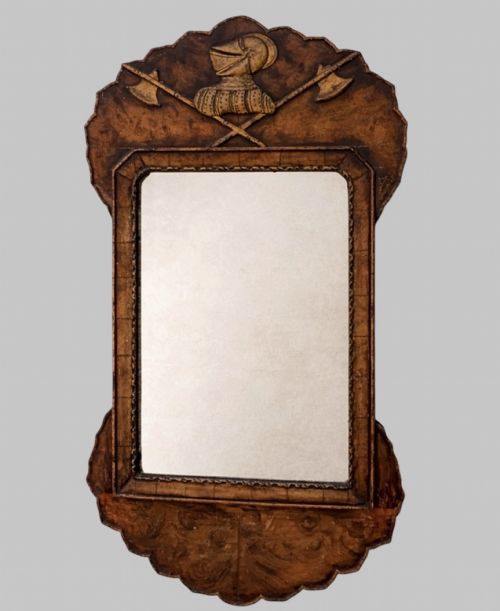


Heraldic Wall Carving
These heraldic wall carving pieces bring centuries of armorial heritage and carved detail into a room.
Heraldic Wall Carving
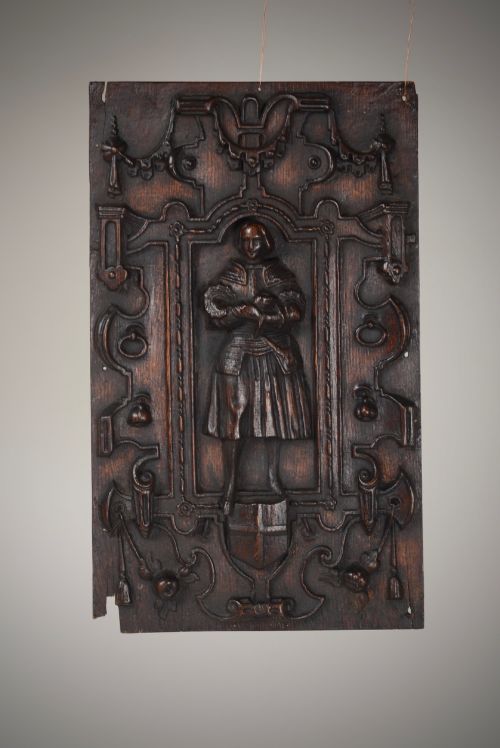
A heraldic wall carving represents family crests, coats of arms, and armorial bearings translated into solid wood or stone for display. Buyers searching for a heraldic wall carving will find pieces ranging from 17th-century panels to 19th-century revival plaques.
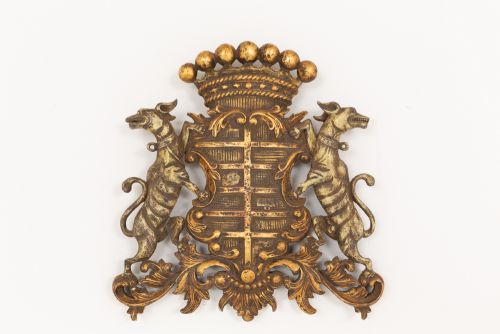
The selection includes wall plaques, armorial shields, carved wooden panels, and mirrors shaped like shields. Many items originate from the 19th century, alongside earlier 17th- and 18th-century examples.
Forms vary from country house console tables featuring family coats of arms to smaller wall sculptures and cartouche emblems. Oak, walnut, and hardwood serve as the primary foundations for these displays.
How they were made
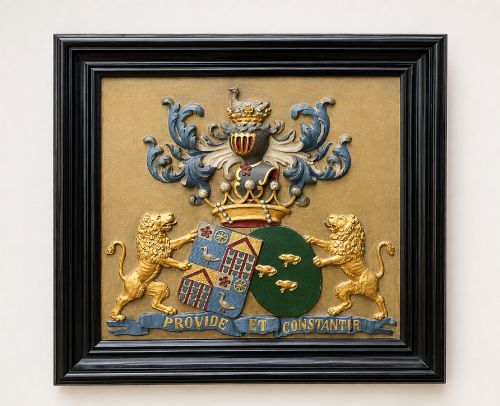
Carvers shaped these pieces from oak, walnut, fruitwood, and other hardwoods using chisels and gouges to build high-relief coats of arms and crests. Some panels incorporate applied elements like gesso, paint, and gold leaf or polychrome decoration to highlight specific armorial details.
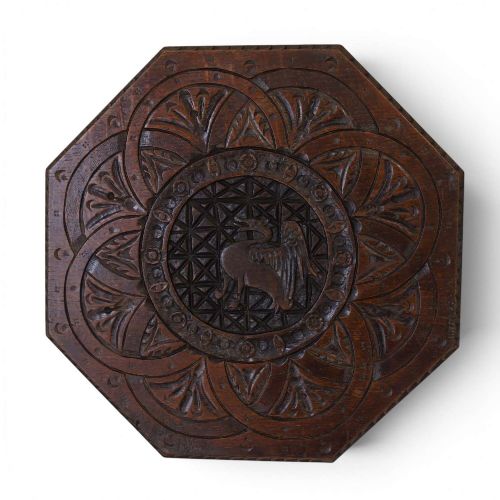
Makers occasionally adapted existing items, such as turning former tabletops or book covers into wall plaques. Frames of brass or additional carved wood were then added to mount these crests securely for interior display.
One piece began its life as a book cover before finding a second career hanging on the wall as an armorial plaque.
What varies in quality
The depth and crispness of the chisel work dictate the sculptural success of the carving, distinguishing sharp armorial details from softer, worn surfaces. The choice of timber also matters, with dense oak and figured walnut providing a more stable and refined base than simpler hardwoods.
Original surface treatments, such as period polychrome paint, gold leaf, or aged gesso, elevate a piece compared to later or stripped surfaces. The cohesion of the design, whether executed in a Gothic Revival, Baroque, or Renaissance Revival style, anchors its visual authority.
The Heraldic Wall Carving Glossary
- Armorial
- Relating to heraldry or coats of arms. It describes items bearing familial or institutional insignia.
- Cartouche
- An ornamental tablet or panel, often oval or scroll-edged, used to hold an emblem or coat of arms.
- Gesso
- A plaster-like mixture applied to wood as a base for paint or gilding. It allows for crisp decorative mouldings around carved elements.
- Polychrome
- Painted in several colours. This finish adds vibrant realism to heraldic crests and coats of arms.
- Gothic Revival
- An architectural and decorative style drawing on medieval forms. It heavily influences many 19th-century oak plaques and shields.
Heraldic Wall Carving: Frequently Asked Questions
How were heraldic wall carvings used originally?
These pieces served as prominent displays of lineage, loyalty, and identity within great halls, country houses, and civic buildings. They marked family alliances, institutional memberships, or royal allegiance.
Over time, owners also repurposed elements like book covers or tabletops into wall plaques for decorative display in domestic interiors.
What woods are commonly found in these carvings?
Oak and walnut appear most frequently among the listed pieces, chosen for their durability and grain. Carvers also utilised fruitwood, hardwood, and occasionally marble.
Surfaces were often left as natural wood, polished, or enhanced with paint and gold leaf.
How do I date a heraldic wall carving?
Dating relies on stylistic clues, such as the heavy geometric forms of 17th-century panels versus the medieval revival motifs typical of 19th-century Gothic Revival pieces. Material construction and documented family crests also help establish the era.
Makers sometimes inscribed specific years or attributed the design to historical periods like the 18th century.