
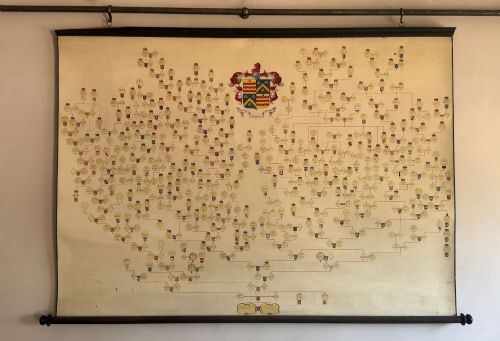

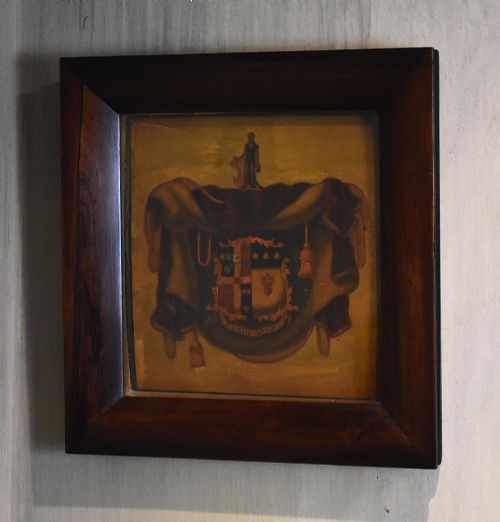


Dark Wood Coat of Arms
These dark wood coat of arms pieces bring carved heraldry and domestic history into a room.
Dark Wood Coat of Arms
A dark wood coat of arms combines heraldic display with solid timber construction, taking the form of wall plaques, fire screens, console tables, and armorial panels. The selection spans centuries from the seventeenth century through the Georgian and Victorian periods, utilising dark timbers such as oak, walnut, and mahogany.
Buyers encounter items bearing specific family crests and pedigrees, alongside broader decorative panels and functional furnishings carved or painted with heraldry. The forms range from small book covers and armorial plaques to large country house console tables and coopered stick stands.
Origins vary across British and Dutch workshops, reflecting both domestic lineage and continental revival styles. These objects served as markers of identity and status within historic interiors.
How they were made
Makers utilised dense timbers such as oak, walnut, and mahogany, shaping them through joinery, turning, and cooperative barrel construction. These foundational wooden structures often incorporated embossed and chased brass or oil paint on panel and paper.
Decorative elements involve carved armorial motifs, painted family crests, and cast iron details. Surfaces display the natural grain of the wood alongside applied heraldic pigments and metalwork.
Some families ensured their pedigree remained visible while keeping warm by incorporating the coat of arms directly onto a fire screen.
What varies in quality
The distinction between pieces lies in the crispness of the heraldic carving and the fidelity of the painted or chased armorial details. Finer examples display precise lineage recording and sophisticated joinery, while simpler items rely on broader decorative forms.
The integrity of the timber and the preservation of original painted or metal surfaces determine the character of each piece. Scale and context, such as large country house furniture versus domestic wall plaques, also define the stature of the work.
The Dark Wood Coat of Arms Glossary
- Armorial
- Relating to heraldry or a coat of arms. This term describes items decorated with familial crests or shields.
- Pedigree
- A line of descent or family tree. In these listings, it refers to documented ancestral records presented visually.
- Coopered
- Made with staves and hoops like a barrel. This technique appears in cylindrical wooden forms such as stick stands.
- Chased
- Ornamented by indenting metal rather than removing it. This metalwork method appears on brass elements accompanying the wood.
Dark Wood Coat of Arms: Frequently Asked Questions
What is a dark wood coat of arms?
A dark wood coat of arms is an antique object, such as a panel, plaque, or fire screen, featuring carved, painted, or metal heraldic imagery mounted on timber.
These pieces record family lineages and heraldic achievements, functioning historically as symbols of identity and status within domestic interiors.
How were these armorial panels used?
Armorial panels and plaques were displayed on walls or integrated into furniture to signify family heritage and allegiance.
Fire screens and console tables combined heraldic display with practical household utility in large country houses and reception rooms.
Which woods are used?
Makers predominantly used dark timbers including oak, walnut, and mahogany for their durability and rich colour.
These woods provided a stable base for carved coats of arms, applied brass, and painted family crests.
How do I identify the period?
Periods are identified through construction techniques, timber selection, and stylistic revival indicators such as Dutch Renaissance or Gothic Revival.
Documented family pedigrees and specific stylistic markers help anchor items within the seventeenth, eighteenth, or nineteenth centuries.