

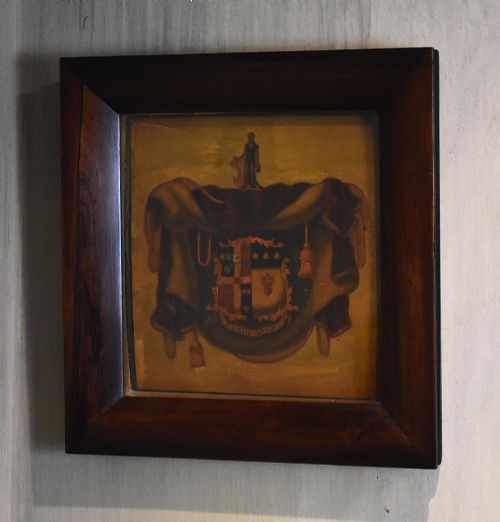
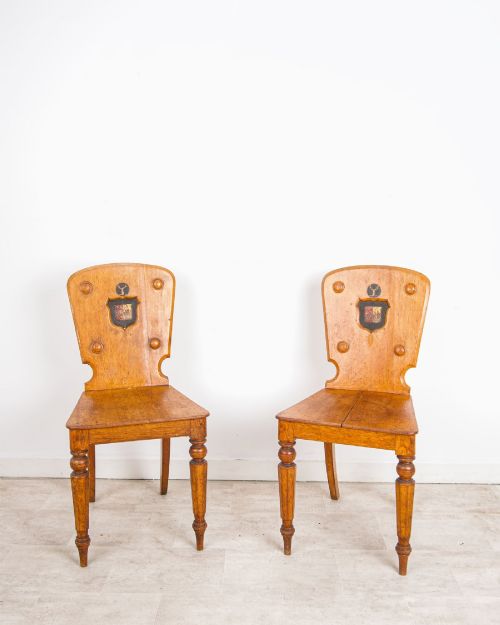

Heraldic Coat of Arms
These heraldic coat of arms pieces carry family identity and civic pride across centuries in iron, wood, brass and porcelain.
Heraldic Coat of Arms
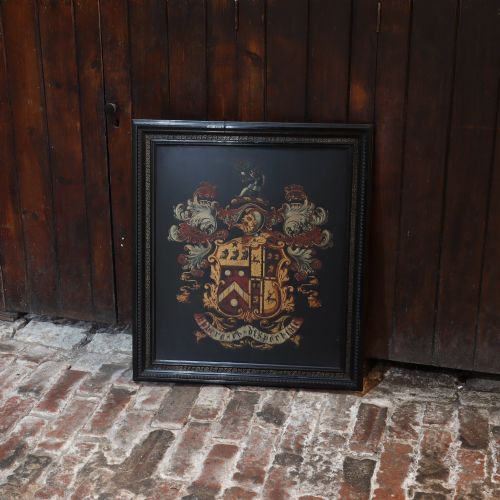
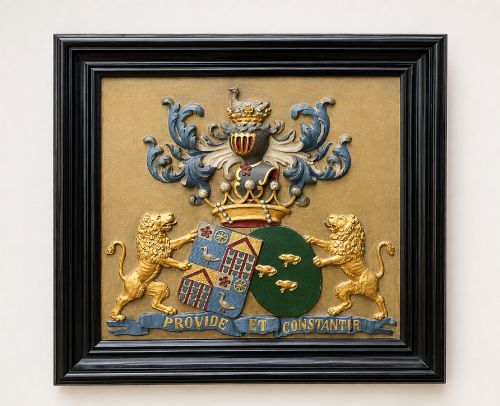
A heraldic coat of arms represents families, institutions, and civic bodies through visual symbols applied to various mediums. When searching this phrase, a buyer encounters wall plaques, decorative plates, painted panels, and fire buckets spanning the Georgian, Victorian, and later periods.
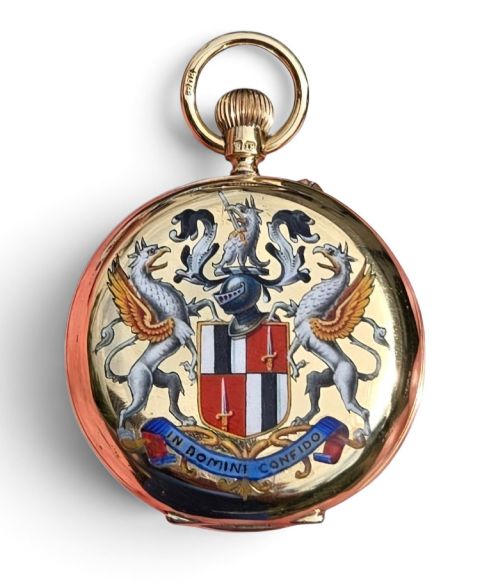
The objects on this page range from monumental cast iron architectural plaques and carved hardwood shields to porcelain plates and pocket watches. These items served as marks of lineage, corporate identity, or official authority in homes, municipal buildings, and railway stations.
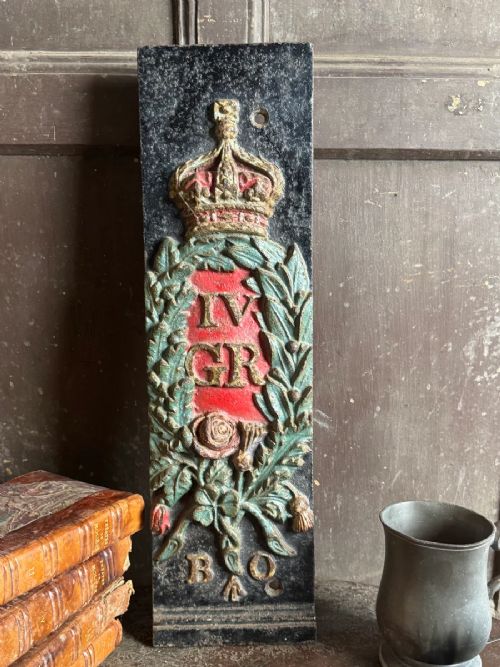
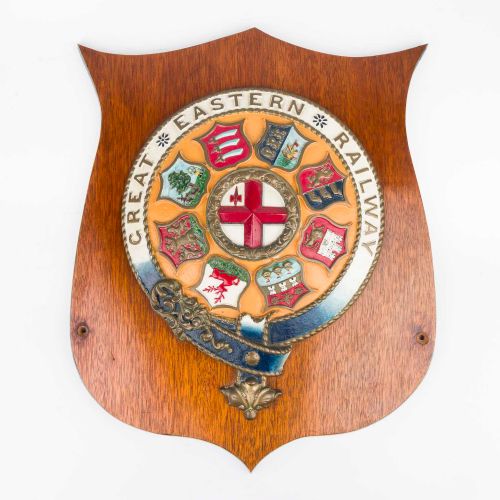
Wall plaques and cast iron panels predominate among the larger survivals, often recording specific family alliances or railway and government crests. Smaller domestic items, including armorial porcelain plates and engraved glass, bring family insignia into everyday dining and display.
Materials and construction
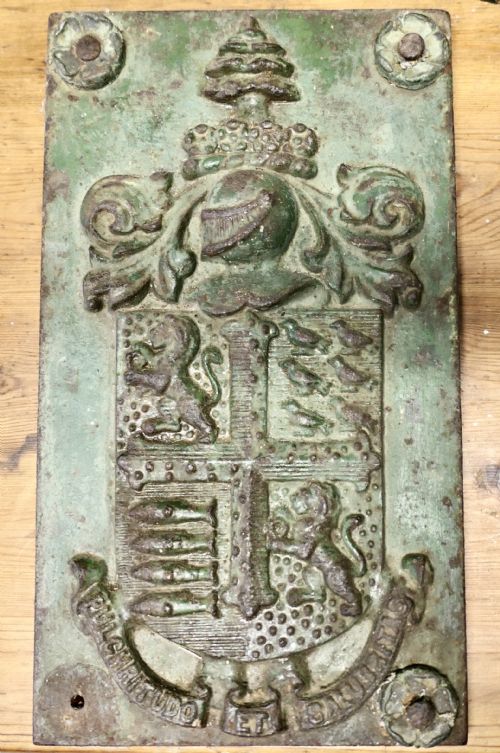
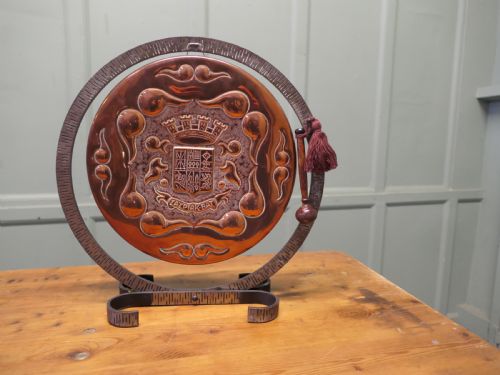
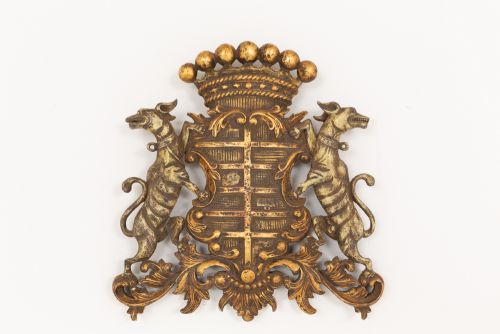
Metalworking techniques shape many of the armorial items, utilising cast iron, brass, bronze, and copper. Founders poured iron into moulds to create heavy architectural plaques, while artisans embossed and chased brass on fire screens and log boxes.
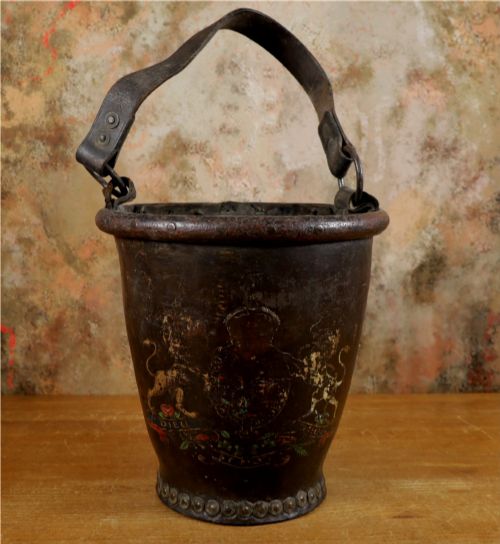
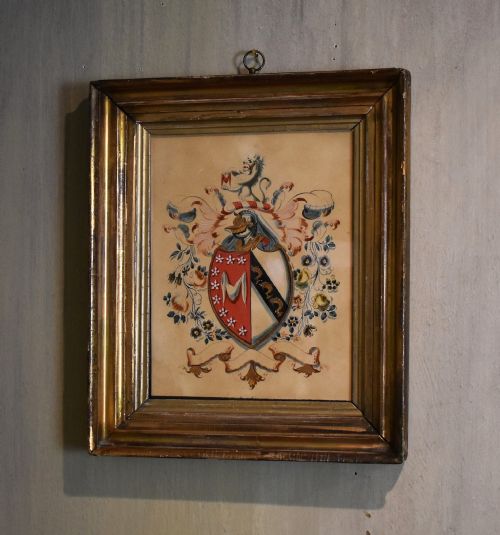
Wood and leather feature prominently in carved hardwood shields, oak hall chairs, and soft leather fire buckets studded with armorial designs. Painters applied oils, watercolours, and gold leaf onto wood panels, canvas, glass, and leather surfaces to render detailed crests.
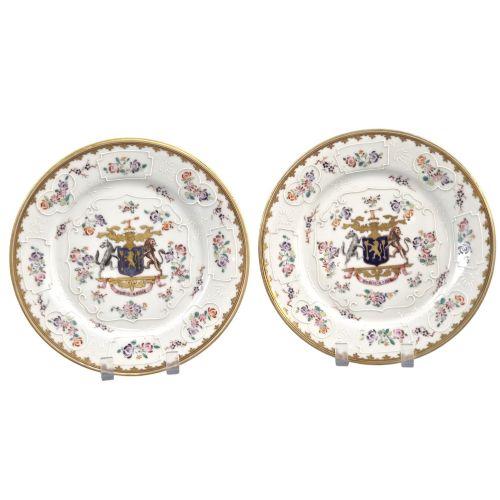
Ceramic pieces rely on porcelain and glazed pottery bodies painted with armorial enamels. Factories such as Coalport and Edmé Samson decorated soup plates, sauce boats, and campana vases with family coats of arms for elite patrons.
A coach panel once rode the highways on the side of a carriage before hanging quietly on a wall.
Quality and execution
The distinction between ordinary and exceptional armorial pieces rests on the precision of the heraldic painting and the crispness of the casting. Finely hand-painted porcelain and meticulously carved wood display accurate tinctures and sharp relief that lesser decorative work lacks.
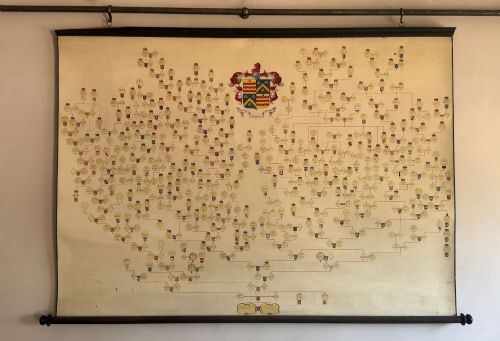
Provenance and documented lineage elevate certain items, such as panels bearing the specific coats of arms of named families or institutions. Maker attribution, whether an established porcelain factory or a known metalworker, similarly separates standard commercial items from distinguished commissions.
R Stewart Glasgow·Wood And Michell
The Heraldic Coat of Arms Glossary
- Armorial
- Relating to heraldry or bearing a coat of arms. This term describes plates, porcelain, and panels decorated with family insignia.
- Crest
- The component of a heraldic display situated above the helmet on a coat of arms. It often appears independently on metalwork and glass.
- Tincture
- The metals, colours, and furs used in heraldry. Proper rendering of these elements defines authentic armorial design.
- Cast iron
- An iron-carbon alloy poured into moulds. It forms heavy architectural plaques and royal coats of arms.
- Famille Rose
- A palette of Chinese porcelain enamels dominated by opaque pink. Armorial plates and sauce boats frequently utilise this decoration.
Heraldic Coat of Arms: Frequently Asked Questions
What is a heraldic coat of arms?
A heraldic coat of arms is a distinct design displayed on a shield or surcoat to identify families, corporations, or nations. These visual symbols follow strict rules of heraldry to record lineage and authority.
Over centuries, these designs moved from battlefields and seals onto domestic objects, architectural plaques, and ceramics. Surviving pieces record historic family alliances and civic bodies through enduring materials.
How were armorial plates used?
Armorial plates functioned as high-status tableware commissioned by noble families and affluent merchants. Displayed during formal dining, they reinforced the lineage and social standing of the host.
Beyond dining tables, many of these porcelain and pottery plates served as cabinet display pieces. Their hand-painted crests transformed everyday vessels into personal statements of identity.
What are cast iron armorial plaques?
Cast iron armorial plaques are heavy relief panels featuring royal or civic coats of arms. Foundries produced them for architectural placement on public buildings, railway infrastructure, and municipal properties.
These durable metal plaques stood up to exterior weather while projecting authority and official status. Today, they survive as substantial wall art reflecting 19th-century civic pride.
How do I date an armorial piece?
Dating an armorial piece relies on examining the material, manufacturing technique, and stylistic conventions of the mounting or vessel. Ceramic bodies, metal casting styles, and framing methods often point to specific decades.
Researching the specific family name or motto inscribed on the piece provides additional chronological context. Surviving records and heraldic rolls link specific coats of arms to documented historical figures.