


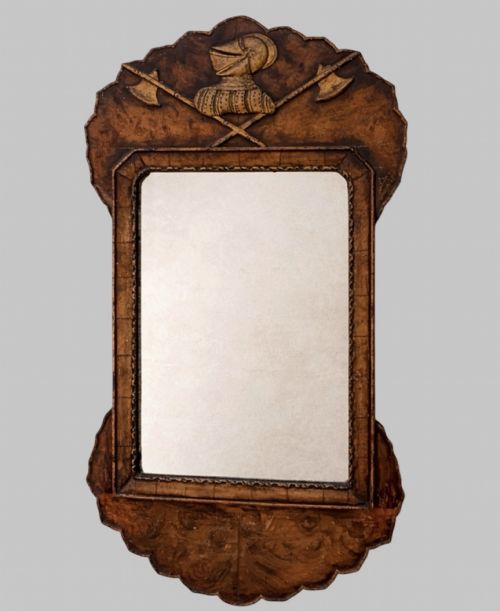


Armorial Heraldic Wall Carving
An armorial heraldic wall carving brings centuries of family lineage, hand-carved crests, and painted coats of arms directly into a room.
Armorial Heraldic Wall Carving
An armorial heraldic wall carving represents family lineages, coats of arms, and civic symbols carved into timber or stone. When you search for this phrase, you encounter wall plaques, shields, console tables with crests, and mirrors set with armorial crests.
The pieces on this page span from the seventeenth century through the Victorian era into the early twentieth century. Oak and walnut form the backbone of the selection, accompanied by carved hardwood, marble, and polychrome pigment.
Stylistic influences range from Gothic Revival and Baroque to Dutch Rococo and Renaissance Revival. Most examples originate from British, Dutch, and Italian workshops, reflecting centuries of heraldic display.
Materials and construction
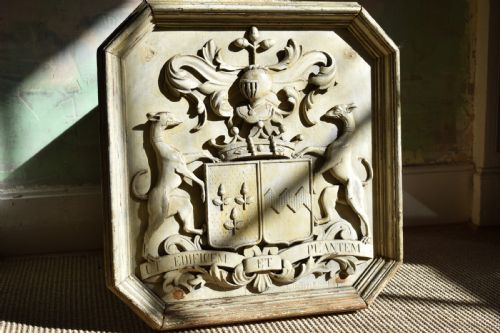
Carvers shaped these armorial pieces primarily from solid oak, walnut, and dense hardwoods, utilising deep relief carving techniques to render intricate mantling, helms, and heraldic beasts. Grain direction and timber selection determined how sharply details like a lion shield crest or family motto could be defined.
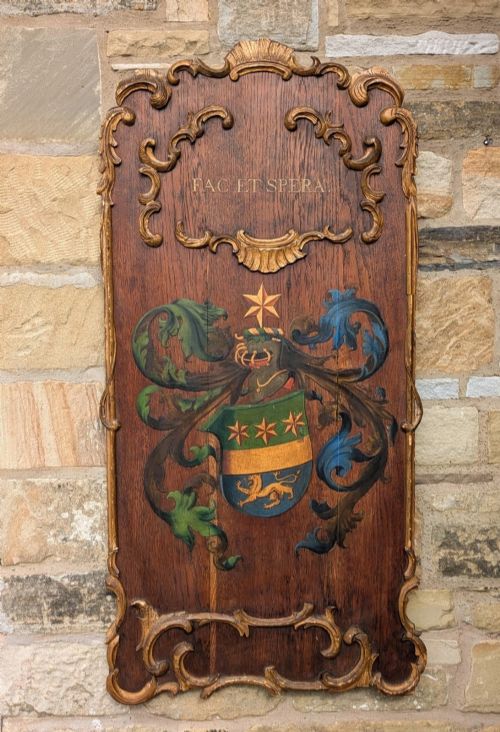
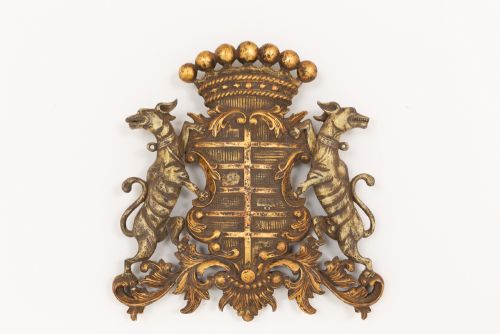
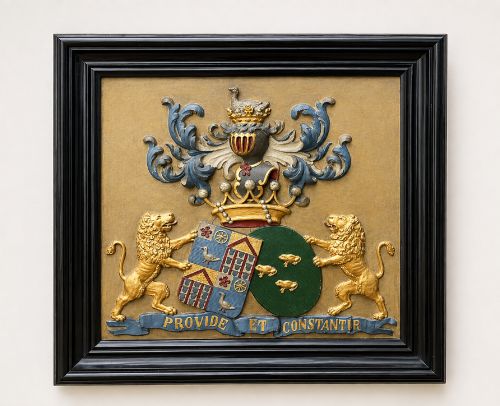
Many items incorporate layers of paint, polychrome pigment, and gilt to highlight the distinct quarters and charges of a coat of arms. In some instances, carved timber elements were inset into brass frames or combined with Italian marble to elevate the piece.
Armorial Heraldic Wall Carving Retail Price Guide 2026
Typical asking prices for armorial heraldic wall carving among the pieces listed under this phrase on Sellingantiques today, from the lower quarter to the upper quarter. They describe what is for sale here now, not the wider market.
One nineteenth-century heraldic lion looks thoroughly startled by his own shield, having clearly spent too long guarding a Dutch hallway.
Assessing quality in heraldic carvings
The standard of a carving rests on the crispness and depth of the chisel work within the mantling and the anatomical accuracy of heraldic beasts such as lions. Superior examples display confident, undercut relief that creates genuine depth, whereas lesser panels rely on shallow, summary incisions.
Original pigment and gilt preservation elevates an armorial plaque, particularly when polychrome details remain undisturbed by later overpainting. The historical documentation linking a specific crest to a known family or country house further distinguishes the piece.
Nanninga Uitterdyke·Van Rijckevorsel And Verheijen·Seton Family·Clifton Family
The Armorial Heraldic Wall Carving Glossary
- Armorial
- Relating to heraldic arms or a coat of arms. These designs were historically used to identify noble families and dynasties.
- Mantling
- The ornamental foliage or scrollwork depicted around and behind the shield on a coat of arms. It originates from the cloth attached to a helmet to protect the wearer from the sun.
- Polychrome
- Painted or decorated in several colours. In heraldic carvings, this refers to the traditional tinctures applied to the coat of arms.
- Crest
- The component of a heraldic display placed on top of the helmet above the shield. It is frequently carved as a standalone wall plaque or shield.
- Relief
- A sculptural technique where the figures project from a background plane. High relief involves deep undercutting that creates strong shadows and dimensionality.
Armorial Heraldic Wall Carving: Frequently Asked Questions
How do I identify the family on a coat of arms?
Identifying the family involves researching the specific charges, chevrons, and mottoes depicted on the shield against historical armorial records. Surviving inscriptions or family names noted in the provenance often provide a direct starting point.
Many pieces record specific lineages, such as the Clifton family or the Seton family, linking the carving directly to a landed estate or historic house.
What woods were commonly used for wall shields?
Oak and walnut predominate among the surviving wall shields and panels, chosen for their durability and suitability for crisp chisel work. Tiger oak and dense hardwoods also appear in nineteenth-century interpretations.
Carvers selected these timbers to withstand the demands of deep relief carving while retaining structural stability over centuries on a wall.
How should I hang a heavy armorial panel?
Hanging a heavy timber or marble crest requires secure fixings anchored directly into wall studs or masonry rather than relying on standard picture wire. Given the substantial weight of solid oak and hardwood panels, professional installation is often necessary.
Ensure the integrated brackets or mounting points on the back of the plaque are load-tested before committing the piece to the wall.
Are painted polychrome carvings original?
Determining originality in paint requires examining the pigment for age-related craquelure, oxidation, and integration with the carved surface underneath. Many nineteenth-century and earlier pieces retain their historic polychrome schemes.
Subsequent touch-ups or complete re-painting occurred frequently over the centuries to keep heraldic colours bright, so microscopic analysis or specialist inspection helps establish the timeline of the paint layers.