

Carved Wooden Shield
These carved wooden shield pieces bring heraldry, carved mahogany, and oak into a room, offering centuries of craftsmanship and wall presence.
Carved Wooden Shield
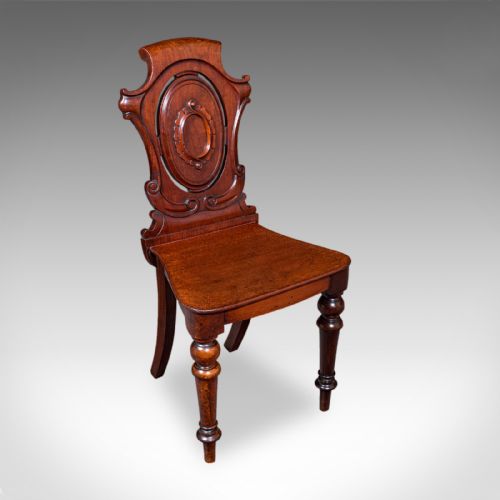
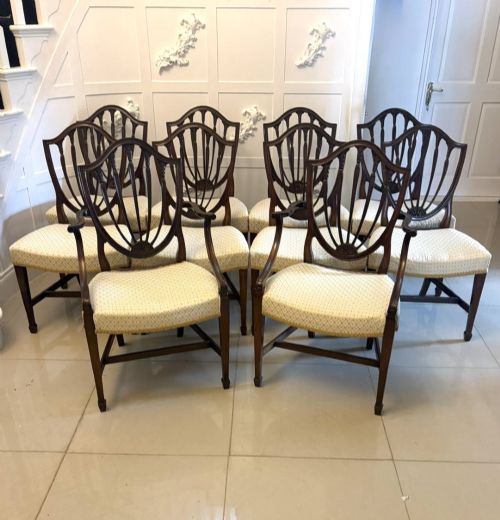
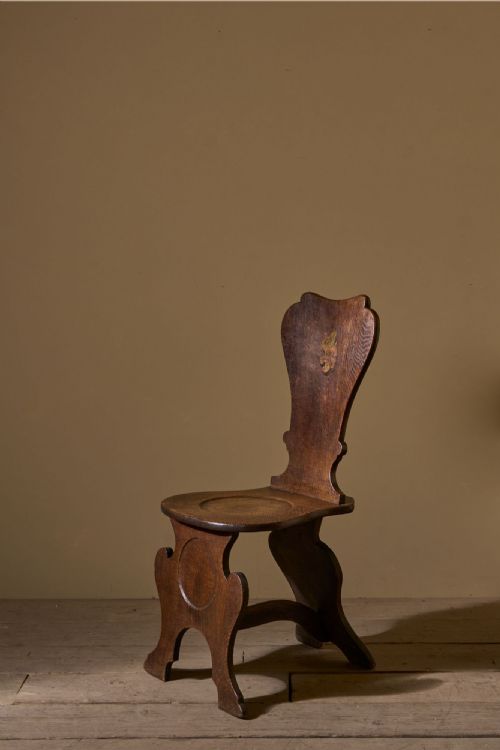
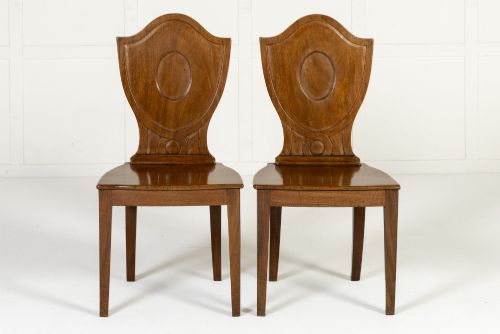
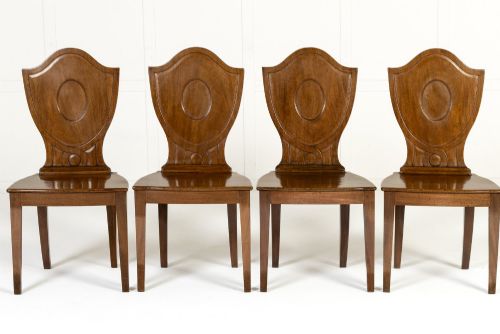
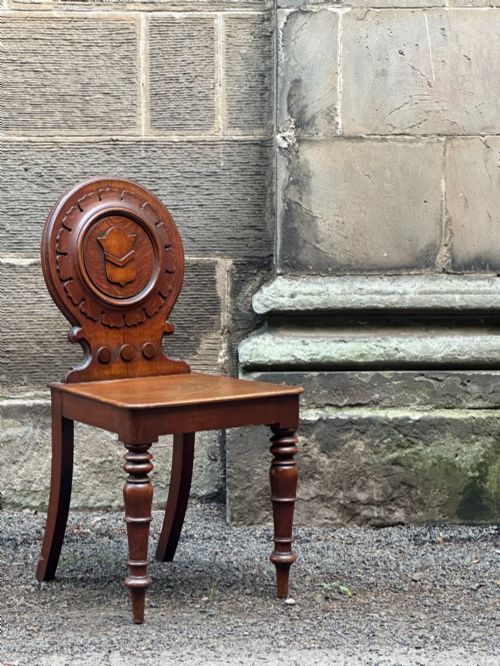
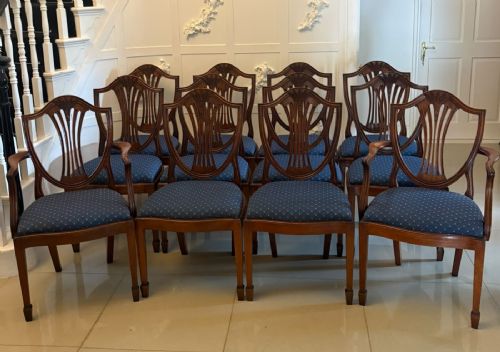
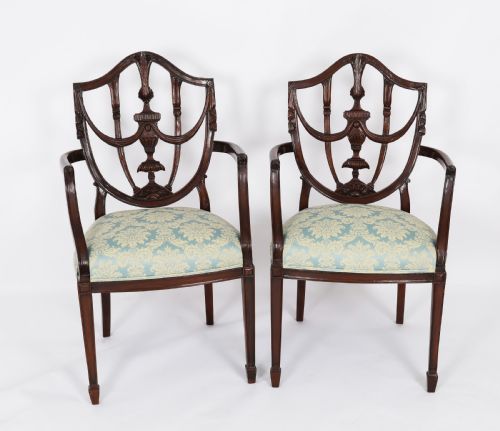
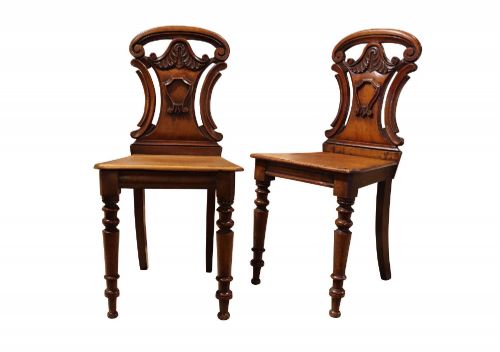
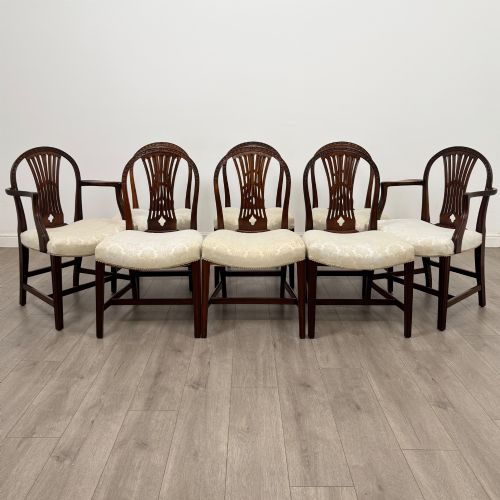
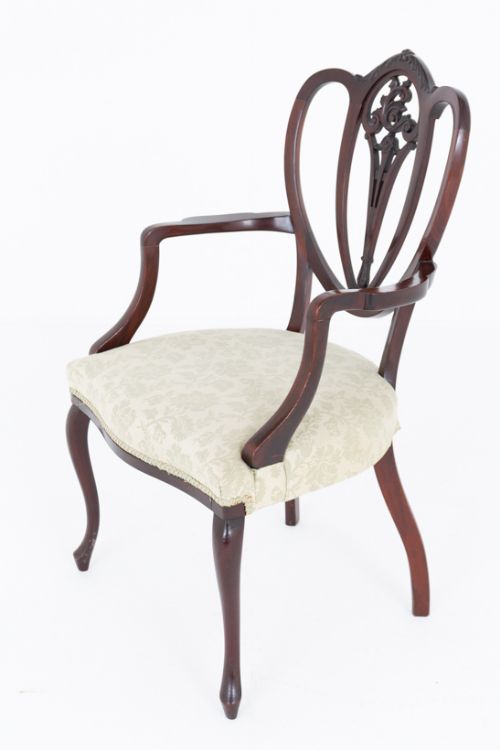
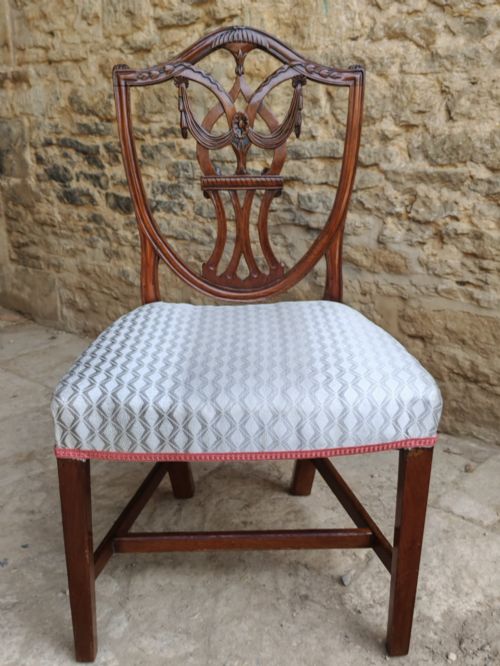
When you search for a carved wooden shield, you encounter a distinct group of antique objects spanning heraldic plaques, armorial carvings, and the shield backs of chairs. The most common form on this page is the shield back chair in mahogany, oak, or walnut, alongside wall plaques bearing heraldry.
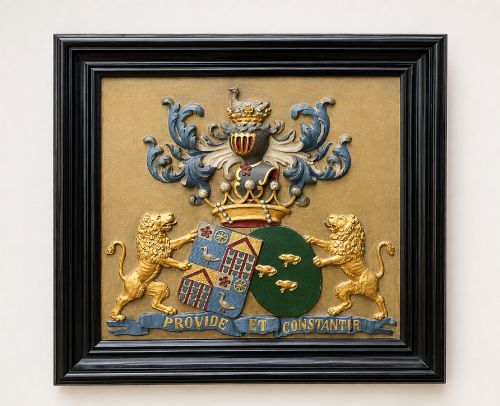
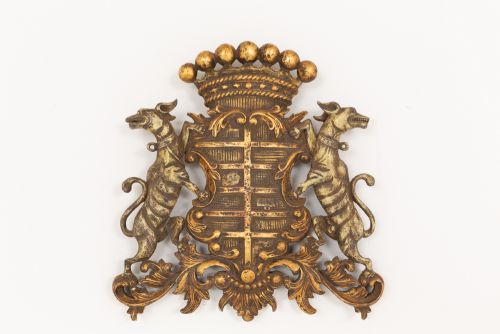
The evidence shows examples stretching from the eighteenth century through the Victorian period and into the twentieth century. Alongside seating, you find carved hardwood armorial shields and Continental plaques carrying coats of arms or painted details.
Makers and workshops produced these forms across British and European traditions, drawing on Georgian and Regency design vocabularies. Whether in the form of a hall chair or a wall mounted plaque, each piece centres on the carved outline of the shield.
What varies in quality
The distinction between standard and exceptional pieces rests in the crispness and depth of the carving. Superior items display undercut details and balanced proportions, particularly in the pierced splats of shield back chairs or the relief work of armorial plaques.
Material selection also dictates the standing of a piece, with figured mahogany and quarter-sawn oak commanding attention over simpler secondary timbers. Original surfaces, retainable patination, and intact heraldic paintwork elevate the status of any shield or chair.
Listings feature mahogany, oak, walnut, and maple across periods spanning the eighteenth, nineteenth, and twentieth centuries.
Maple and Co·Van Rijckevorsel and Verheijen
The Carved Wooden Shield Glossary
- Armorial shield
- A decorative panel carved to display a coat of arms or heraldic symbols. These pieces frequently incorporate paint, brass, or gilded elements.
- Hall chair
- A rigid wooden seat designed for an entrance hall, often featuring a solid carved back rather than upholstery. They frequently display painted or carved family crests.
- Splat
- The central vertical strip of wood in the back of a chair. In shield back designs, the splat takes the curved contour of the upper frame.
- Carver
- An armchair designed to match a set of smaller side chairs around a dining table. They typically incorporate open arms framing the seat.
Carved Wooden Shield: Frequently Asked Questions
Where should I hang a wooden shield?
Wall plaques and armorial shields suit entrance halls, libraries, or living spaces where they can serve as a focal point. Ensure they hang securely on appropriate fixings given the weight of the hardwood.
Keep them away from direct heat sources and strong sunlight to protect any historic paint or polished timber surfaces.
How do I care for antique shield back chairs?
Dust regularly with a soft, dry cloth and feed the wood periodically with a suitable wax to maintain the finish. Avoid commercial silicon sprays which can damage older polishes.
Check the joints and upholstery bindings gently over time, as heavy daily use in a dining room requires stable construction.
What is the difference between a hall chair and a dining chair?
Hall chairs are typically constructed entirely of wood with rigid seats, designed for temporary seating in hallways rather than long dining sessions. They often carry more pronounced carved heraldry or family crests on the back.
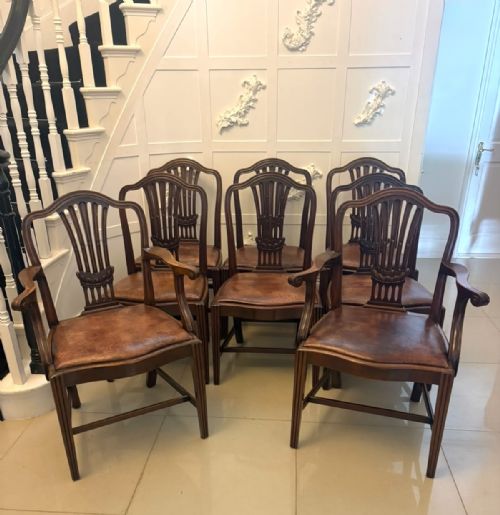
Dining chairs prioritise comfort through padded seats in leather or fabric while retaining the shield back aesthetic.
How can I tell a Georgian shield back from a later revival?
Georgian pieces exhibit eighteenth-century construction techniques, hand-cut joinery, and timber patination developed over long periods. Revival pieces from the Victorian and Edwardian eras often show machine assistance or tighter, cleaner standardisation.
Examine the underside and interior joints for tool marks and timber shrinkage that indicate true age.