
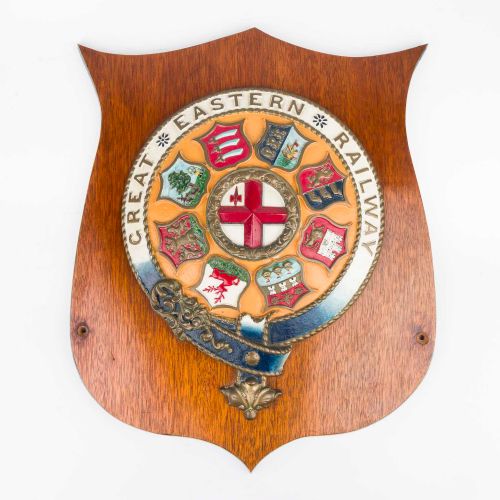


Coat of Arms Plaque
A coat of arms plaque carries history onto a wall, bringing carved wood, cast iron and painted bronze into a room.
Coat of Arms Plaque
A coat of arms plaque represents family lineages, corporate bodies, and civic institutions through heraldic design. These pieces appear across various forms, including wall plaques, armorial shields, and architectural reliefs.
The selection here draws principally from nineteenth-century examples alongside eighteenth-century works and later twentieth-century castings. Materials range from cast iron and bronze to carved hardwoods and painted plaster.
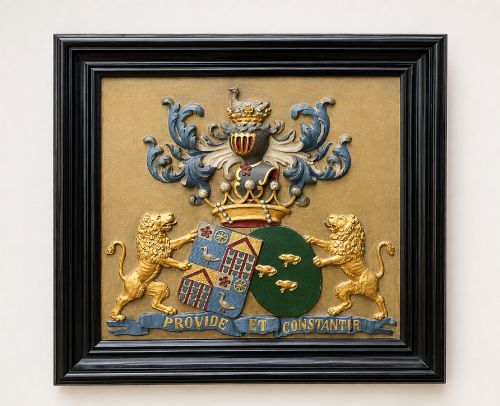
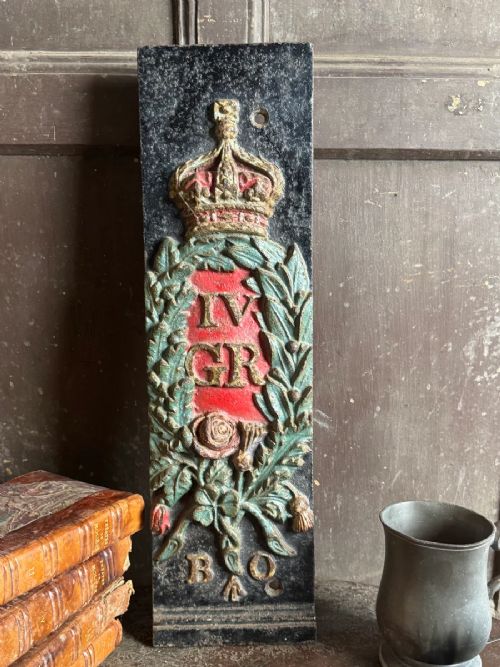
Buyers encounter everything from large iron royal coats of arms to specific railway crests and Dutch marriage plaques. Each object serves as a sculptural record of allegiance or heritage designed for wall hanging.
Materials and construction
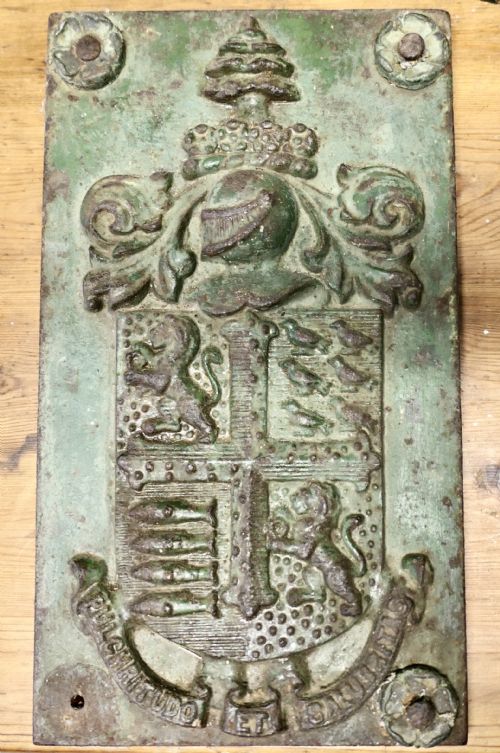
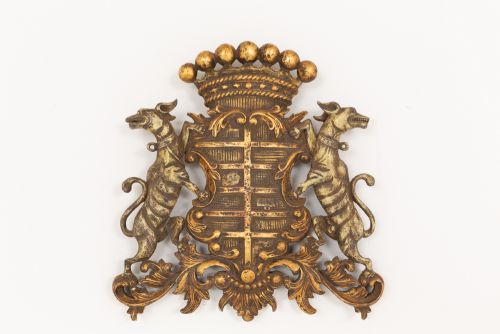
Metal versions rely on foundational foundry work, utilising cast iron, bronze, and brass to achieve sharp relief details. Many iron and bronze examples show traces of original paint, gold leaf, or polychrome decoration applied to highlight specific heraldic tinctures.
Wooden pieces demonstrate traditional carpentry and carving techniques, utilising oak, walnut, and tiger oak. Artisans shaped these hardwoods into armorial shields and panels, sometimes pairing carved wood centres with brass frames.
Assessing quality
Quality rests in the crispness of the casting or the depth of the carving, where sharper lines separate superior armorial shields from softer iterations. The handling of detail in crowns, lions, and mottoes dictates the visual strength of the piece.
Surface preservation significantly influences the standing of a plaque, particularly where original paint, gilding, or patination remains intact. Greater skill shows in how materials like bronze, marble, and hardwood maintain their integrity over centuries.
Van Rijckevorsel & Verheijen·Board of Ordnance·Great Eastern Railway
The Coat of Arms Plaque Glossary
- Armorial
- Relating to heraldry or a coat of arms. These designs display hereditary symbols belonging to families or institutions.
- Polychrome
- Painted, printed, or decorated in several colours. This treatment often appears on carved wooden or plaster crests to denote proper heraldic tinctures.
- Cast Iron
- An iron-carbon alloy poured into a mould to form a rigid shape. This material was widely utilised for heavy royal and civic wall plaques.
- Relief
- A sculptural technique where figures or designs project from a flat background. Many architectural plaques and bronze panels employ this method.
- Gilt
- Covered thinly with gold leaf or gold paint. This finish highlights raised details on metal and wooden shields.
Coat of Arms Plaque: Frequently Asked Questions
Where were these plaques displayed?
Many large iron and bronze plaques hung on municipal buildings, railway stations, and government offices to mark authority and ownership.
Smaller wooden shields and carved panels belonged inside domestic interiors, libraries, and great halls to display family lineages.
How do I hang a heavy iron plaque?
Due to the substantial weight of cast iron and bronze pieces, secure fixings into structural brickwork or strong wall studs are essential.
Professional wall brackets or heavy-duty mirror plates provide the necessary support for safe wall mounting.
What periods do these pieces cover?
The available selection spans from the late seventeenth century through the Georgian and Victorian eras up to the mid-twentieth century.
Nineteenth-century Gothic Revival and Victorian heraldic designs form the largest portion of these historical wall decorations.
How should I clean a bronze plaque?
Dust the surface gently with a dry, soft brush to remove accumulated dirt without disturbing the aged metal patina.
Avoid chemical polishes and abrasive cleaners, as these can strip away original surface finishes and historic paint traces.