


Heraldic Wall Decor
These pieces of heraldic wall decor bring coats of arms and armorial bearings into domestic rooms with carved wood, cast iron, and painted ceramic.
Heraldic Wall Decor
Heraldic wall decor encompasses wall plaques, decorative plates, framed prints, and panels displaying coats of arms, crests, and armorial bearings. These items serve to display lineage, allegiance, or decorative symbolism within interior spaces.
Examples on this page span several distinct periods, including Georgian, Victorian, Edwardian, and mid-twentieth-century pieces. Common formats range from carved hardwood armorial shields and cast iron Royal coats of arms to framed book covers and glazed pottery plates.
The materials utilised in these objects reflect the diverse traditions of heraldic display. Wood, oak, hardwood, gesso, ceramic, paper, glass, cast iron, bronze, and brass all appear across the selection.
Materials and Construction
Carved and painted wood form a significant portion of the heavier wall shields and panels, often utilising oak and other hardwoods finished with gesso and paint. Artisans shaped these materials to give depth and prominence to the relief carvings of crests and armorial bearings.
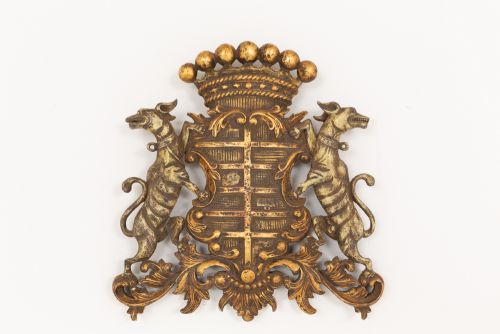
Metalworking techniques are equally prominent, seen in cast iron plaques and heavy bronze or brass plates. These metallic pieces often feature detailed moulding and engraving to render mottos, heraldic beasts, and lineage symbols with lasting durability.
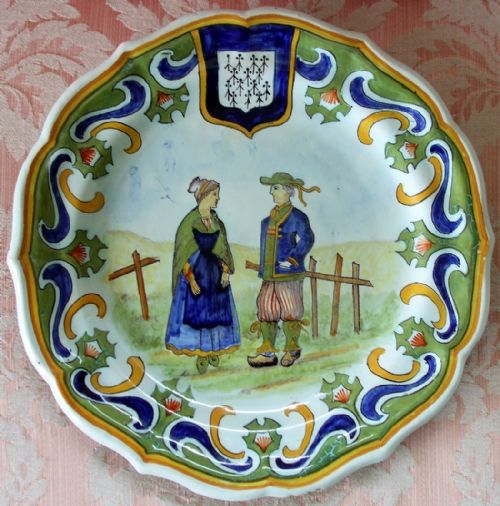
Ceramic and paper works are represented through French faience dishes, glazed pottery armorial plates, and framed scrapbook pages or genealogies. These items employ traditional pottery glazing and hand-painted techniques alongside paper framing to preserve historical documents and artwork.
Listings feature items spanning from the Georgian period through the 19th Century, Edwardian era, and up to 1940.
Assessing Quality in Armorial Art
The execution of the carving or casting determines much of the visual fidelity in these pieces. Finer works display crisp detailing in the heraldic charges, animal figures, and mantling, whereas simpler items present softer or more generalised contours.
Material selection and mounting contribute significantly to the overall substance of an object. Heavy cast bronze and brass plates or deep carved hardwood shields represent a more substantial investment of artisan labour than lighter pressed metals or thin ceramic bodies.
The integrity of the original surface finish, whether hand-painted pigments on wood or high-gloss glazes on pottery, preserves the intended appearance of the coat of arms. Pieces retaining clear inscriptions, mottos, and uncompromised structural frames offer a more complete historical record.
Icilio Federico Joni
The Heraldic Wall Decor Glossary
- Armorial
- Relating to heraldry or a coat of arms. This term describes items bearing official or decorative family crests and symbols.
- Coat of Arms
- A distinct heraldic design on a shield or background. It historically identified noble families, institutions, and clans.
- Faience
- Tinned-glazed earthenware originating in Europe. French faience dishes often feature hand-painted heraldic motifs.
- Cartouche
- An oval or oblong frame enclosing a design, crest, or inscription. These frequently appear on metal emblems and plaques.
- Mantling
- The ornamental foliage or drapery flowing from the helmet in a full achievement of arms. It translates visually into carved or painted scrollwork around a shield.
Heraldic Wall Decor: Frequently Asked Questions
What is heraldic wall decor?
Heraldic wall decor consists of decorative objects that display coats of arms, family crests, and genealogical records. These pieces range from carved wooden shields to cast iron plaques and glazed ceramic plates.
Such items were traditionally used to denote lineage, clan allegiance, or civic pride. Today, they function primarily as decorative focal points for libraries, studies, and hallways.
How were cast iron coats of arms used?
Cast iron coats of arms and armorial plaques were typically mounted on the exterior or interior walls of civic buildings, institutions, and large estates. Their robust metal construction allowed them to withstand exposure while projecting authority and heritage.
In domestic settings, smaller cast iron or bronze versions serve as substantial interior wall ornaments. They offer a strong architectural presence due to their weight and dark metallic finishes.
How do I identify Victorian heraldic pieces?
Victorian pieces often reflect the nineteenth-century revival of gothic and Renaissance styles, manifesting in heavy glazed pottery plates, cast iron Royal coats of arms, and carved wooden shields. These items frequently incorporate deep relief work and distinct Victorian aesthetic traits.
Examining the materials, such as oak panels or heavy earthenware, alongside the specific style of the armorial bearings helps place an object within the nineteenth century.
How should I hang heavy wooden shields?
Heavy carved hardwood shields and cast iron plaques require secure wall fixings suited to their substantial weight. Utilising appropriate wall anchors and engaging structural studs ensures the piece remains safely supported.
Because these items often feature integrated rear hanging loops or brackets, checking the stability of the mounting hardware before installation is essential for protecting both the wall and the antique.