





Relief Coat of Arms
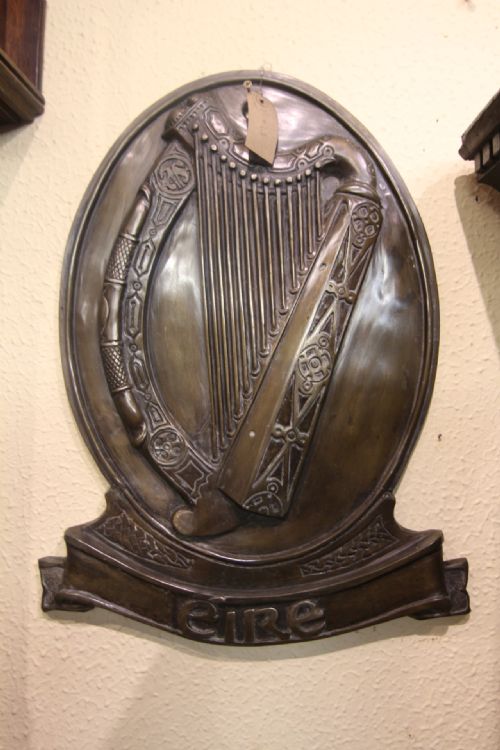
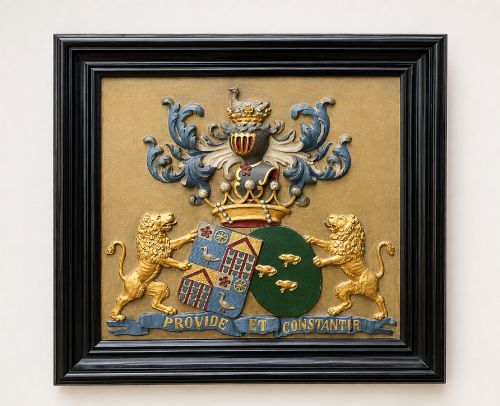
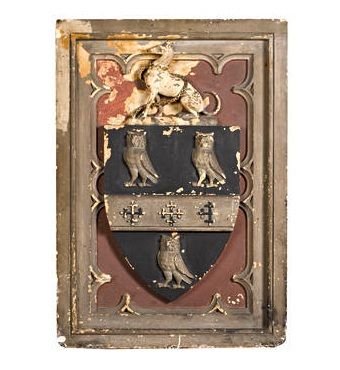
A relief coat of arms brings centuries of heraldic tradition directly to the wall through cast bronze, carved oak, and painted plaster.
Relief Coat of Arms
When you search for a relief coat of arms, you encounter a specialised form of armorial display spanning several centuries. These pieces take the shape of wall plaques, wall reliefs, and heraldic sculpture, designed to record family lineages, institutional allegiances, and official titles.
The selections available here range from nineteenth-century Dutch marriage plaques and Scottish clan crests to seventeenth-century Italian marble and nineteenth-century Gothic revival designs. Wall plaques and armorial panels dominate the offerings, usually executed as single shields or paired lion crests.
Origins stretch across Britain, Italy, and the Netherlands, reflecting both domestic lineage commissions and continental workshops. You meet materials varying from cast bronze and iron to carved tiger oak and walnut, each carrying specific armorial bearings.
Assessing quality and execution
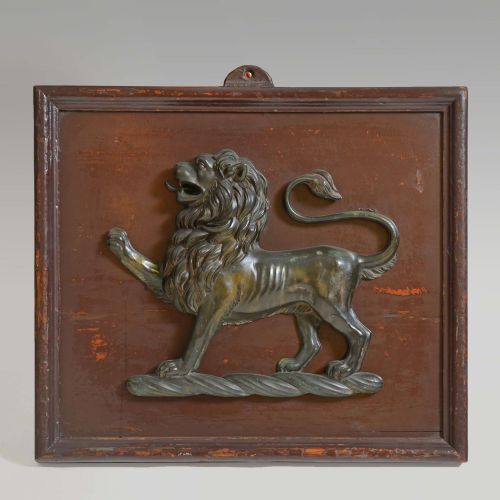
Quality rests upon the crispness of the heraldic carving and the precision of the casting. Finer examples show deeply undercut foliage, legible tinctures where pigment survives, and anatomically convincing beasts such as the lion passant.
Material selection dictates much of the visual weight, with heavy cast bronze and dense carved oak sitting at a different level of craftsmanship than softer painted plaster panels. The historical provenance and documented lineage associated with specific families or institutions further elevate certain pieces.
Relief Coat of Arms Retail Price Guide 2026
Typical asking prices for relief coat of arms among the pieces listed under this phrase on Sellingantiques today, from the lower quarter to the upper quarter. They describe what is for sale here now, not the wider market.
Even fierce heraldic lions occasionally need a gentle dusting behind the ears.
Van Rijckevorsel and Verheijen·Pugin
The Relief Coat of Arms Glossary
- Heraldry
- The system by which coats of arms and other armorial bearings are devised, described, and regulated. It forms the core design principle behind these plaques.
- Lion passant
- A heraldic lion depicted walking with its right forepaw raised and head seen in profile. This specific posture frequently appears on Scottish clan crests.
- Armorial panel
- A flat section of wood, metal, or stone bearing a coat of arms or family crest in relief. These panels often served as interior architectural decorations.
- Polychrome pigment
- Colour applied to sculpture or relief work to delineate different areas of a design. It gives life to armorial shields and crests.
- Gothic revival
- An architectural and decorative style drawing inspiration from medieval forms. This aesthetic heavily influenced nineteenth-century armorial carving.
Relief Coat of Arms: Frequently Asked Questions
What is a relief coat of arms?
A relief coat of arms is a sculptural representation of a family or institutional crest raised from a flat background surface. These pieces were created to display lineage, alliances, and official authority in domestic or civic interiors.
They appear in materials ranging from cast bronze and iron to carved oak, walnut, and marble. Many were designed as wall plaques or overmantel centrepieces.
How were armorial plaques used?
Armorial plaques functioned primarily as symbols of identity, status, and heritage within great houses, public buildings, and offices. Marriage plaques commemorated specific unions, while clan crests marked familial allegiance.
They were mounted directly onto interior walls, above fireplaces, or incorporated into architectural panelling. Their durable construction in metal or hard wood ensured they survived centuries of use.
How do I identify the age of a crest?
Dating relies on stylistic clues, material composition, and the specific fabrication techniques used by the workshop. Nineteenth-century pieces often reflect Gothic revival influences or carry specific historical dates and maker inscriptions.
Earlier examples from the seventeenth and eighteenth centuries show distinct tool marks and weathering consistent with period stone and early bronze casting methods. Examining the reverse side and mounting points also reveals the age of the piece.
Where should I hang a heavy bronze plaque?
Heavy bronze and cast iron plaques require secure anchoring into masonry or reinforced wall studs to support their substantial weight safely. Professional installation is recommended given the density of solid metal and stone sculptures.
Choose a location with stable humidity and temperature away from direct heat sources to protect any remaining polychrome pigment or gilt finishes.