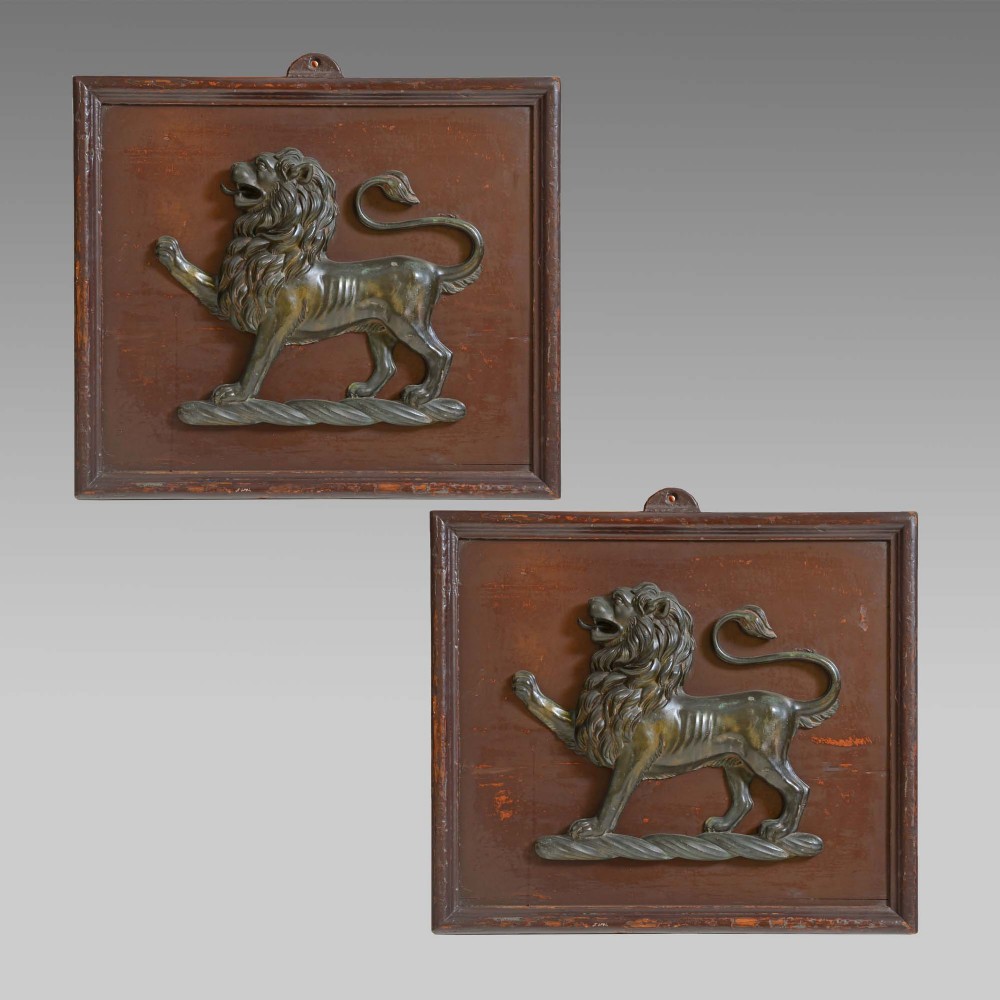
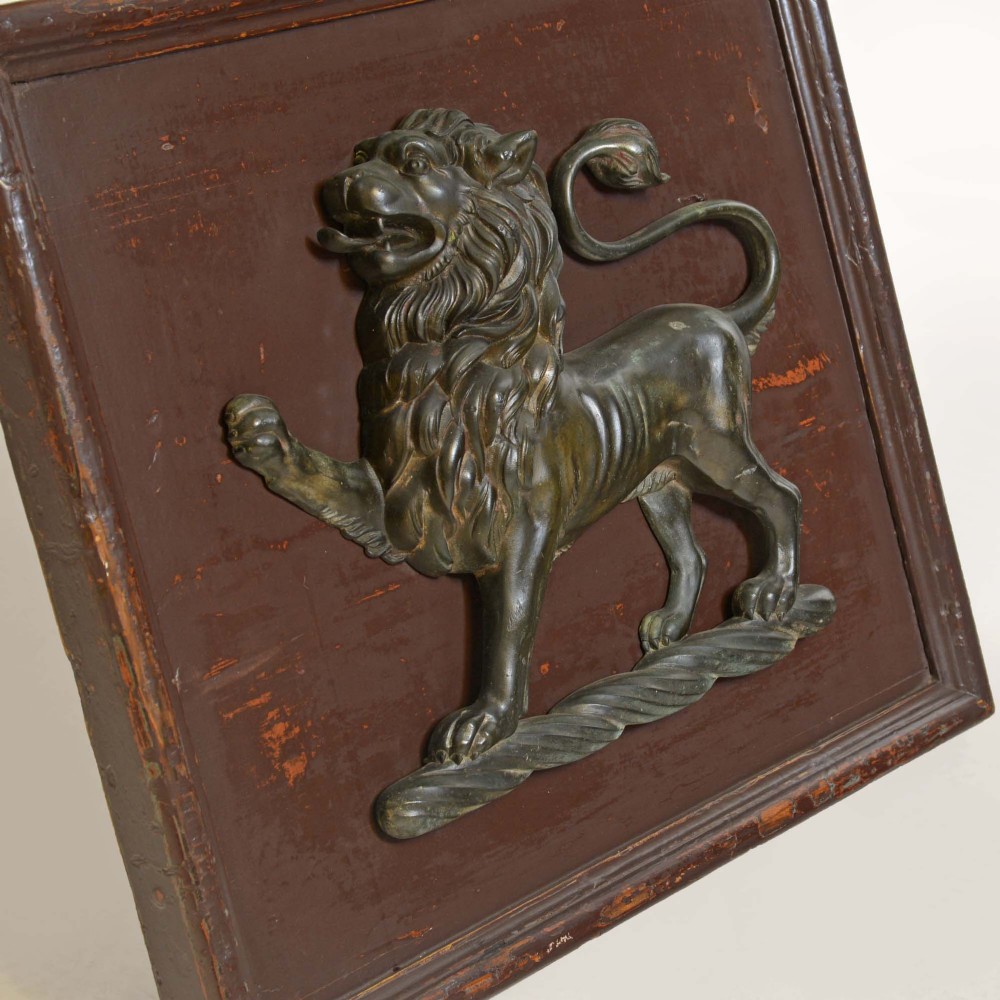
Baggott & Co. has dated this Heraldic Bronze Lion Plaque to the 18th Century.
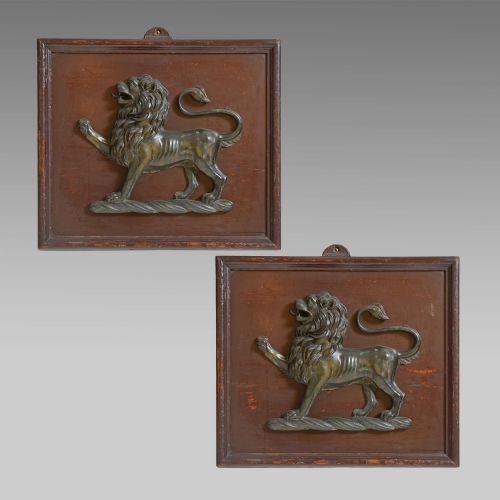
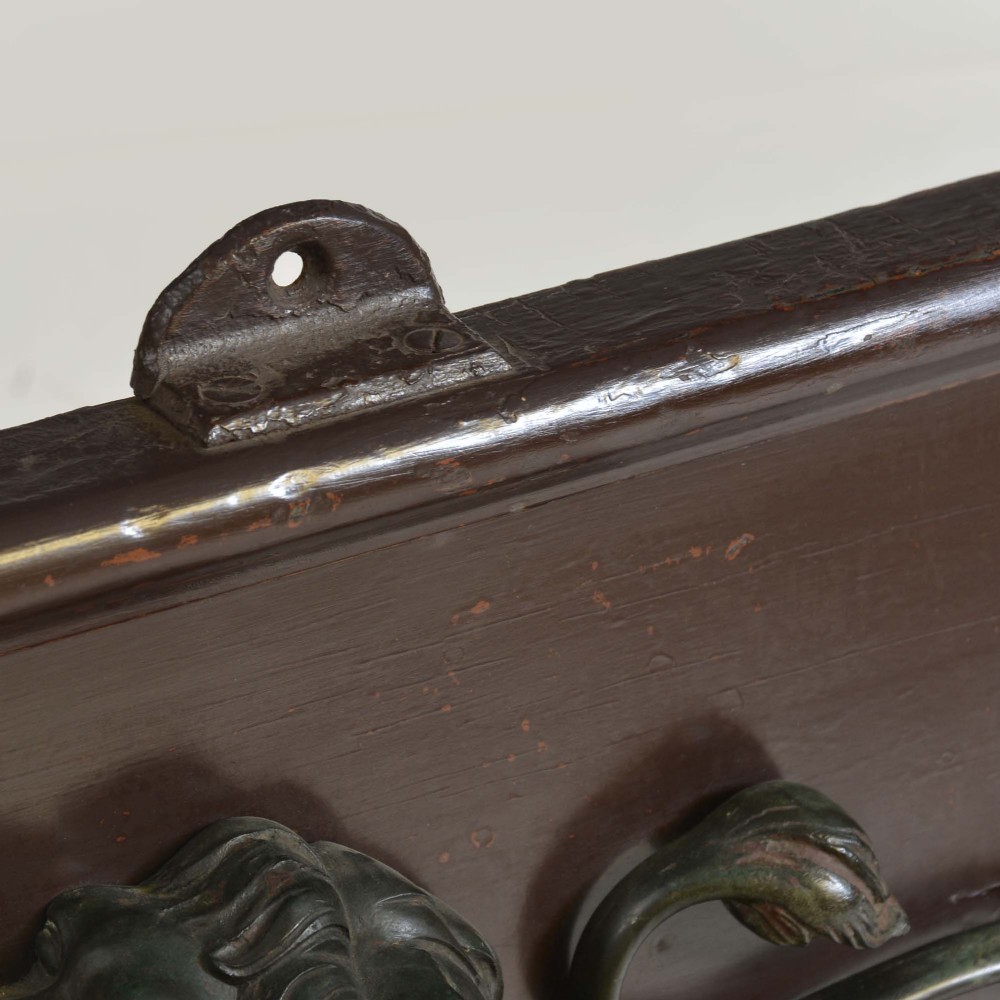
Height of lion 14" (36cm) Board: Height 22" (56cm) x 25.5" (65cm).
Literature:
Glorat, the family seat, is in the Scottish parish of Campsie, Stirlingshire - now renamed East Dunbartonshire. Other branches of Clan Stirling, descendants of de Striveling, include the Stirlings of Kier, Perthshire, and the Stirlings of Cadder, Stirlingshire. The name Stirling was derived from the town of that name, located in a 'tract of country between the firths of Forth and Clyde has been, through all antiquity, famous for battles and rencounters between the different nations who were possessed of North and South Britain'.
Sir John Stirling, received the honour of knighthood in 1430 and armour-bearer to King James 1 of Scotland. He was also governor of Dumbarton Castle and Sheriff of the county of Dumbarton. Sir John obtained the lands of Glorat as a dowry with his wife, the daughter of the Laird of Galbraith and was succeeded by his son, William Stirling, 1st of Glorat, also governor of Dumbarton Castle and sheriff of Dumbarton; from whom lineally descended Mungo Stirling, Esq. of Glorat, who was created a Baronet of Nova Scotia in 1666. The house and lands of Glorat still remain in the Stirling family.
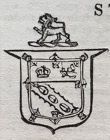
The full coat of arms for Stirling of Glorat depicting:
Argent, a bend, engrailed, azure [blue], charged with three buckles, a naked arm issuing out of a cloud from the sinister side, grasping a sword in pale, therewith guarding an imperial crown in the dexter chief point, all within a double tressure, counter-flowered with thistles, vert [green].
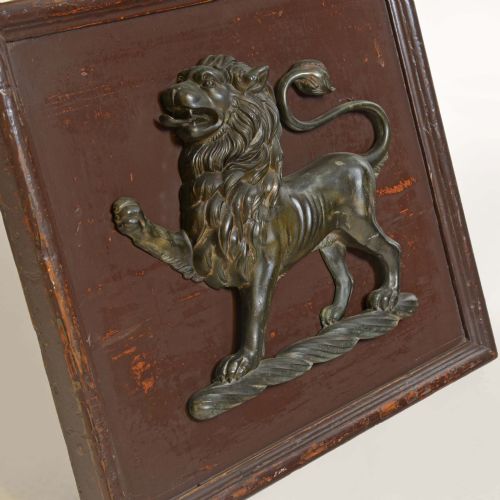
Crest: A lion passant.
Baggott & Co. has dated this Heraldic Bronze Lion Plaque to the 18th Century.
Dealers in antiques and decorative interiors based in the cotswolds and scotland
You can view the stock and full dealer information on the Baggott & Co. Profile Page

Pair Heraldic Bronze Crest of Lion Passant, Clan Stirling of Glorat