


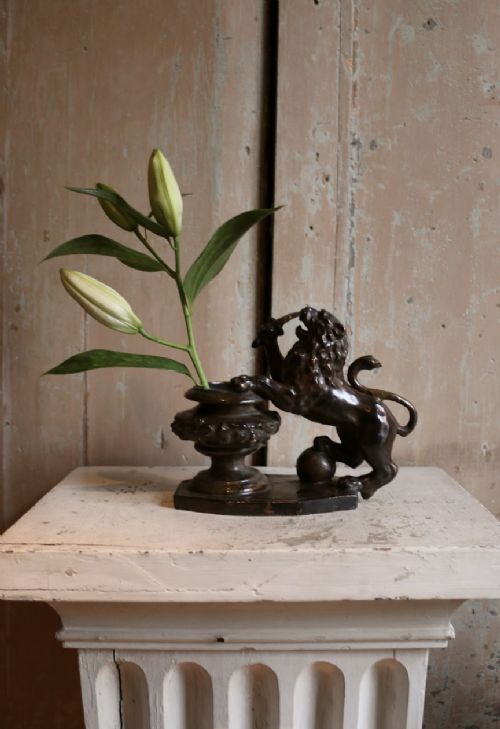


Cast Bronze Lion
These cast bronze lion figures and ornaments range from functional door hardware to French animalier sculptures, shaped by centuries of foundry traditions.
Cast Bronze Lion
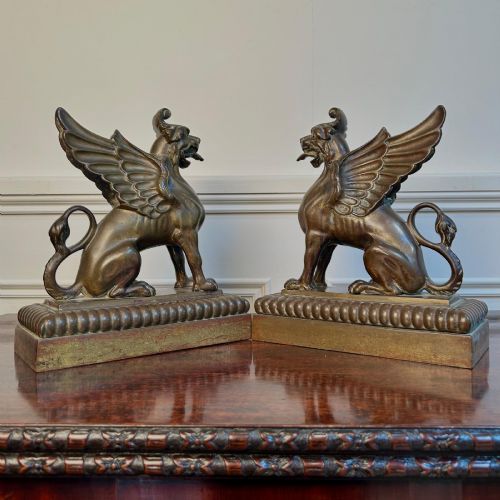
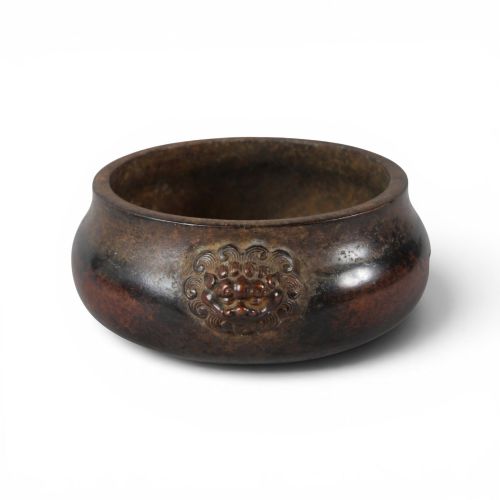
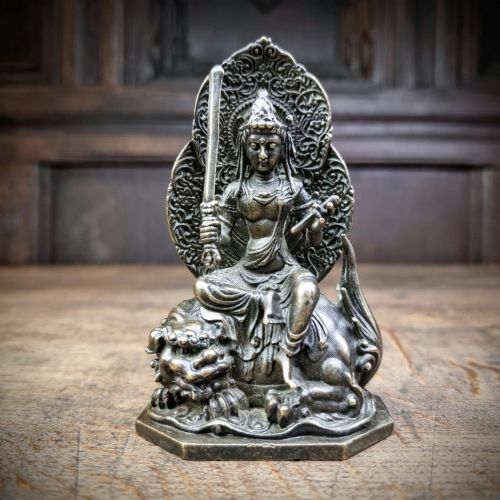
When you search for cast bronze lion, you encounter a varied selection of sculptural figures, heavy doorstops, and temple censers drawn from the nineteenth and early twentieth centuries. European animalier studies sit alongside Qing Dynasty censers and Tibetan temple lions, showing how diverse cultures utilised this powerful feline motif.
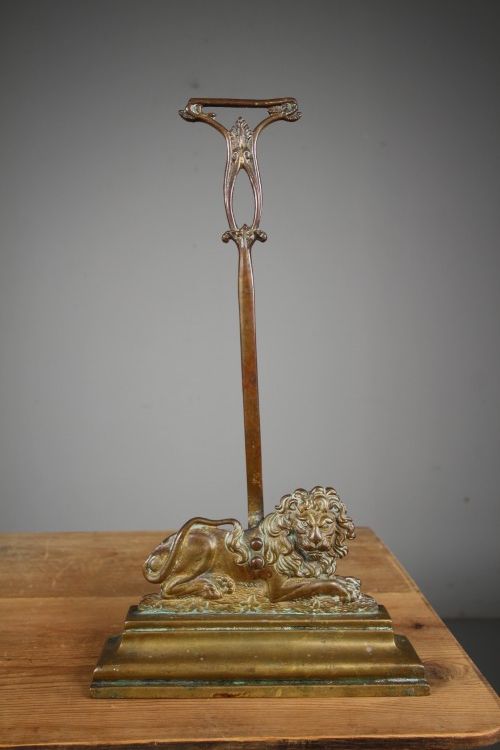
Domestic items such as door porters, inkwells, and bookends appear frequently alongside cabinet bronzes and architectural fireplace fenders. The nineteenth century yields the highest volume of French animalier and Victorian works, while earlier pieces reach back to the seventeenth century in scholar's pieces and armorial plaques.
Materials and casting methods
Foundries utilised traditional metal casting techniques, pouring molten bronze into moulds to capture fine muscular detail and surface expression. Many pieces received patinated finishes, ranging from deep dark tones to cold-painted colour applications, whilst others were combined with marble plinths or timber mounts.
Heavier items, including temple lions and door porters, relied on substantial metal density for stability in architectural settings. Brass and bronze alloys predominate, occasionally complemented by gilt layers or verdigris treatments developed over time.
Listings include items spanning from the seventeenth century through to the 1920s, incorporating bronze, brass, marble, and wood.
Distinctions in craftsmanship
The definition in the musculature, mane texture, and facial expression separates finer foundry work from simpler commercial productions. Superior casts retain crisp detail without losing definition in the finishing chase work.
The depth and stability of the patination indicate the standard of original surface treatment and subsequent care. Heavier specimens often demonstrate superior structural integrity in the metal pour and mount attachments.
Franz Bergman·Paul-Édouard Delabrièrre·G. Gardet·Louis Riche·Al Barye
The Cast Bronze Lion Glossary
- Animalier
- A nineteenth-century artistic movement focusing on the realistic depiction of animals, particularly predators in motion or repose. French foundries popularised this sculptural genre through prolific casting.
- Censer
- A vessel designed for burning incense, frequently surmounted by a foo lion or shishi finial on Asian bronzes. These ritual objects combine practical function with symbolic temple sculpture.
- Door Porter
- A heavy weighted object, also known as a doorstop, designed to keep interior doors open. Cast bronze examples often incorporate sculptural handles or heraldic motifs.
- Cold-Painted
- A decoration method where paint is applied to a bronze object without high-temperature firing. This technique requires delicate preservation to prevent surface flaking.
- Patinated Bronze
- Metal treated with chemicals or heat to alter its surface colour and tone. This finish protects the underlying alloy while creating aged aesthetic depths.
Cast Bronze Lion: Frequently Asked Questions
How do I clean a bronze lion?
Dust the surface gently with a soft, dry brush to remove particles without disturbing the underlying patination. Avoid abrasive cleaners or polishes that strip historical finishes.
Apply a microcrystalline wax sparingly if protection from atmospheric moisture is necessary. Professional conservation advice remains recommended for significant antique bronzes.
What is a temple lion?
Temple lions, also known as foo dogs or shishi, serve as traditional guardian figures placed outside sacred spaces. They symbolise protection and architectural warding in Asian decorative arts.
Cast bronze versions often appear in pairs, with male and female figures guarding entrances or serving as decorative finials on censers.
How can I tell the age of a bronze?
Examine the wear patterns on the base, the composition of the alloy, and the characteristics of the patination. Foundry marks and stylistic indicators help narrow the period of production.
Comparing construction methods against known historical examples provides further context for dating. Earlier pieces often display distinct hand-finishing marks from older casting traditions.
Where should I display a heavy door porter?
Place the piece on firm flooring near heavy interior doors where its weight provides practical utility. Ensure the base rests evenly to prevent scratching vulnerable timber surfaces.
Many collectors also display door porters on tabletops or hearths simply as sculptural objects. Their dense construction makes them stable focal points in interior arrangements.