



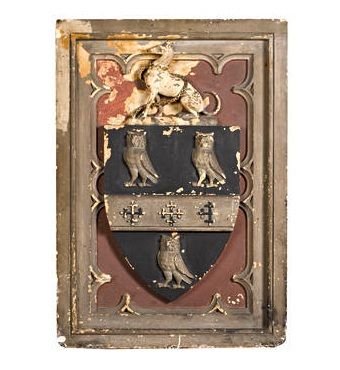


Heraldic Relief Panel
These heraldic relief panel examples carry centuries of lineage and craft in carved wood, bronze and paint.
Heraldic Relief Panel
When you search for a heraldic relief panel, you are looking at armorial displays, family crests and commemorative plaques executed in carved timber, cast metal and plaster. These objects served as symbols of lineage, alliance or authority, designed to be mounted on interior walls or displayed within stately rooms.
The versions you are most likely to meet on this page span the seventeenth through the mid twentieth century, with a strong representation of nineteenth century Gothic revival work. They take the form of wall plaques, carved wooden panels and armorial book covers, often featuring specific family names and dates.
Origins stretch across Britain, the Netherlands and Italy, utilising regional timbers like oak and fruitwood alongside cast bronze and polychrome pigments. Each piece records a distinct visual vocabulary of heraldry, from marriage plaques bearing joint coats of arms to military and civic emblems.
Materials and construction
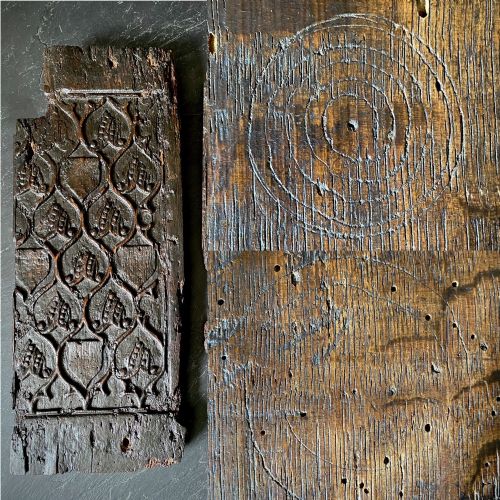
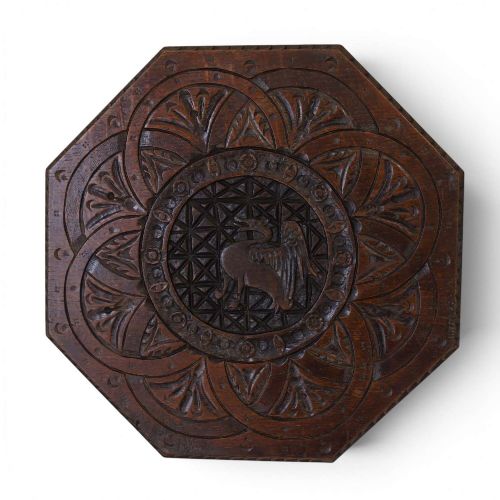
Makers shaped these panels primarily from hardwoods such as oak, walnut and fruitwood, employing deep relief carving to bring coats of arms and figures into prominent three dimensional focus. Tool marks left by gouges and chisels often remain visible across the timber surfaces, revealing the hand methods of past woodcarvers.
Heraldic Relief Panel Retail Price Guide 2026
Typical asking prices for heraldic relief panel among the pieces listed under this phrase on Sellingantiques today, from the lower quarter to the upper quarter. They describe what is for sale here now, not the wider market.
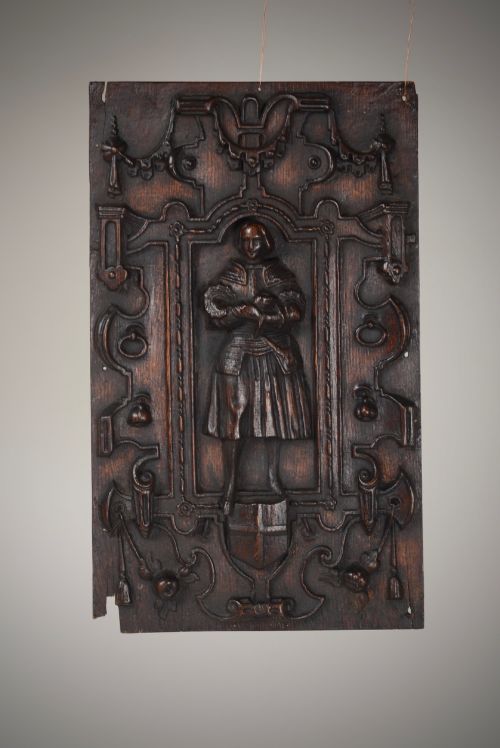
Colonel Sir Edward Massey shares wall space here with Joan of Arc and a Glasgow ministry.
What separates the fine examples
Quality rests in the crispness and depth of the modelling, whether through the precision of the woodcarver's chisel on oak and fruitwood or the sharp definition of a bronze casting. Finer pieces display anatomical accuracy in portraiture and correct heraldic detailing, whereas simpler items rely on more rudimentary surface work.
The preservation of original finishes, including polychrome paint, gilding and natural patina, elevates the integrity of a panel. Pieces that retain their historic surface without excessive modern restoration offer a clearer view of their original decorative intent.
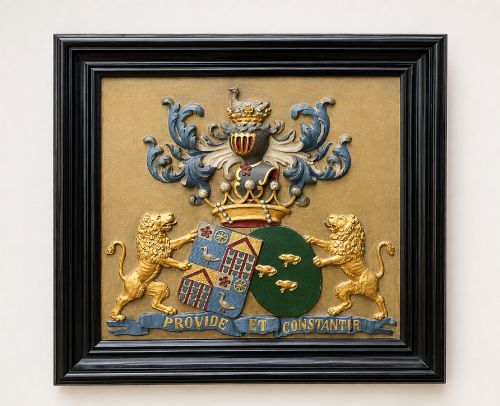
Van Rijckevorsel and Verheijen·Ministry of Supply Glasgow·Seton Family
The Heraldic Relief Panel Glossary
- Heraldic
- Pertaining to heraldry, the system of devising, displaying and recording coats of arms. It provides the visual language of lineage and family crests seen on these panels.
- Armorial
- Relating to armorial bearings or a coat of arms. An armorial panel displays specific familial insignia.
- Gothic Revival
- An architectural and decorative style drawing inspiration from medieval forms. This style heavily influences nineteenth century panels through pointed arch motifs and tracery.
- Polychrome
- Decorated in several colours. This describes panels enhanced with painted pigments or applied finishes.
- Relief
- A sculptural technique where the sculpted elements remain attached to a solid background of the same material. High relief projects boldly from the plane.
Heraldic Relief Panel: Frequently Asked Questions
How were heraldic relief panels originally displayed?
These panels were typically mounted on the interior walls of significant homes, civic halls or libraries to display family lineage and civic pride. Many functioned as architectural elements or commemorative markers within private rooms.
Some smaller examples, such as armorial book covers or portable plaques, served specialised protective or decorative roles before finding their way onto walls as standalone works of art.
What materials are most common?
Oak and fruitwood form the foundation of most wooden panels, offering a stable medium for intricate relief carving. Walnut and cast bronze also appear frequently in nineteenth century pieces.
Surfaces are often enhanced with polychrome pigment, paint, or gilt to delineate heraldic tinctures and add visual depth to the carved or cast designs.
How do I identify the period?
Dating relies upon stylistic markers such as Gothic revival motifs, the character of the woodcarving, and any inscribed dates or names. Seventeenth century pieces generally show simpler, deeper timber work, while nineteenth century examples often incorporate sharper machinery-assisted preparation alongside hand finishing.
Materials also offer clues, as cast bronze and painted plaster armorials become more prominent during the Victorian and later periods.
Can I hang them on modern walls?
Most of these pieces are designed as wall plaques or panels with suitable flat backs or hanging provisions. Their substantial wooden or bronze construction requires secure fixings to support the weight safely.
Keeping them away from direct sunlight and sudden humidity changes helps protect the historic wood, bronze, and painted surfaces.