


Antique Armorial Plaque
These antique armorial plaques carry centuries of lineage, carved, cast and painted to mark alliances and estates.
Antique Armorial Plaque
An antique armorial plaque is a sculptural relief bearing heraldic bearings, family crests or royal coats of arms designed for wall mounting. When you search for an antique armorial plaque, you encounter pieces spanning from the seventeenth century through to the mid twentieth century. The selection ranges from monumental cast iron royal emblems to carved hardwood marriage plaques and smaller brass-framed oak crests.
Most examples originate from British, Dutch and Italian traditions, executed in materials that reflect the status of the household they represented. Wall sculptures and heraldic panels appear in various formats, including timber marriage shields and bronze reliefs bearing specific family names or ministry titles.
Materials and construction
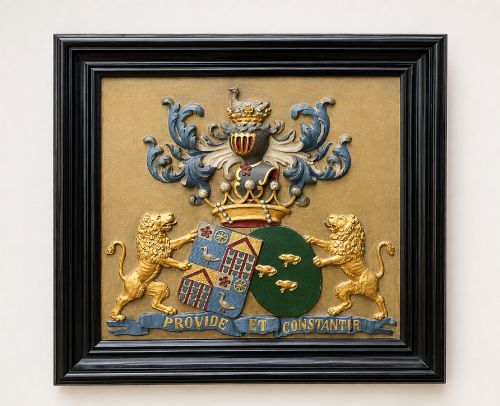
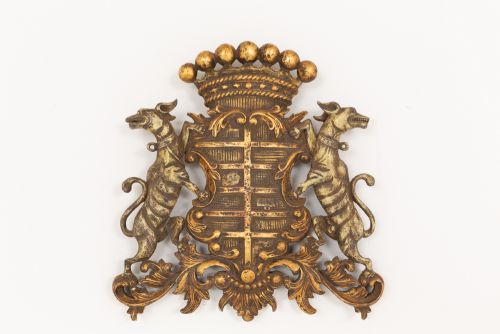
Carvers shaped heavy timbers such as oak, walnut and hardwood into deep relief shields and panels, sometimes applying polychrome paint and gold leaf to highlight the heraldic charges. Metal pieces utilise cast iron and bronze, often finished with paint or left in their natural dark metallic state to define the intricate contours of the coat of arms.
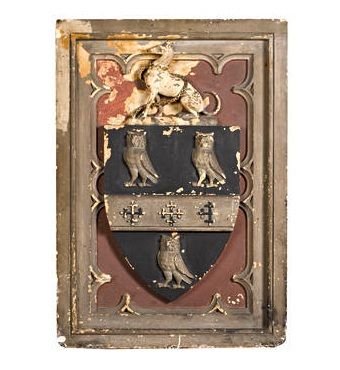
Earlier Italian and British works incorporate carved stone and marble for architectural settings, whilst later nineteenth and twentieth century examples combine carved timber inset into brass frames or moulded plaster panels.
Listings feature materials spanning cast iron, oak, carved hardwood, gold leaf, polychrome paint, bronze and Italian marble.
Judging quality and execution
Quality rests in the crispness of the heraldic carving and the fidelity of the cast metal details. Superior pieces display deep, confident chisel work in wood or sharp, clean lines in cast iron and bronze, whereas lesser examples show softer, generalized contours.
The survival of original polychrome paint, gilding and surface patination significantly elevates a piece, as does documented provenance linking the crest to specific families or historical periods.
Van Rijckevorsel And Verheijen
The Antique Armorial Plaque Glossary
- Armorial
- Relating to heraldry or bearing a coat of arms. These designs visually record family lineages, alliances and official authority.
- Polychrome paint
- Decoration executed in multiple colours. This traditional surface treatment brings vibrancy and contrast to carved timber and plaster crests.
- Gilt
- Covered thinly with gold leaf or gold paint. It provides a luminous finish that denotes high status on heraldic panels.
- Heraldic charge
- Any emblem or figure occupying the field of a shield. These symbols form the core visual vocabulary of coats of arms.
- Relief
- Sculpture in which figures project from a background plane. Armorial plaques utilise this technique to create depth on walls.
Antique Armorial Plaque: Frequently Asked Questions
What is an armorial plaque?
An armorial plaque is a decorative wall relief displaying a coat of arms, family crest or heraldic symbols. These objects were historically commissioned to mark noble lineages, marriages or important architectural structures.
They serve as striking focal points in traditional interiors, bringing historical depth and sculptural presence to wood-paneled rooms or stone walls.
How do I date an armorial plaque?
Dating relies on examining the material, carving technique, and stylistic markers such as Gothic Revival or Baroque influences. Wood species, fastener types, and any accompanying inscriptions or paint layers also help narrow the period of creation.
Comparative analysis with documented examples from the seventeenth to the twentieth centuries provides a reliable chronological anchor.
Where were armorial plaques displayed?
These plaques were mounted prominently inside great halls, above mantelpieces, or upon the exterior stone facades of manor houses and civic buildings. Their primary function was to signal authority, heritage and familial alliances to visitors.
Today, collectors hang them securely on interior walls using robust hardware suited to their substantial weight.
What materials were used for armorial plaques?
Makers utilised a diverse range of materials depending on the intended setting and period, including carved oak, walnut, hardwood, cast iron, bronze, stone, marble and plaster. Many timber and plaster examples feature applied paint and gold leaf.
Each material dictates the weight and mounting requirements of the specific piece.