



Antique Family Coat Arms
An antique family coat arms brings centuries of lineage and heraldic art into a room, offering a tangible link to specific ancestral histories through painted, carved, and embossed displays.
Antique Family Coat Arms
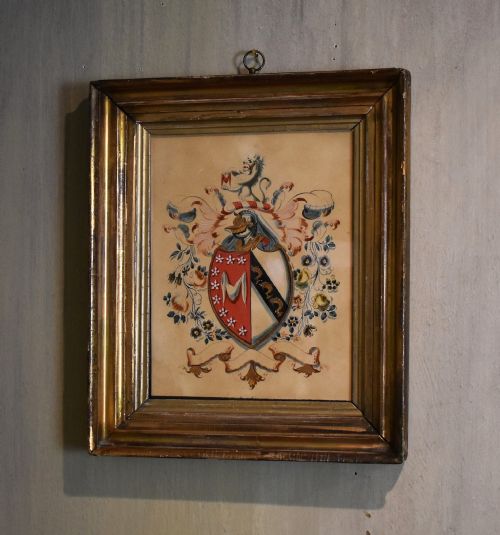
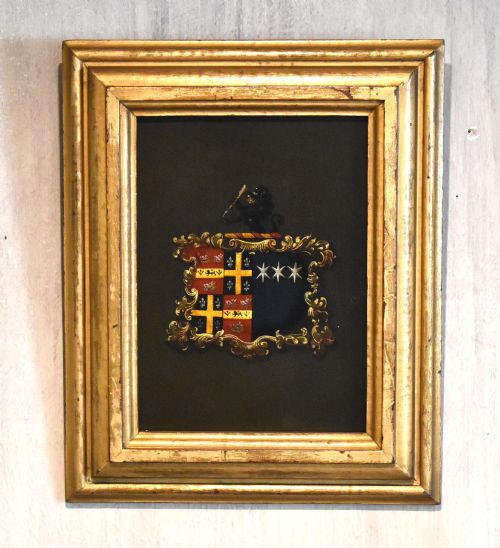
When you search for an antique family coat arms, you encounter a diverse array of heraldic objects created to record lineage, marriages, and familial alliances. These pieces serve as historical markers that reflect the social status and heritage of prominent households across Britain and continental Europe.
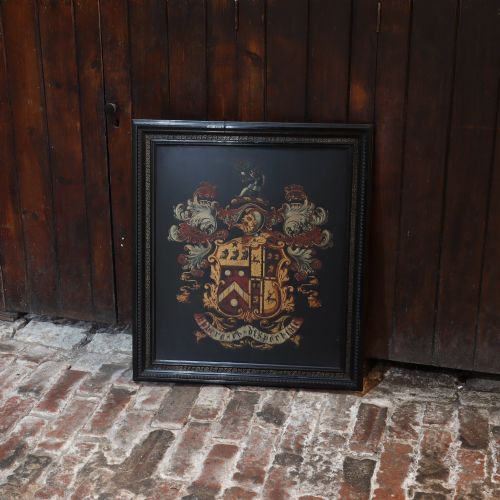
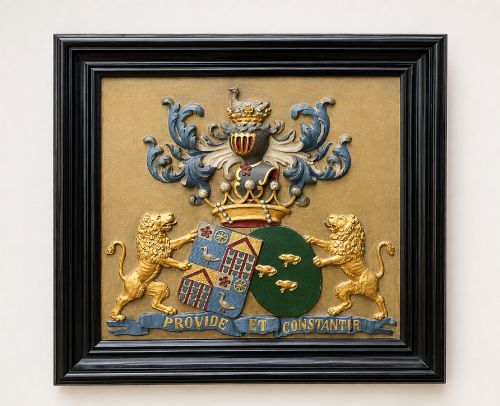
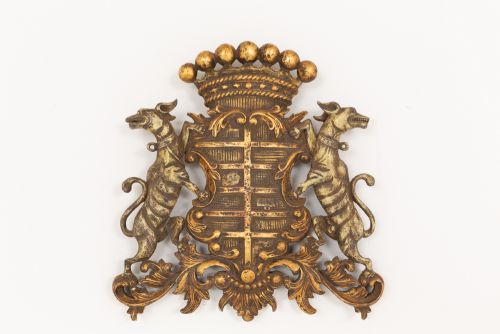
The selections available range from large carved wooden panels and framed watercolours to embossed brass fire screens and glazed pottery armorial plates. You are most likely to meet 19th-century interpretations, alongside Georgian coaching panels and earlier survivorgs from the 17th century.
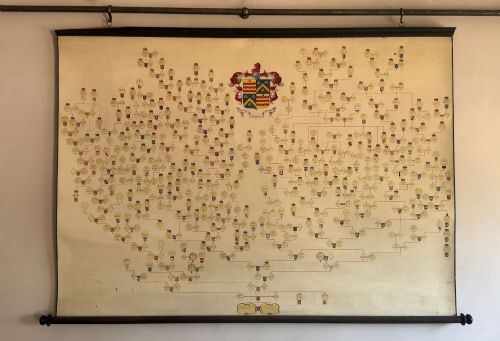
Makers and artists applied these armorial designs to various household and decorative formats, including wall plaques, framed artwork, and specific family pedigrees. Each item records the specific visual language of heraldry, utilising designated symbols, crests, and mottoes tied to particular surnames.
Materials and construction
Craftsmen utilised traditional materials such as oak, walnut, and various hardwoods for carved panels and shields, often applying paint, gilt, and brass mounts to highlight the heraldic details. Paper and parchment served as the foundation for detailed genealogical charts and watercolour paintings.
Metalwork techniques involved embossing and chasing sheet brass, alongside cast bronze elements integrated into wooden frames or display pieces. Glass also appears as a substrate, with oil paintings executed directly onto the surface to create luminous armorial crests.
Pottery production methods yielded glazed armorial plates featuring fired heraldic decoration, while mixed-media objects combined carved wood crests inset directly into metal or wooden frames for domestic display.
Some families proudly displayed their heraldic crests on the doors of their horse-drawn carriages before hanging them inside as wall art.
Assessing quality in armorial pieces
The distinction between standard and exceptional pieces rests upon the precision of the heraldic painting, the depth and crispness of the wood carving, and the quality of the materials employed. Finer examples display meticulous attention to heraldic rules and tinctures, executed by skilled artists or specialised heraldic painters.
Historical significance and provenance elevate certain items, particularly when the piece is linked to documented families, specific country houses, or certified genealogical records. The preservation of original paint, gilt, and framing components further contributes to the standing of an armorial item.
The Antique Family Coat Arms Glossary
- Armorial
- Relating to armorial bearings or a coat of arms. These designs display specific hereditary symbols granted to individuals or families.
- Crest
- The component of a coat of arms situated on top of the helmet or shield. It forms a distinct part of the full heraldic achievement.
- Pedigree
- A line of descent or ancestral chart recording family lineage over several generations. Often presented in framed manuscript or watercolour formats.
- Gilt
- Covered thinly with gold leaf or gold paint. This technique accentuates raised details on carved wooden shields and frames.
- Coach panel
- A painted wooden panel bearing a family coat of arms, originally mounted on the door of a private horse-drawn carriage. These items were often removed and framed as wall art.
Antique Family Coat Arms: Frequently Asked Questions
What is an antique family coat arms?
An antique family coat arms is a decorative or historical object displaying the heraldic insignia of a specific lineage. These items were commissioned by households to display their heritage and social standing.
They appear in various forms, including carved wooden shields, painted glass, brass fire screens, and framed genealogical charts. Each piece records the unique visual symbols associated with a particular surname.
How were coat of arms displayed in homes?
Historically, families displayed their heraldic devices on interior walls using carved wooden panels, framed watercolours, or wall plaques. Larger country houses utilised console tables and architectural elements bearing carved armorial bearings.
Some domestic items served practical functions while displaying heraldic art, such as brass fire screens and ceramic plates. These objects combined daily utility with the visual assertion of family lineage.
How can I identify the family on a coat of arms?
Identifying the family requires examining the specific heraldic charges, colours, and mottoes depicted on the shield or crest. Many pieces include accompanying text, surnames, or specific geographical associations painted or carved directly onto the object.
Genealogical research into the recorded surnames, such as Bath, Hubrecht, or Mackinnon, often links the armorial design to documented family trees and historical records.
What periods do these pieces come from?
The available items span multiple centuries, with significant representation from the 19th century and the Georgian era. Surviving pieces also include examples from the 17th century and early 20th-century revivals.
Stylistic shifts reflect these periods, moving from Baroque and Dutch Renaissance Revival designs to Victorian Gothic Revival and later genealogical compilations.