
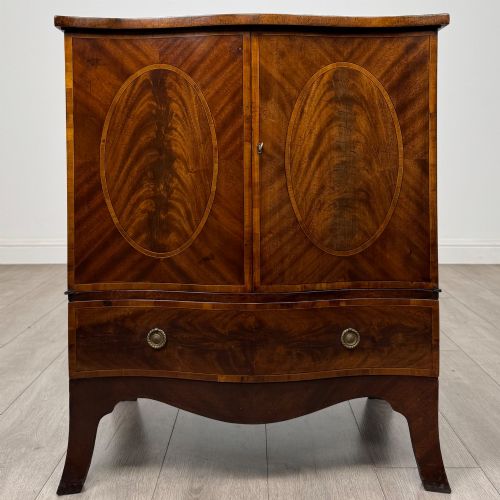
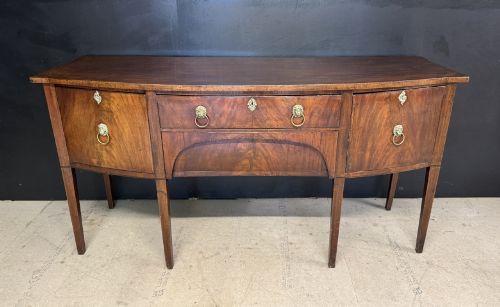
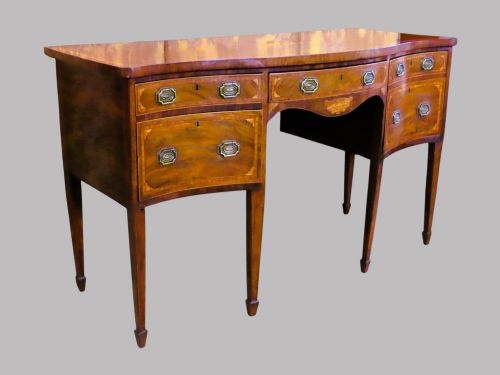
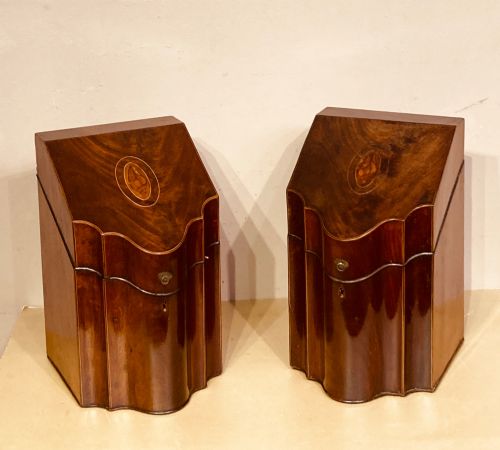
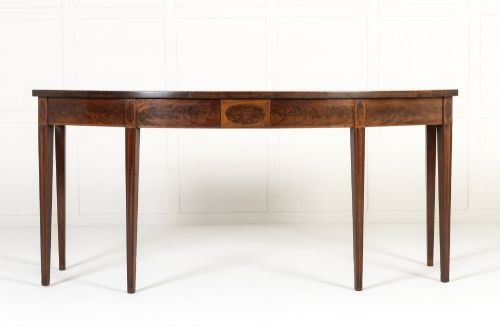
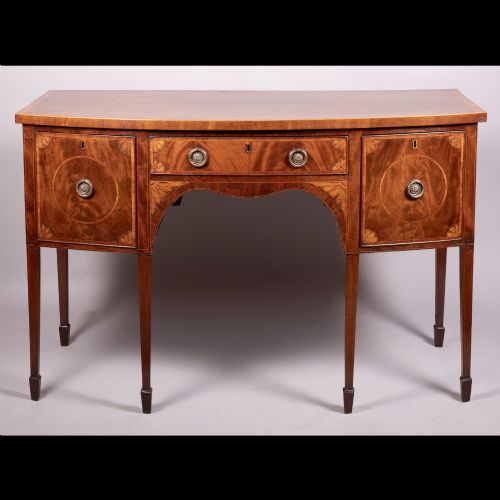

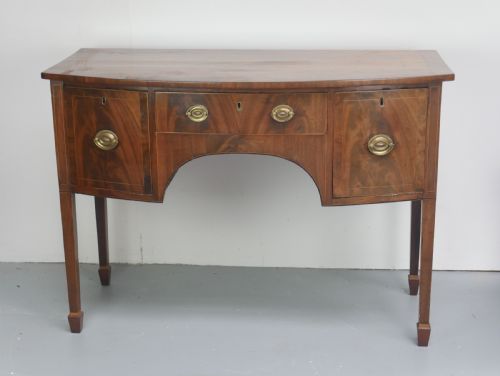
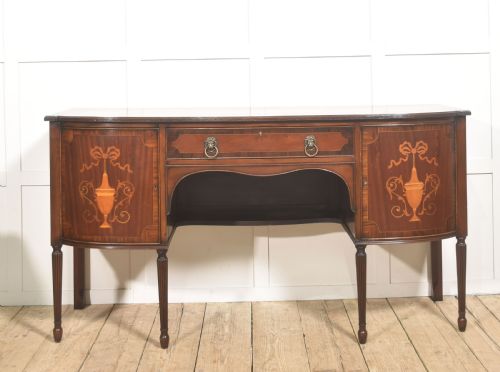
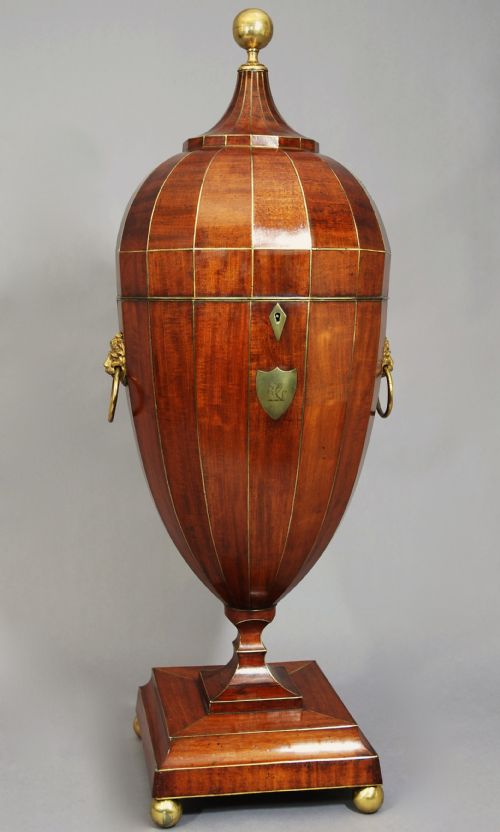


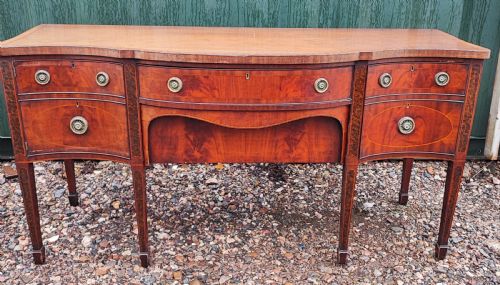


Hepplewhite Mahogany Sideboard
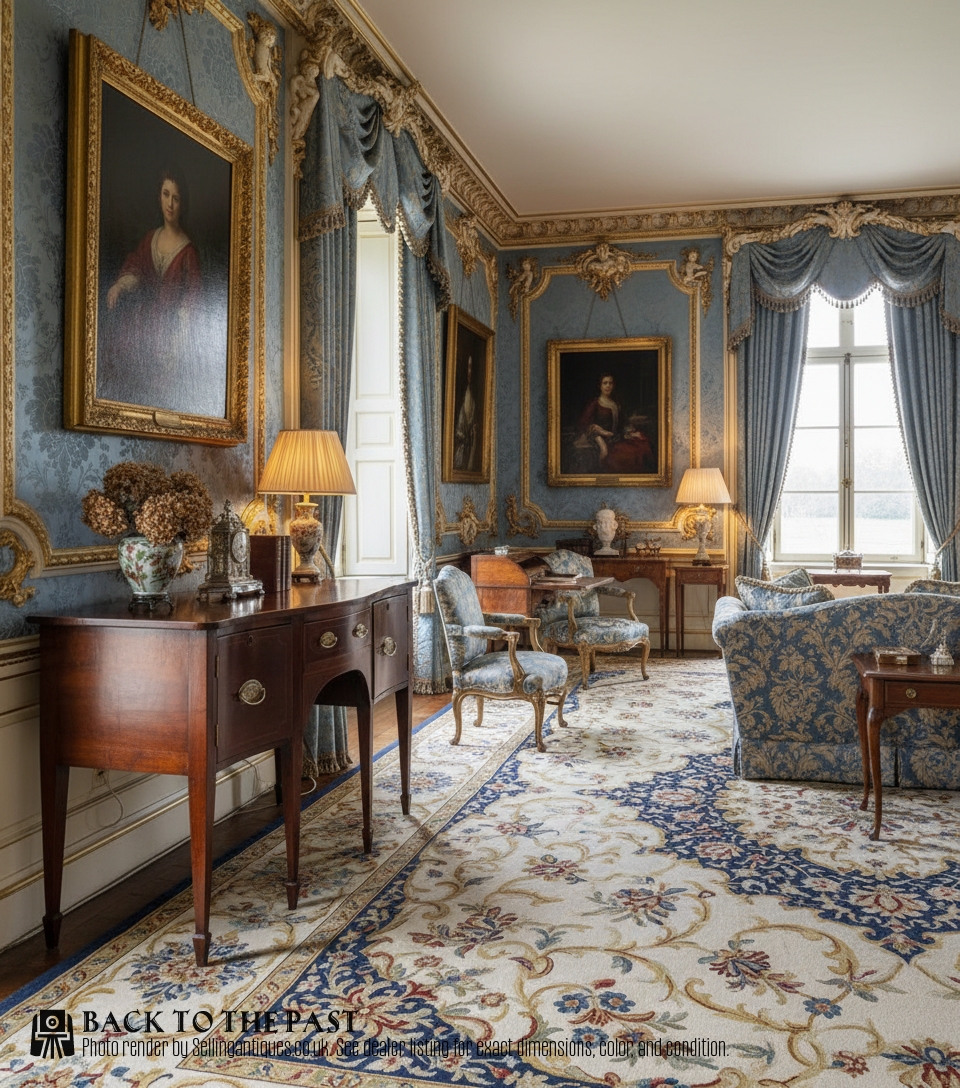
These hepplewhite mahogany sideboard examples bring architectural grace and rich timber grain to a dining room.
What a Hepplewhite Mahogany Sideboard Is
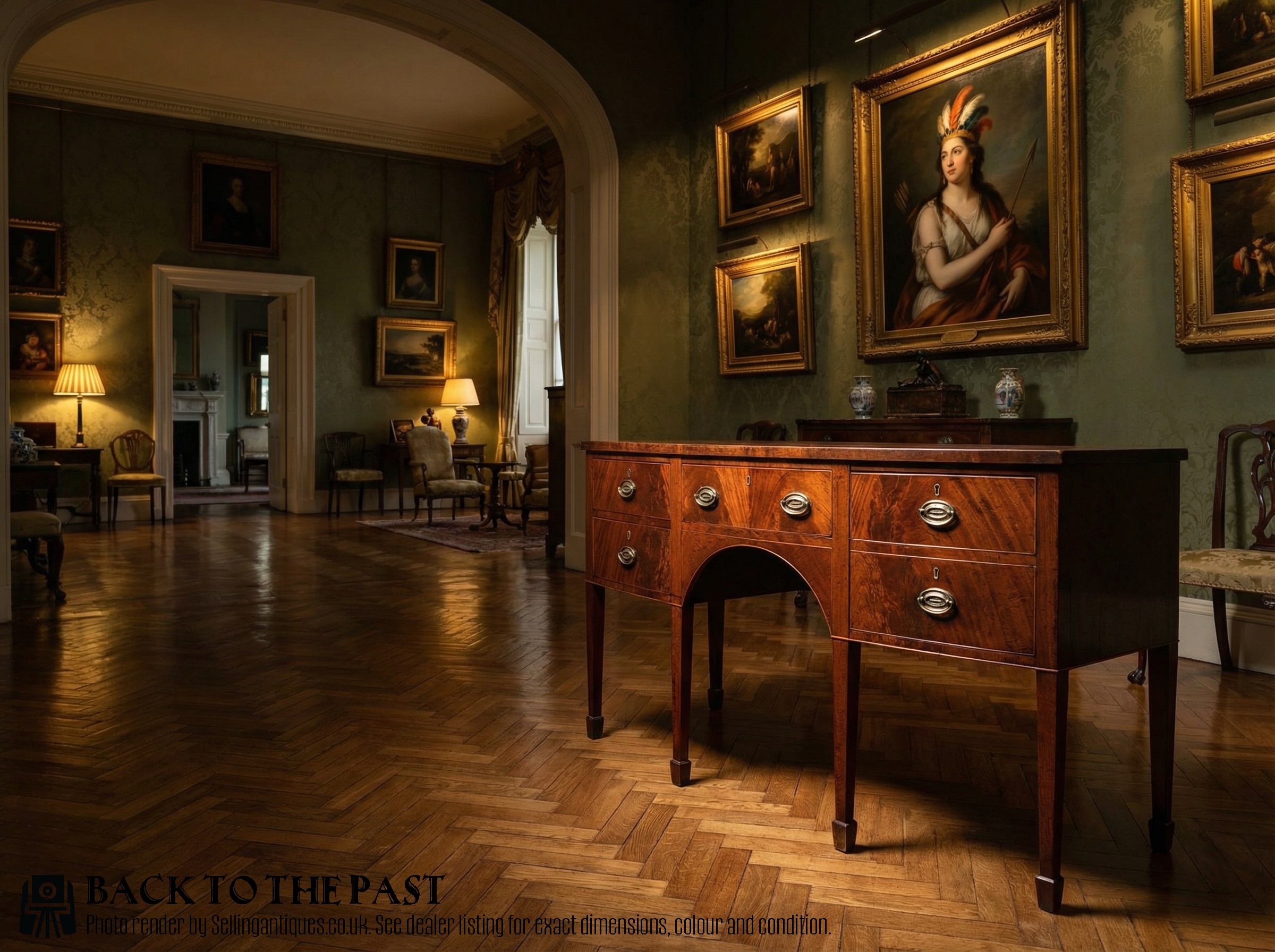
A hepplewhite mahogany sideboard is a formal dining room serving piece defined by elegant proportions and refined joinery. The selection includes eighteenth century originals alongside later nineteenth century and nineteen hundred revivals.
Forms span serpentine fronts, bow fronts, and straight profiles, often detailed with contrasting stringing and boxwood inlay. These pieces combine practical storage with the decorative refinement characteristic of the Georgian period.
Buyers encounter both period George III pieces and later interpretations reflecting the enduring appeal of the design. Each variant employs rich timber figures to create a commanding focal point in a traditional interior.
Materials and Construction
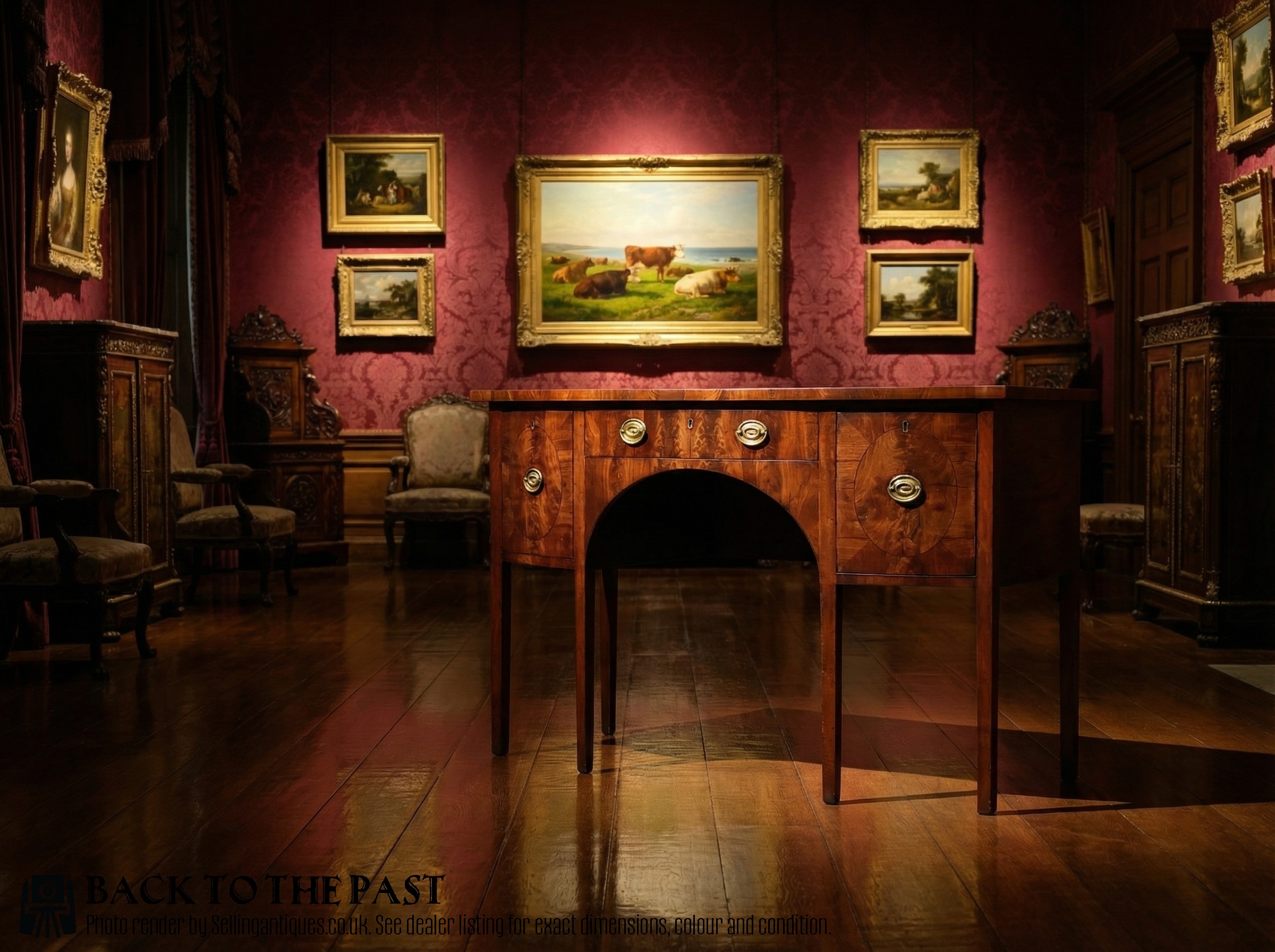
Construction relies upon solid mahogany and figured flame mahogany veneers applied to secondary framing. Cabinetmakers selected timber specifically for grain movement and depth of colour.
Surface enrichment involves intricate boxwood inlay, satinwood details, and marquetry motifs. Original hardware typically incorporates cast brass handles and backplates, complementing the warm tones of the wood.
Retail Price Guide 2026
Typical UK retail prices for hepplewhite mahogany sideboard, calculated from the Sellingantiques database of over a million retail prices indexed since 2003. This retail price guide relies exclusively on Sellingantiques data; no external sources or auction records are used, so the figures do not describe the wider market.
Listings feature mahogany, satinwood, and boxwood inlay across eighteenth century, nineteenth century, and nineteen hundred periods.
Assessing Quality and Character
Quality rests in the subtlety of the timber selection and the precision of the cabinetwork. Superior examples display continuous grain patterns across multiple drawers and doors, indicating careful timber alignment during construction.
The sophistication of the inlay work and the crispness of edge moulding further distinguish exceptional pieces. Proportions also play a crucial role, with smaller scaled or serpentine forms commanding particular attention for their elegance.
The Hepplewhite Mahogany Sideboard Glossary
- Serpentine front
- A curved furniture front featuring a convex centre flanked by concave ends. This shape requires advanced woodworking skill to execute smoothly.
- Bow front
- A convex, outwardly curving cabinet front that softens the linear geometry of a room. It appears frequently on eighteenth century serving pieces.
- Flame mahogany
- A veneer cut from the fork of a mahogany tree where branches join the trunk. It creates a distinctive, fiery pattern with intense visual depth.
- Boxwood inlay
- Narrow strips of pale boxwood embedded into darker mahogany surfaces to create linear borders. This technique highlights structural outlines.
- George III
- The stylistic period spanning the reign of George the Third from seventeen sixty to eighteen twenty. Furniture from this era emphasises classical balance and refined ornamentation.
Frequently Asked Questions
How do I spot a period piece?
Examine the secondary woods, construction methods, and wear patterns inside the drawers and along the backboards. Eighteenth century cabinetmakers used specific timber pairings and hand-cut joints that differ from later manufacturing methods.
Look closely at the colour and patina of the mahogany surfaces, which develop a deep lustre over generations of polishing. Later revivals from nineteen hundred often reveal crisper machine tooling and different internal framing techniques.
Where should I place a sideboard?
These dining room servers anchor a formal dining space, traditionally positioned against the main wall opposite the entrance or dining table. Their generous lengths and shallow depths make them well suited for serving food or displaying silver.
Ensure the room has adequate clearance around the piece so that drawers and cupboards open fully. Placing the sideboard away from direct heat sources protects the mahogany veneer and delicate boxwood inlays from drying out.
What is the difference between bow and serpentine fronts?
A bow front curves outward in a single continuous convex sweep from one side to the other. This creates a softer, rounded profile that works well in more compact dining spaces.
By contrast, a serpentine front curves outward in the middle and inward near the corners. This complex undulating shape demands greater skill from the cabinetmaker and offers a more formal architectural presence.
How do I care for antique mahogany?
Maintain the finish by dusting regularly with a soft, dry cloth and applying natural beeswax polish sparingly. Avoid silicone-based sprays, which can penetrate old finishes and attract dust over time.
Keep the piece away from direct sunlight and radiators to prevent the timber from warping and the veneer from lifting. Stable room humidity preserves the structural integrity of both the solid mahogany frame and the delicate inlay work.