
Georgian Sideboard
A georgian sideboard brings the measured proportion and cabinet-making ambition of the late eighteenth and early nineteenth centuries directly into a modern interior.
Georgian Sideboard
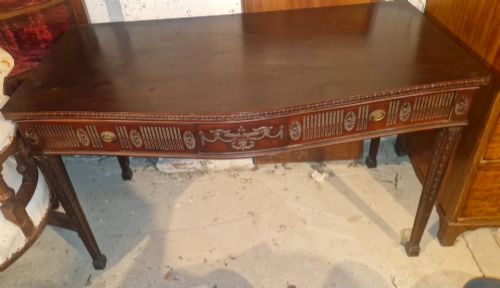
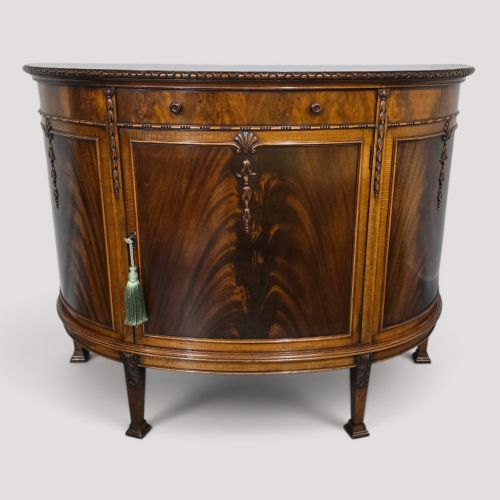
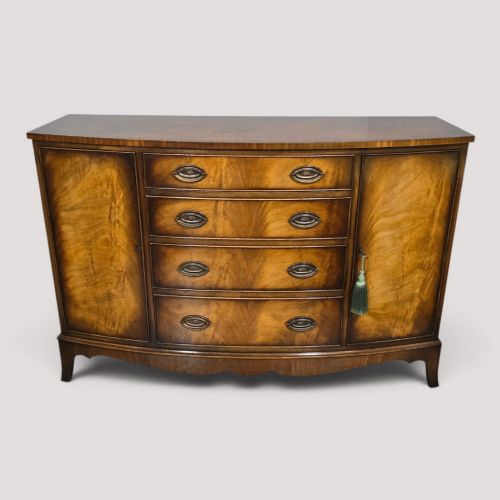
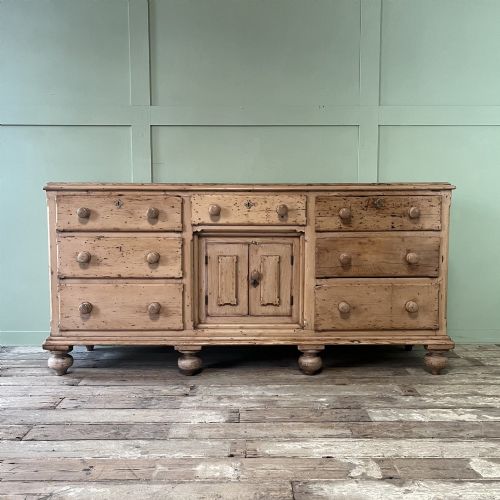
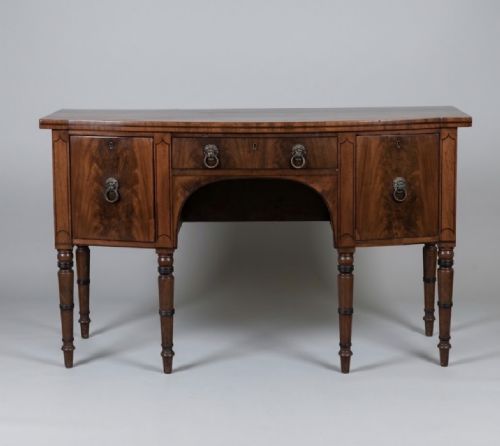
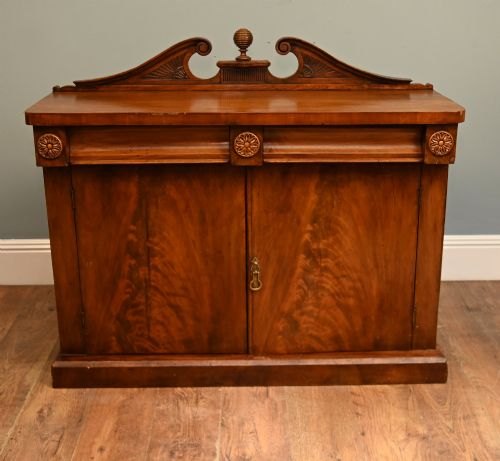
A georgian sideboard encompasses heavy timber servers, bow-fronted serving tables, and breakfront credenzas designed to anchor dining rooms across the eighteenth and nineteenth centuries. Buyers meet examples spanning strict George III proportions through to later Regency interpretations and twentieth-century revivals.
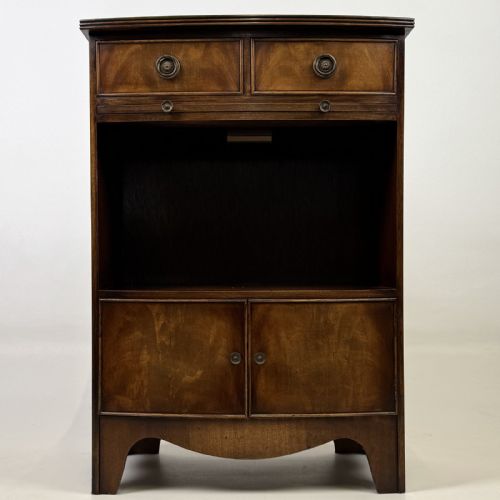
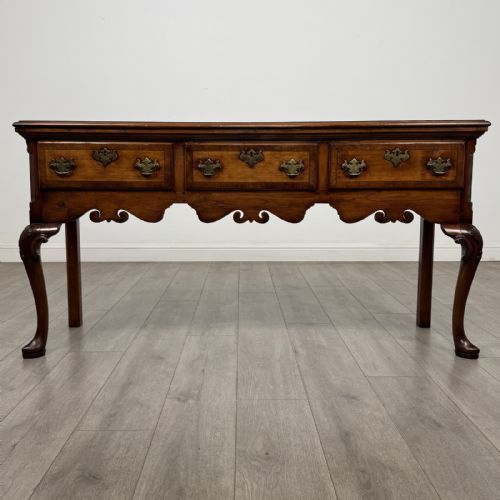
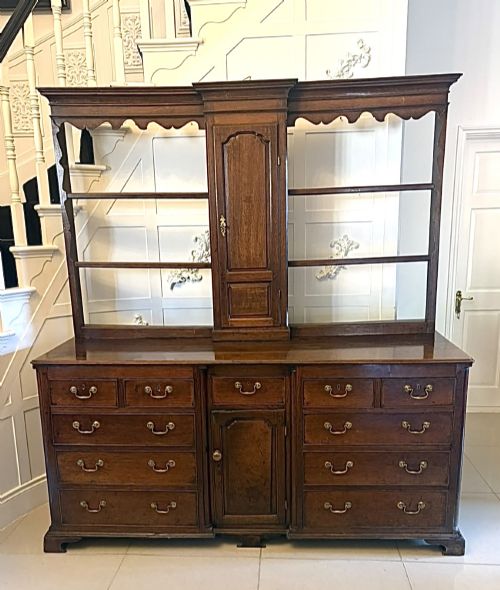
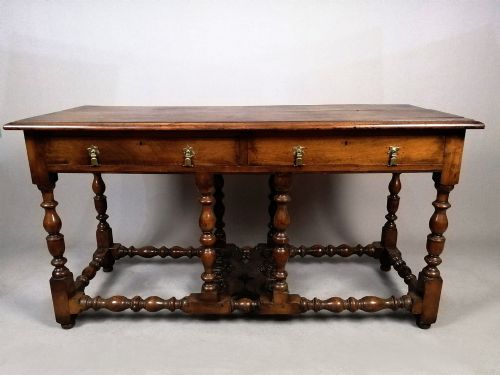
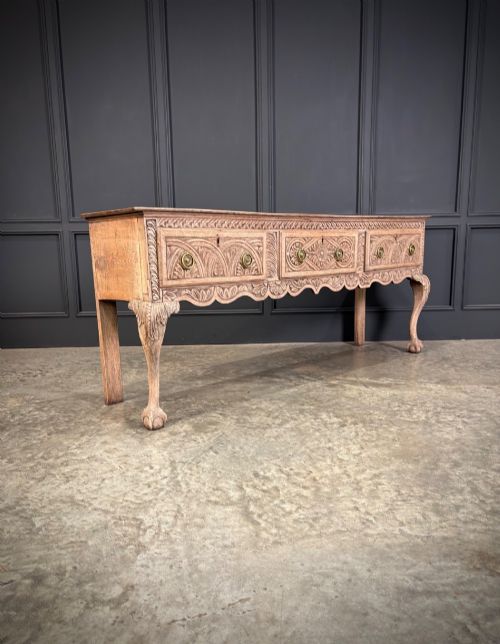
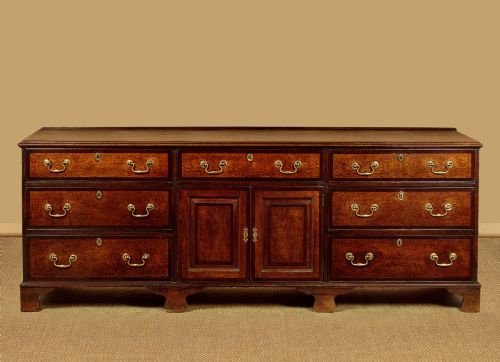
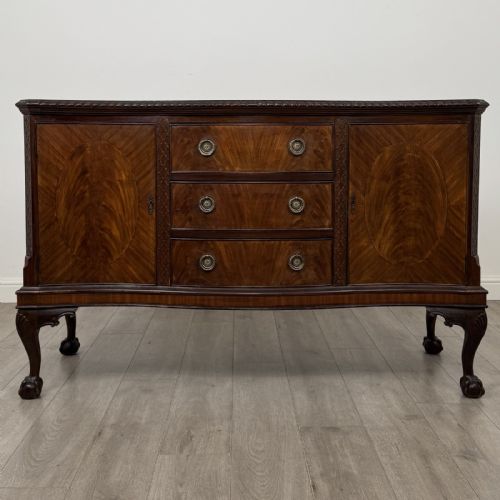
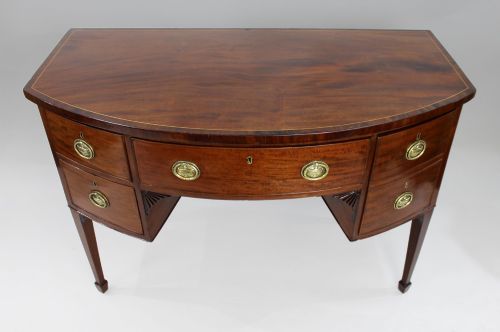
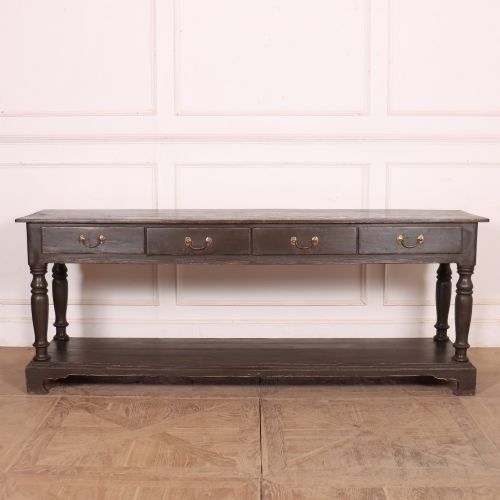
The primary forms vary from straightforward oak farmhouse dresser bases with potboards to elegant flame mahogany pieces fitted with delicate boxwood stringing and central drawer banks. Many incorporate serpentine fronts or tapering legs that lift the heavy timber mass from the floor.
Origins stretch from English workshops to Welsh country kitchens and Scottish cabinet-makers, reflecting both formal urban dining requirements and robust provincial utility.
The Measure of Craft
Quality rests upon the selection of the timber grain, where matched flame mahogany veneers and harmonious drawer symmetry distinguish superior workshop output from standard commercial production. The crispness of inlaid stringing and the depth of hand-carved mouldings reveal the cabinet-maker's underlying competence.
Structural integrity also separates the output, visible in the snug fit of dovetailed drawer linings and the retention of original brass hardware rather than later replacements.
Listings feature oak, mahogany, flame mahogany, and pine across eighteenth-century, nineteenth-century, and twentieth-century periods.
Whytock & Reid·Gillows·David Morley
The Georgian Sideboard Glossary
- Bow-front
- A cabinet front curved in a convex arc across its entire width. This shape softens the linear rigidity of formal dining furniture.
- Breakfront
- A piece whose central section projects forward from the flanking cupboards. It creates architectural depth across the main elevation.
- Serpentine
- A front profile shaped with a central convex curve flanked by concave sweeps. This undulating line requires advanced timber-shaping skill.
- Potboard
- An open lower shelf fitted beneath a dresser base. Historically, it stored heavy earthenware and metal pots off cold flagstone floors.
- Stringing
- Narrow inlaid lines of contrasting light or dark wood used to outline drawers and panels. It defines the geometric boundaries of the facade.
Georgian Sideboard: Frequently Asked Questions
What is a georgian sideboard?
A georgian sideboard is a dining room serving console developed during the eighteenth and nineteenth centuries to store cutlery, linen, and wine. These large case pieces evolved from simple oak dresser bases into sophisticated mahogany servers with multiple drawers and cupboards.
They stand as enduring examples of period cabinet-making, valued for their functional storage capacity and refined proportions.
How do I style a georgian sideboard?
Living with a georgian sideboard involves balancing its heavy timber presence against surrounding walls and contemporary lighting. Placing ceramic lamps, heavy books, or silver trays on the top surface helps integrate the piece into a modern dining space.
Ensure adequate floor clearance around the front profile so that bow-front or serpentine doors can open without obstruction from nearby seating.
How do I date a georgian sideboard?
Dating relies on examining timber choices, secondary woods used in drawer linings, and the style of the hardware and feet. Earlier eighteenth-century pieces frequently utilise solid oak or walnut, while late eighteenth and nineteenth-century examples lean heavily towards figured mahogany and elaborate veneer work.
Construction details such as hand-cut dovetails and vernacular pegged joints also point towards specific regional workshops and decades.