
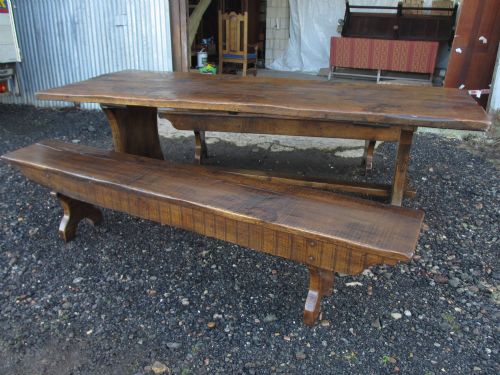
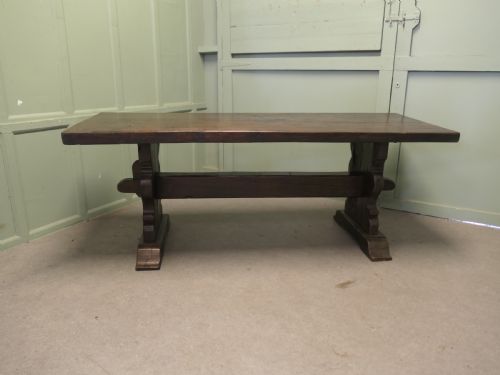
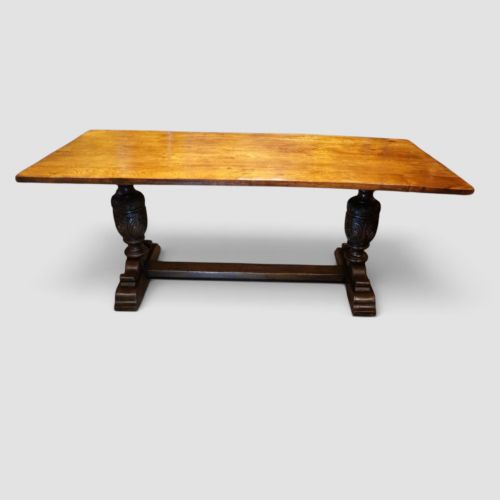
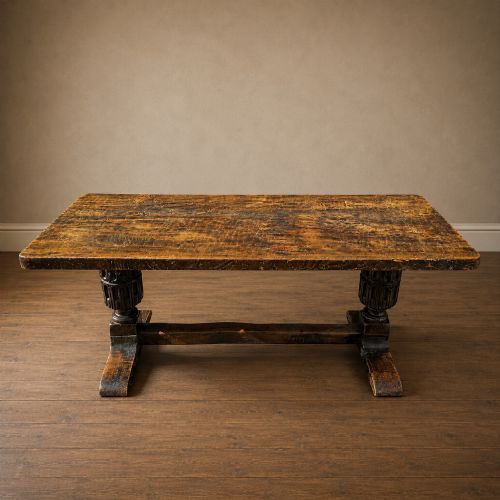
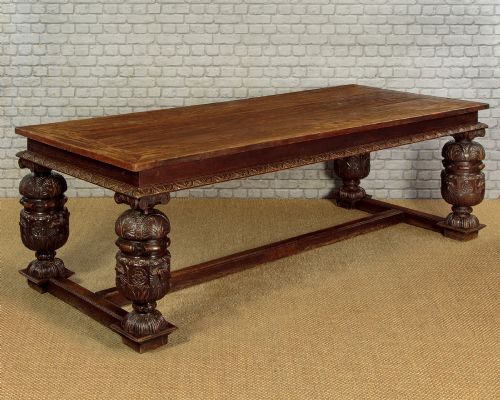


Heavy Oak Trestle Table
A heavy oak trestle table is a robust dining surface built for long service, combining solid timber tops with sturdy end supports.
Heavy Oak Trestle Table
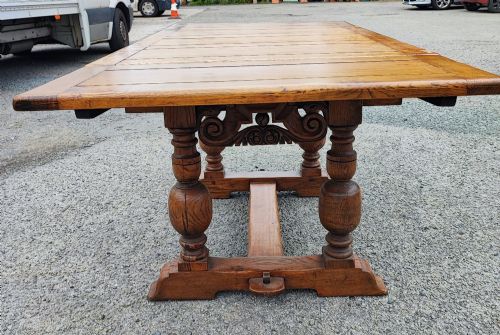
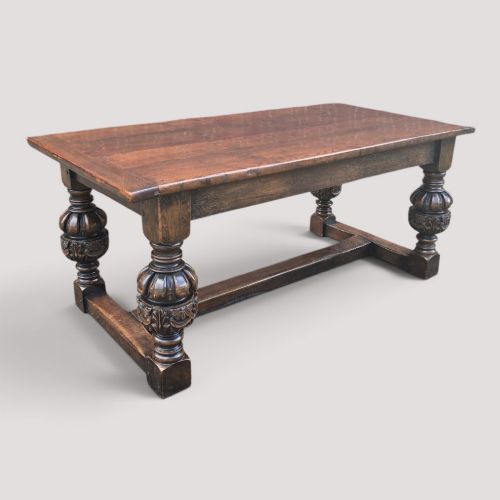
A heavy oak trestle table provides a substantial surface designed for dining and communal use, drawing on historical forms such as refectory and farmhouse styles. These pieces range from authentic seventeenth-century survivors to later revival pieces produced across the nineteenth and twentieth centuries.
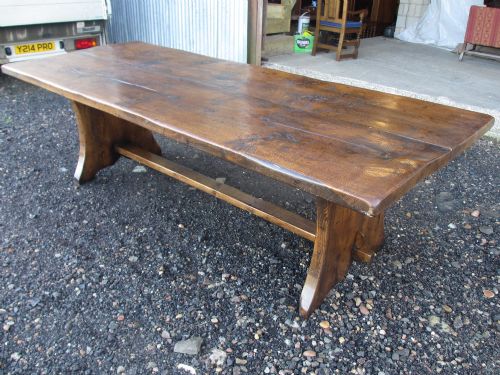
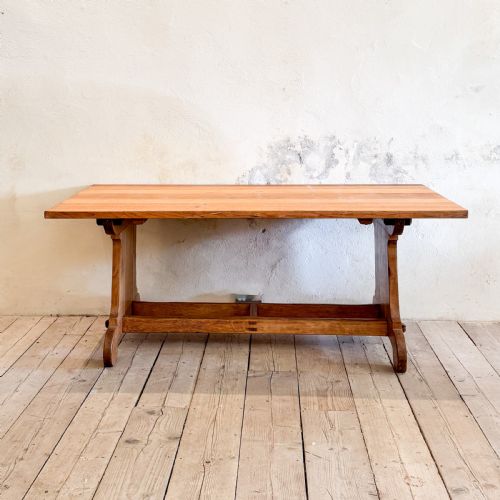
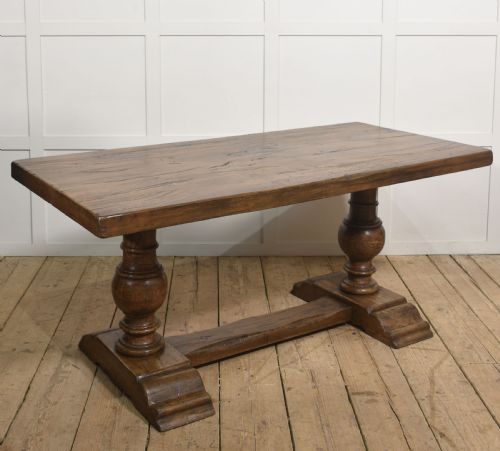
The version most commonly encountered on this page is the refectory or farmhouse dining table featuring shaped trestle ends and thick timber planks. Examples appear in various regional idioms, including English tavern styles and French country designs.
Makers and craftsmen utilised robust construction methods to support large gatherings, often incorporating elm or walnut elements alongside the primary oak framework. Pieces serve equally well as library tables or large dining surfaces in contemporary spaces.
How they were made
Makers constructed these tables using solid oak, frequently pairing thick timber tops with elm planks or iron hardware for added stability. Surfaces often consist of multiple joined boards or single-plank configurations supported by substantial trestle bases.
Carpenters employed traditional joinery techniques to secure the heavy tops to shaped trestle ends, ensuring the furniture could withstand decades of daily use. Iron bracing and stretcher bars sometimes reinforced the framework in larger monastic or tavern formats.
Some public school library tables carry generations of ink stains carved deeply into the grain by studious pupils.
What varies in quality
The quality of a heavy oak trestle table depends on the selection of timber and the integrity of the original construction. Thick, well-figured planks and robust joint work distinguish superior examples from lighter revival pieces.
Proportion and balance between the heavy top and the shaped trestle ends determine the visual success of the piece. Tables retaining their original surface patination and uncompromised structural timbers hold greater integrity.
The Heavy Oak Trestle Table Glossary
- Trestle
- A support consisting of a horizontal beam fixed to two splayed legs, used in pairs to hold up a heavy tabletop.
- Refectory table
- A long narrow dining table traditionally used in monastic dining halls, characterised by substantial length and heavy timber construction.
- Draw leaf table
- A dining table with extension leaves stored beneath the main top that pull out to increase surface area.
- Single plank top
- A tabletop formed from one wide board of timber rather than multiple joined planks, valued for its uninterrupted grain.
- Jacobean Revival
- A nineteenth or twentieth-century style imitating the heavy, carved oak furniture typical of the early seventeenth century.
Heavy Oak Trestle Table: Frequently Asked Questions
How do I clean a heavy oak trestle table?
Dust the surface regularly with a dry cloth and clean occasionally with a damp cloth using mild soap. Avoid harsh chemical cleaners that strip the natural oils from the timber.
Dry the wood thoroughly after cleaning to prevent moisture damage. Natural beeswax applied sparingly helps maintain the finish over time.
Are these tables suitable for daily dining?
These tables were originally built for heavy daily use in communal dining spaces, making them exceptionally durable for modern households. The solid timber construction withstands regular family meals and gatherings.
Use protective pads underneath hot dishes and liquids to preserve the historic surface patination. Maintenance involves simple wiping and occasional waxing rather than complex treatments.
How can I tell a seventeenth-century table from a revival piece?
Authentic seventeenth-century pieces show distinct tool marks, pegged joinery, and wear patterns consistent with centuries of age. Timbers often exhibit shrinkage and colour variation unique to old-growth oak.
Revival pieces from the Victorian and Edwardian periods replicate these earlier styles using machine-sawn components and different fastening methods. Examining the underside and joinery reveals the true manufacturing period.
What chairs work best with a trestle table?
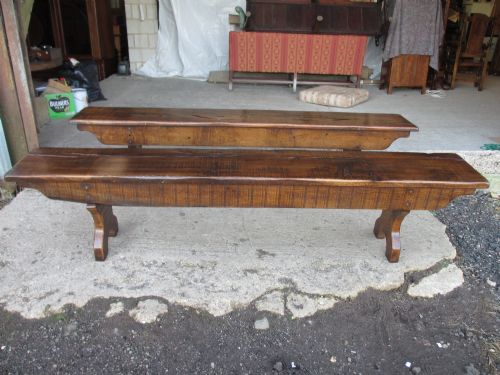
Chairs with open backs or simple wooden frames complement the architectural lines of a trestle base. Benches matching the table style offer a traditional seating arrangement.
Ensure adequate clearance between the underside of the tabletop and the seat height for comfortable dining. Mixing antique chairs with the table adds visual depth to the room.