

Large Monastery Dining Table
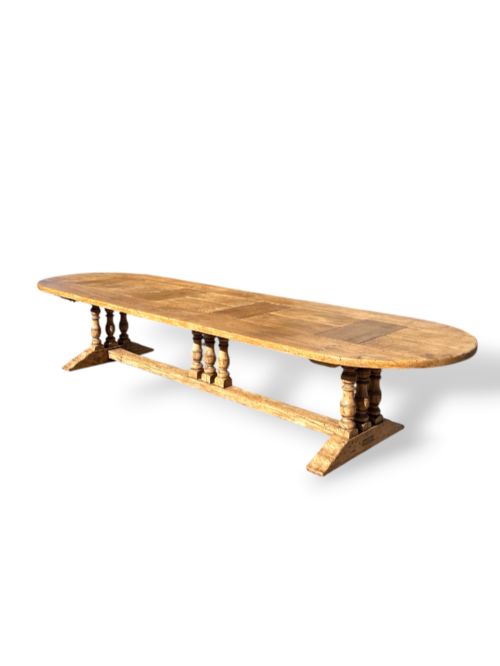
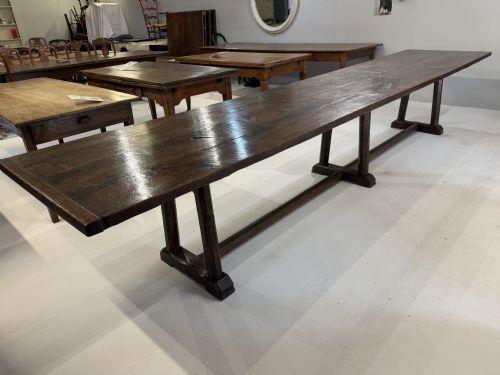
A large monastery dining table brings generous proportions and solid timber construction to a dining space, offering ample room for large gatherings.
Large Monastery Dining Table
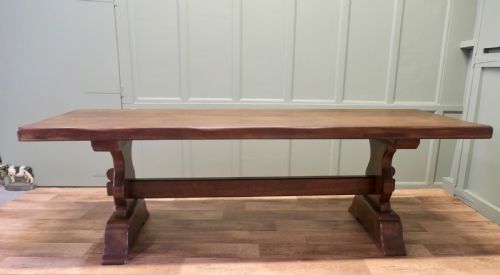
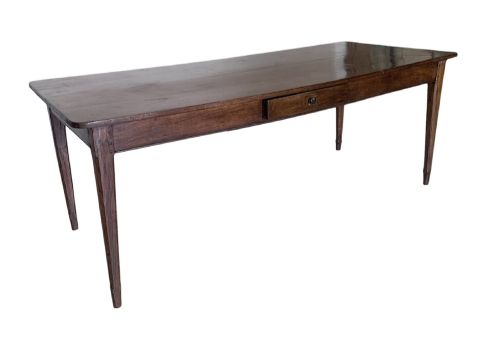
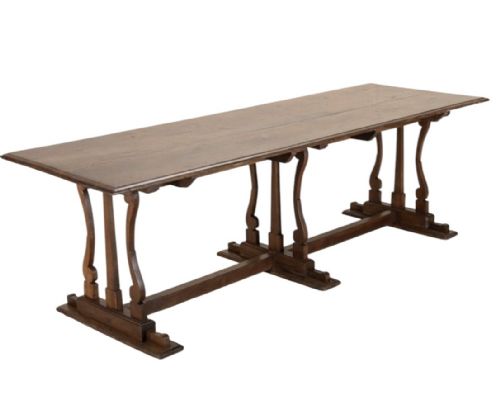
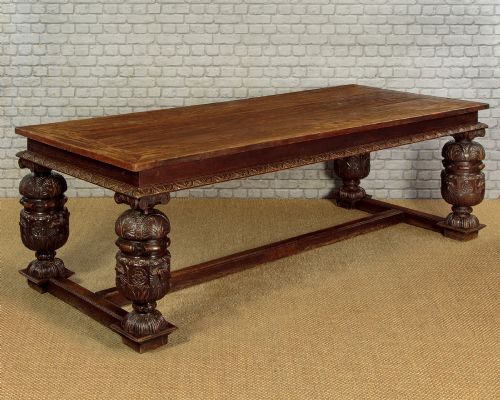
A large monastery dining table is a substantial piece designed for communal dining, often appearing in forms such as refectory tables, farmhouse tables, and trestle bases. When searching for a large monastery dining table, buyers encounter examples spanning from the seventeenth century through to the twentieth century, with nineteenth-century French and English versions particularly common.
The materials used reflect traditional cabinetmaking, dominated by solid oak, walnut, pine, elm, and occasionally accented with iron or brass. These tables frequently display styles ranging from rustic farmhouse and French provincial to Gothic revival and Jacobean revival.
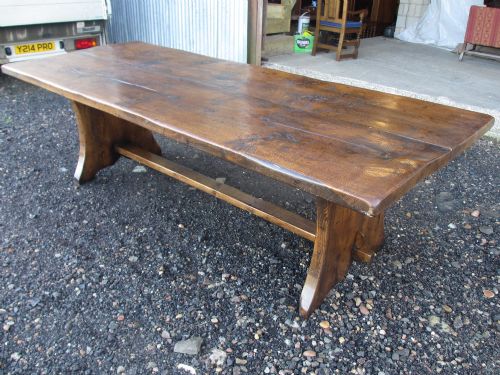
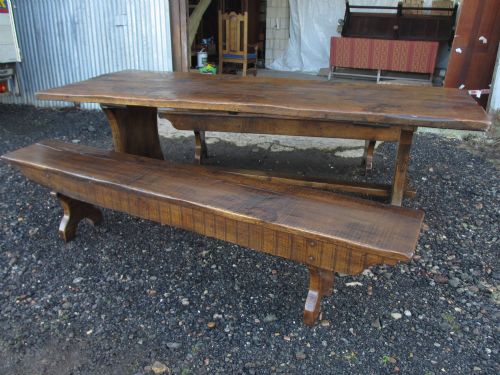
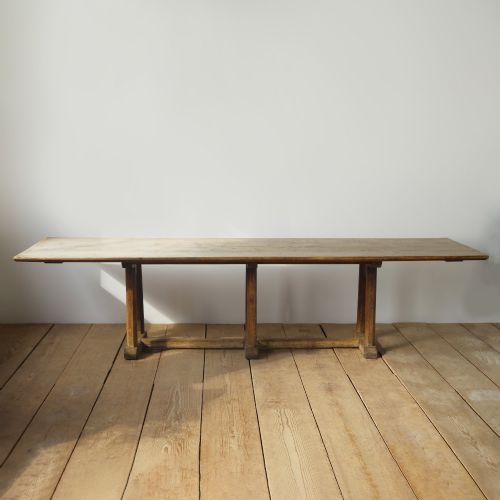
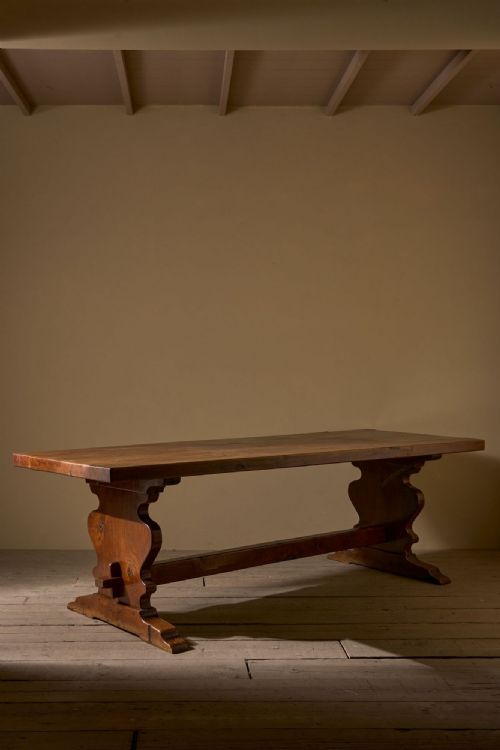
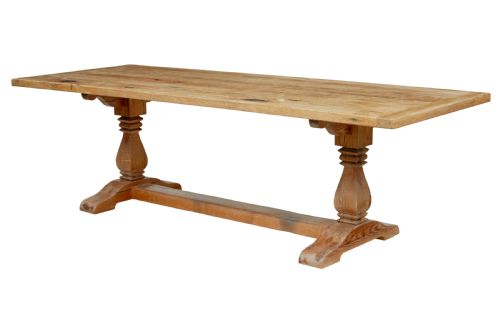
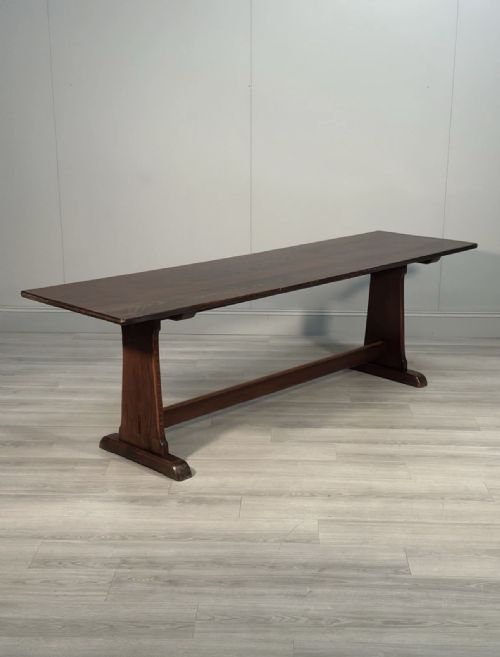
Many of these tables incorporate plank tops and trestle ends, sometimes accompanied by matching bench forms. The selection encompasses both authentic period pieces and later revivals inspired by seventeenth-century designs.
How they were made
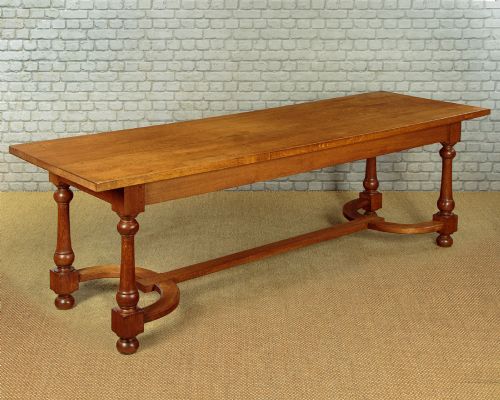
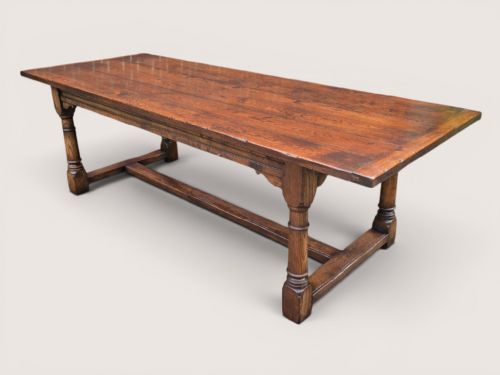
Construction relies heavily on solid hardwoods, primarily oak and walnut, joined using traditional methods suited to heavy everyday use. Planks are joined to form expansive tabletops, supported by robust trestle bases or sturdy four-legged frames.
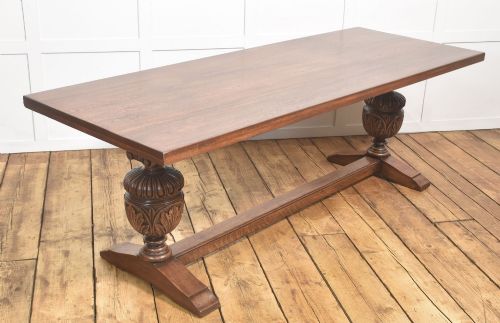
Surface treatments and hardware include carved details, iron braces, and brass fittings, alongside bleached oak finishes that alter the natural tone of the timber. Joinery is exposed in many examples, highlighting the utilitarian origins of these large dining pieces.
Some tables arrive with centuries of dinner party crumbs permanently embedded in the plank joins.
What varies in quality
The harmony between the tabletop construction, such as multi-plank configurations, and the stability of the base structure dictates the overall solidity of the piece. Subtle details in hand-carved trestle ends or period-appropriate hardware further distinguish finer examples from standard workshop productions.
The Large Monastery Dining Table Glossary
- Refectory table
- A long, narrow dining table originally used in monastic dining halls. These pieces typically feature elongated plank tops supported by sturdy trestle bases or heavy legs.
- Trestle ends
- Support structures placed at either end of a table, connected by a central stretcher. This design allows maximum legroom along the length of the table.
- Bleached oak
- Oak timber treated to lighten its natural colour. This finish is frequently seen on French farmhouse and monastery tables to create a softer appearance.
- Plank top
- A tabletop constructed from several distinct wooden boards joined edge to edge. Older examples often utilise wide planks reflecting the size of available timber at the time.
- Jacobean revival
- A nineteenth- or twentieth-century design style mimicking the heavy, carved ornamentation of the early seventeenth century. Tables in this style often feature dark oak and pronounced geometric turns.
Large Monastery Dining Table: Frequently Asked Questions
How do I seat twelve people?
Look for tables designated with longer dimensions, such as those measuring four metres or specifically described as seating twelve comfortably. Trestle base designs are particularly effective for accommodating multiple chairs or benches without obstructive corner legs.
Ensure the clearance beneath the apron or stretcher matches the height of your dining chairs. Benches matching the table length also help maximise seating capacity.
What is a refectory table?
A refectory table is an elongated dining table historically built for communal meals in monasteries and large estates. They are characterised by their substantial length and sturdy supporting frames.
Most examples utilise solid oak or walnut planks resting on heavy trestle ends or four-legged bases connected by stretchers.
How do I clean bleached oak?
Clean bleached oak surfaces with a soft, slightly damp cloth to remove everyday dust and debris. Avoid harsh chemical cleaners that can strip the treated finish from the timber.
Dry the wood thoroughly immediately after wiping to prevent moisture absorption. Occasional waxing with a suitable clear furniture wax helps protect the grain.
Are these tables suitable for kitchens?
These tables function well in spacious kitchens, acting as central preparation surfaces and informal dining areas. Their solid timber construction handles daily domestic activity effectively.
Use protective mats under hot dishes and liquids to preserve the finish of older wood. The robust nature of oak, pine, and elm ensures durability in high-traffic rooms.