
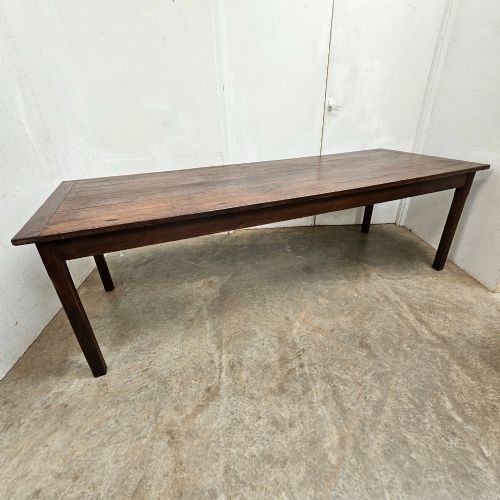
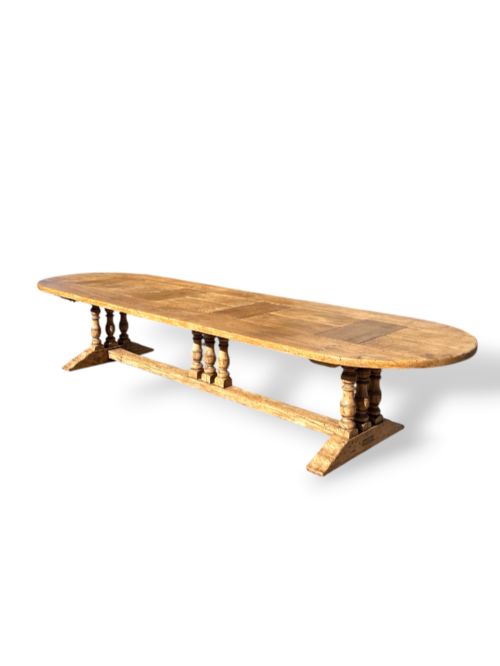
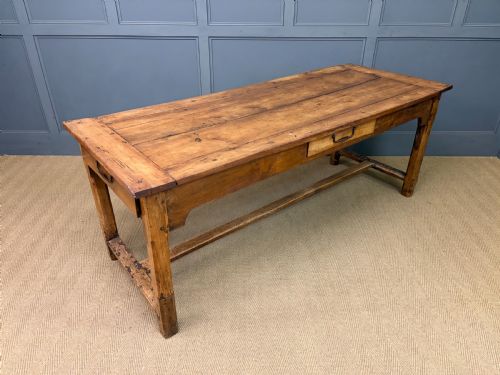
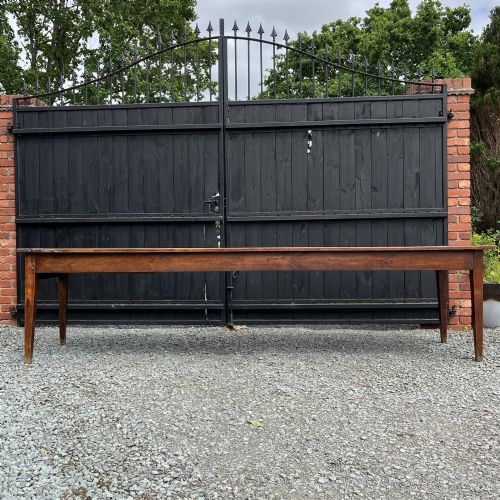
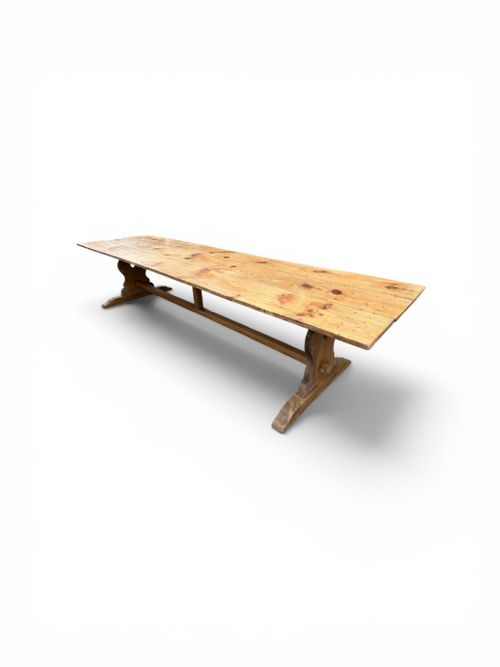


Long French Farmhouse Table
A long french farmhouse table serves as the heavy working heart of a kitchen, built for daily meals and long gatherings.
Long French Farmhouse Table
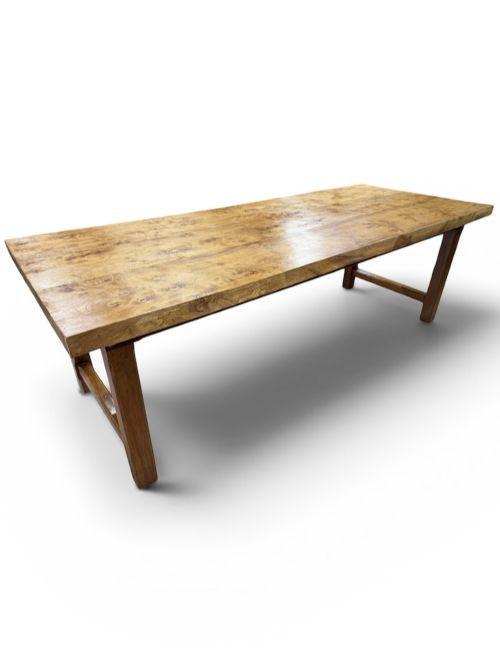
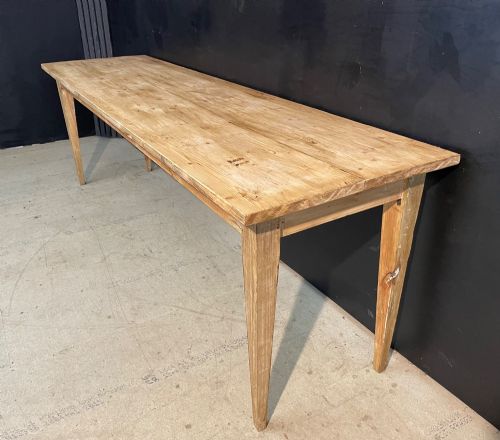
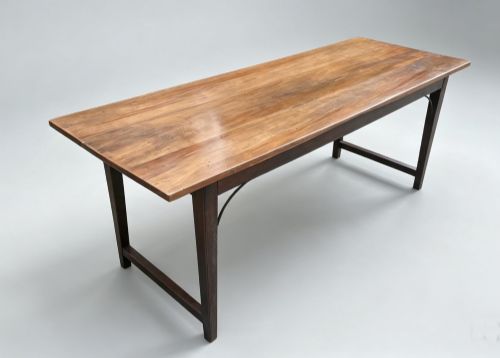
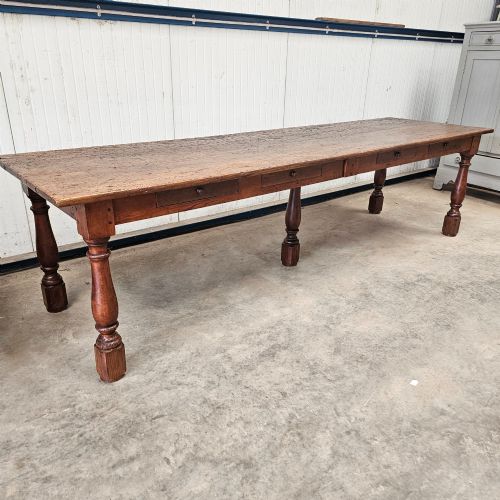
A long french farmhouse table is a substantial dining or work surface originating from French rural properties, built to accommodate large families and communal tasks.
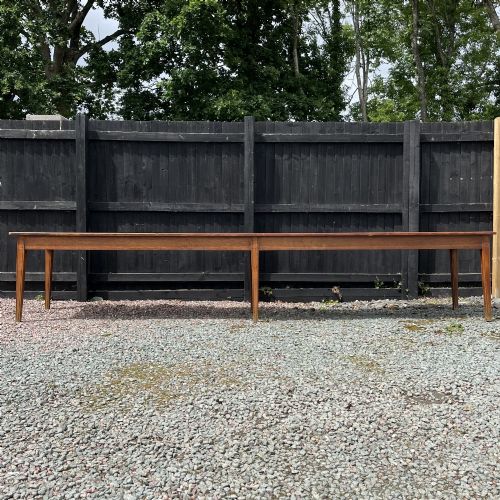
The versions most common on this page date primarily from the nineteenth century, ranging from compact proportions to monumental lengths exceeding three or four metres.
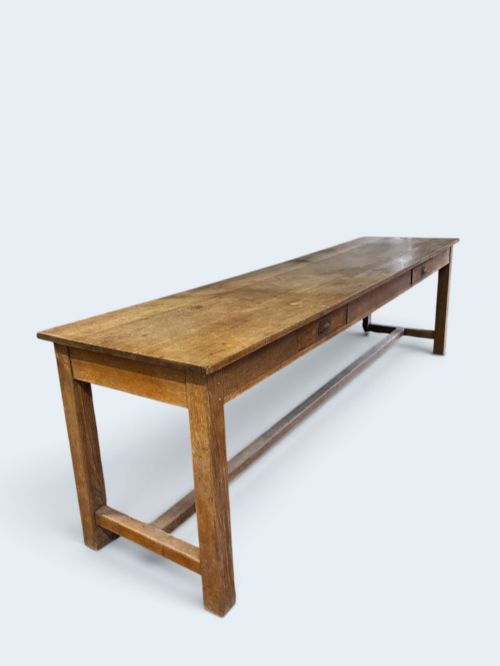
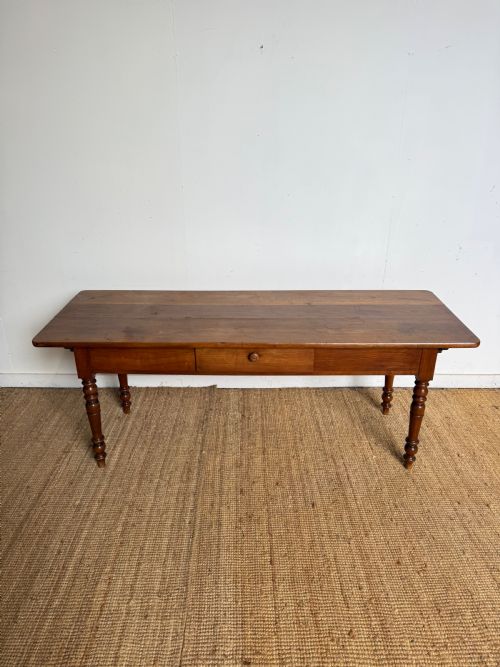
These pieces frequently appear in woods like oak, fruitwood, cherry, and pine, often displaying functional drawers or trestle supports suited to extended daily use.
How they were made
Carpenters constructed these tables using heavy domestic timbers such as solid oak, cherry, fruitwood, and pine, frequently joining thick plank tops to sturdy underframes.
Joinery methods relied on pegging and mortise and tenon joints to withstand decades of heavy pressure, occasionally incorporating sliding breadboard ends to manage timber movement.
Listings feature oak, pine, cherrywood, fruitwood, walnut, and elm spanning the nineteenth and early twentieth centuries.
What varies in quality
Quality rests in the selection of primary timbers, where dense hardwoods like oak or cherry provide greater long-term stability than softer woods.
The integrity of the original underframe and the condition of the plank top determine the structural merit of each individual example.
The Long French Farmhouse Table Glossary
- Refectory table
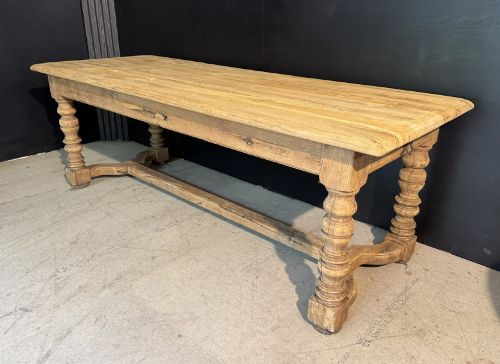
- A long narrow dining table traditionally used for communal meals. These pieces often feature stretcher rails running low between the legs for added stability.
- Breadboard end
- A board attached across the main grain of a table top at either end. This technique helps keep the primary planks flat over many years.
- Trestle table
- A table consisting of two or more support frames connected by a horizontal beam. This design allows for uninterrupted seating space along the entire length.
- Pot-shelf
- A lower open shelf built into the base of a table or serving piece. Historically, households placed heavy pots and utensils on this surface to clear the main working area.
Long French Farmhouse Table: Frequently Asked Questions
How are these tables used today?
These tables function primarily as large dining room surfaces or kitchen central boards for daily meals and gatherings.
Their generous proportions also suit modern open-plan spaces as substantial working desks or serving areas.
What woods were commonly used?
Carpenters built these pieces using domestic hardwoods like oak, cherry, walnut, and fruitwood alongside softer timbers such as pine and poplar.
Hardwood examples generally offer greater weight and resilience for heavy daily use.
How do I care for the surface?
Routine maintenance involves simple dusting and wiping with a damp cloth without harsh chemical cleaners.
Applying natural wax periodically helps protect the timber grain from drying out and minor moisture marks.
Can I seat many guests?
The extended length of these tables easily accommodates large dinner parties and family feasts.
Trestle designs and stretcher-free leg placements offer helpful flexibility for chair positioning.