
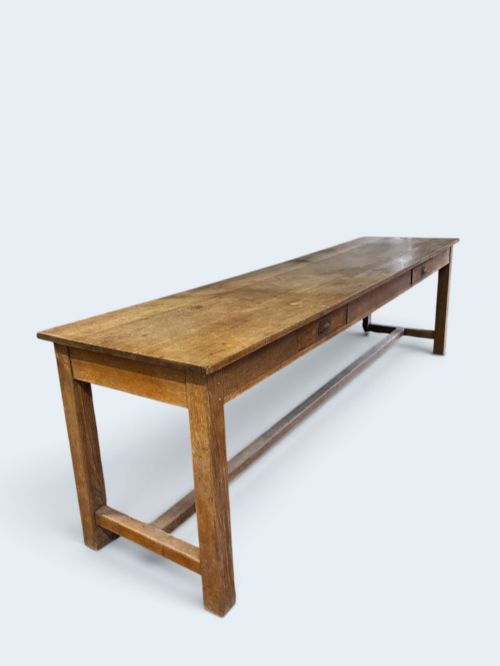
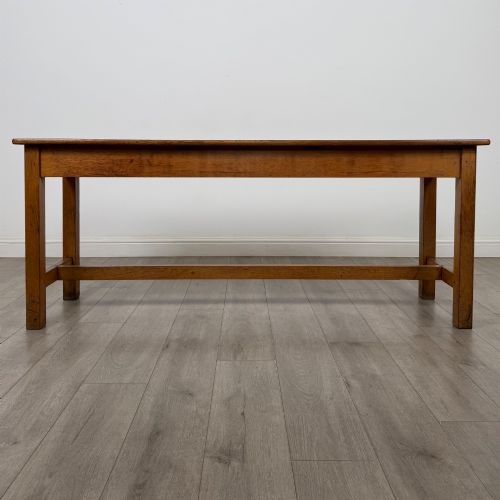
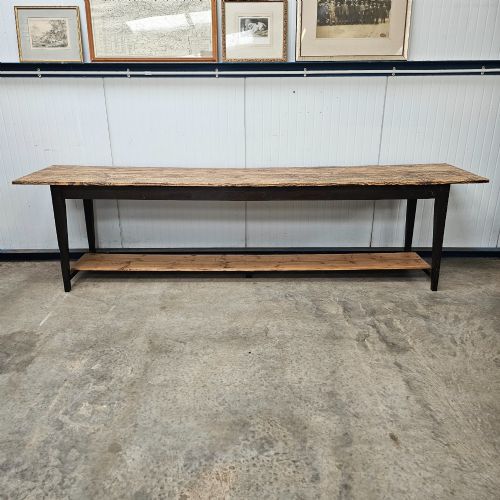


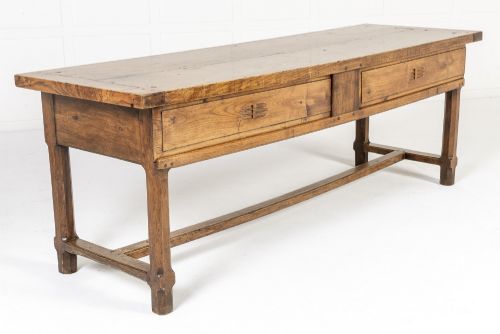


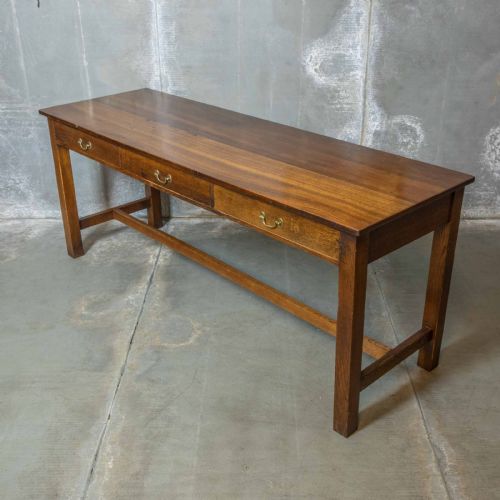


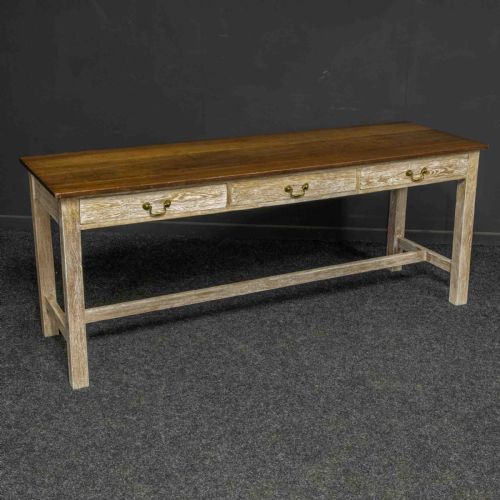

Long Oak Side Table
A long oak side table offers solid timber and generous proportions, making it a practical surface for a hallway or living space.
Long Oak Side Table
A long oak side table brings sturdy construction and elongated proportions to domestic interiors. When searching for a long oak side table, buyers encounter formats spanning 18th century refectory designs to 19th century drapers and serving tables.
How they were made
Construction relies primarily on solid oak, frequently augmented with secondary timbers such as pine for structural frames or internal elements. Metal components like cast iron and brass appear in specific configurations such as ships tables and underframes.
Surface treatments vary from untreated timber to bleached oak finishes that alter the natural tone of the wood. Joinery techniques reflect the utilitarian demands of refectory, drapers, and harvest tables designed for heavy daily use.
Some tables crossed the seas before finding a home, disguised as heavy-duty ships furniture with cast iron frames.
What varies in quality
Quality differentiates through the integrity of the timber selection, distinguishing standard solid oak construction from monumental proportions or specialised forms like ships tables and Gothic underframes. The purity of period characteristics, such as 18th century refectory detailing versus later Edwardian adaptations, shapes the character of each piece.
Surface finish also plays a role, where intentional bleached treatments or patinated rustic farmhouse patinas demonstrate distinct levels of workshop execution and stylistic adherence.
The Long Oak Side Table Glossary
- Refectory table
- A long narrow dining or serving table traditionally used in monasteries and large halls. These examples often feature substantial timber tops and sturdy underframes.
- Drapers table
- An elongated work table historically used in textile shops for folding cloth. They typically provide expansive surface areas and deep proportions.
- Harvest table
- A narrow table designed to accommodate large groups during seasonal gatherings. They frequently combine oak tops with secondary woods like pine.
- Bleached oak
- Timber treated to lighten its natural colour. This finish creates a pale, muted surface popular in French provincial and country interiors.
- Gothic revival
- A stylistic movement reviving medieval architectural forms. Pieces display characteristic pointed arches, tracery, and robust underframes.
Long Oak Side Table: Frequently Asked Questions
Where do I put a long oak side table?
These pieces suit wide hallways, dining spaces, or large living rooms where their extended proportions provide ample surface area.
Their substantial depth and length also allow them to function effectively as serving tables or console surfaces against expansive walls.
How do I care for an oak table top?
Maintenance depends on the surface finish, whether it is raw timber, waxed, or bleached. Regular dusting and the immediate removal of moisture help protect the wood grain.
Avoiding direct heat sources prevents the solid oak from warping or splitting over time.
Are these tables solid oak?
Most examples utilise solid oak for the primary surfaces and structural elements, though some variants incorporate secondary timbers like pine in their construction.
Metal components such as iron or brass also appear in specific utilitarian designs like ships tables.
What is a drapers table?
A drapers table is an extended utilitarian form historically used for measuring and folding fabric in mercantile settings. Their generous length makes them versatile for modern domestic use.
They frequently feature in French country contexts with either natural or bleached oak finishes.