


French Oak Serving Table
A french oak serving table brings heavy timber grain and honest utility straight into a modern dining room.
French Oak Serving Table
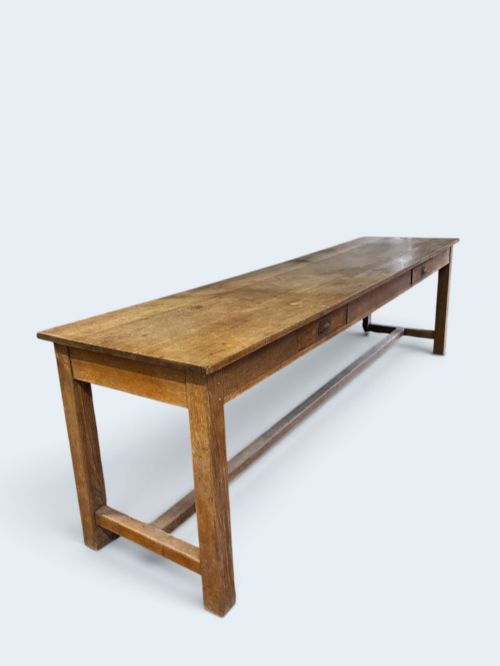
A french oak serving table is a substantial piece of domestic furniture built to handle food preparation and heavy service. These tables span several distinct eras, stretching from early 17th century Renaissance examples through to rustic 19th century provincial pieces and Edwardian interpretations.
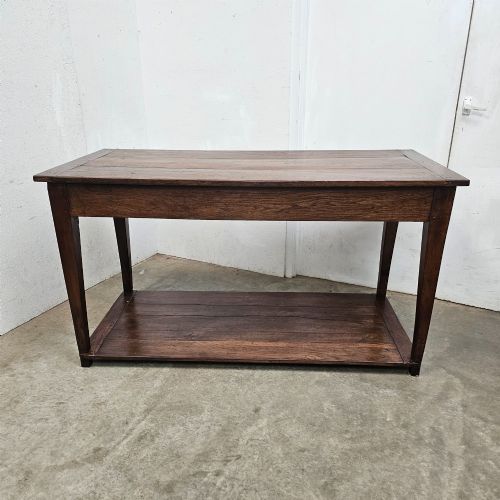
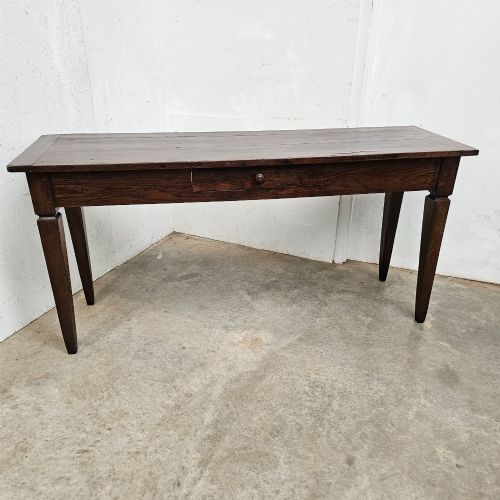
Most items on this page lean heavily towards provincial and rustic farmhouse aesthetics. You will encounter straightforward rectangular boards, two tier work tables, and pieces fitted with practical drawers for linen or cutlery.
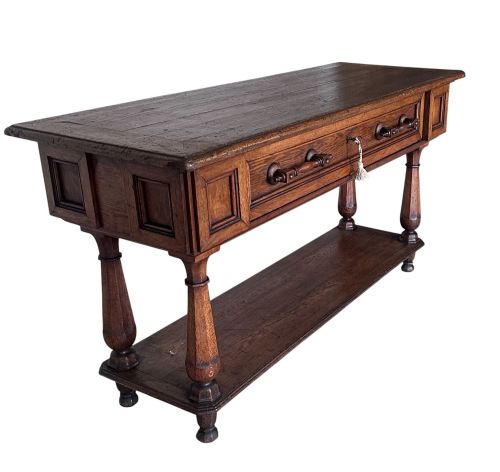
Origins vary from specific regional workshops in Alsace to broader French provincial settings. The forms range from simple work tables and drapers tables to grander console and server arrangements.
Materials and construction
Solid oak provides the primary structural integrity for almost every French oak serving table in the record. Carpenters selected dense timber for its durability, often pairing the main oak boards with secondary woods like fruitwood, pine, chestnut, or walnut.
Metal hardware plays a functional role in the construction and operation of these tables. Iron and brass appear as reinforcement brackets, handles, and drawer pulls, showing straightforward fastening methods rather than decorative flourishes.
Listings on this site feature oak alongside iron, brass, fruitwood, walnut, pine, and paint across various regional styles.
Judging quality in oak furniture
Quality rests in the integrity of the timber and the honesty of the construction. Tables built with thick, uncompromised solid oak boards command respect, whereas heavily restored or altered surfaces disrupt the historical character.
The balance of proportions and the integration of functional elements like drawers or tiers dictate the success of the design. Simpler provincial examples rely entirely on the weight of the timber and the depth of the grain for their presence.
The French Oak Serving Table Glossary
- Drapers table
- A long, narrow utility table originally designed for measuring and displaying cloth. These pieces feature lower shelves for storage and sturdy timber frames.
- Console table
- A table designed to stand flat against a wall, often supported by brackets or legs at the front. They provide surface space without occupying deep floor areas.
- Fruitwood
- A collective term for timbers harvested from fruit-bearing trees such as pear, apple, or cherry. Cabinetmakers used these dense woods for contrasting details or secondary structural elements.
- Two tier
- A furniture configuration incorporating a main upper surface and an additional lower shelf. This design doubles the practical storage space of a serving table.
French Oak Serving Table: Frequently Asked Questions
How do I clean a French oak serving table?
Dust the surface regularly with a dry cloth to prevent grit accumulation in the timber grain. Avoid harsh chemical cleaners that strip the natural patina.
Treat the wood occasionally with a traditional beeswax paste to nourish the dry oak. Buff gently with a soft brush to maintain a warm sheen.
Can I use a serving table for daily dining?
These tables handle everyday use quite well due to their robust solid oak construction. Many historical examples were built specifically as working surfaces for food preparation and service.
Protect the surface from heat and moisture by using mats and coasters. The tough timber absorbs years of domestic life gracefully.
What is the difference between a console and a server?
Console tables sit flush against a wall and generally serve a decorative or lightweight utility purpose. They often have shallow depths compared to dining furniture.
Servers and serving tables are deeper and heavier, designed to hold platters, dishes, and food during meals. They frequently include drawers for cutlery storage.
How do I identify a 19th century piece?
Examine the underside and drawer interiors for tool marks and construction methods consistent with period joinery. Hand-cut joints and uneven board widths indicate older hand tool work.
Look at the wear patterns around the edges and feet, which should show natural use over generations. The patina on the oak develops a deep warmth that modern finishes cannot replicate.