

19th Century French Side Table
When sourcing a 19th century french side table, buyers find versatile occasional pieces defined by rich continental cabinetmaking and elegant period revival forms.
19th Century French Side Table
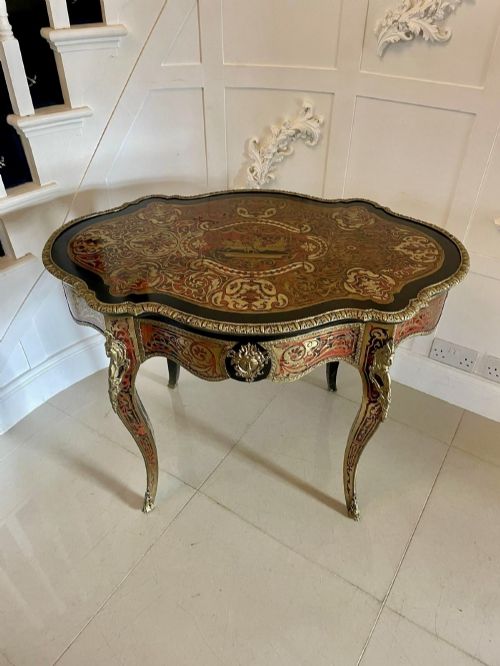
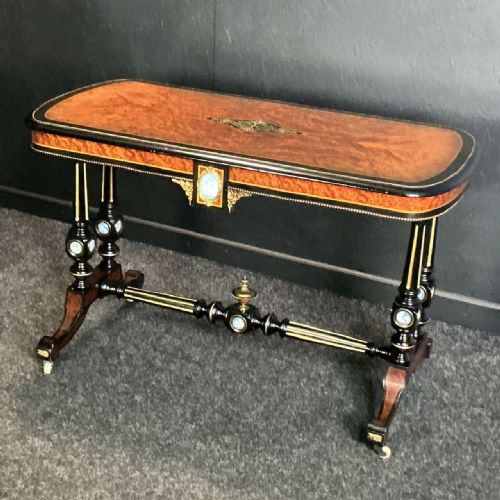
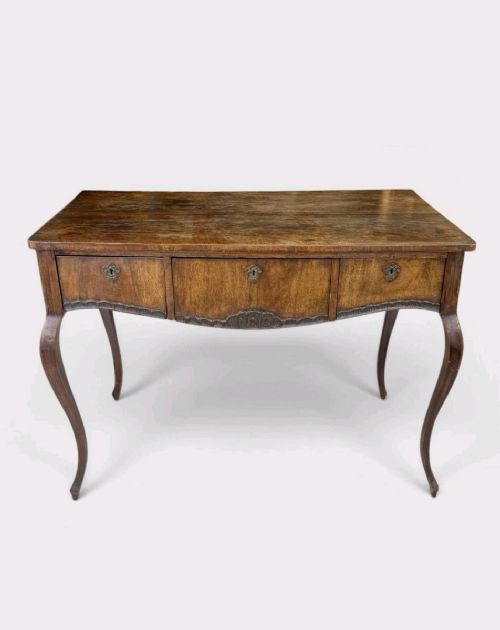
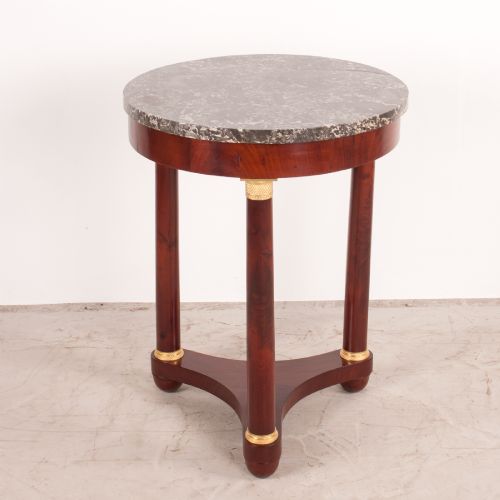
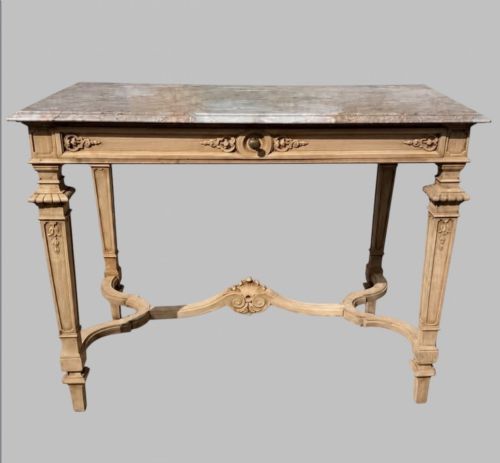
A 19th century french side table encompasses a diverse group of occasional furniture, including compact bouillotte tables, gueridons, and refined bedside cabinets. These forms span from provincial oak and cherry wood designs to highly decorative urban pieces dressed in exotic veneers.
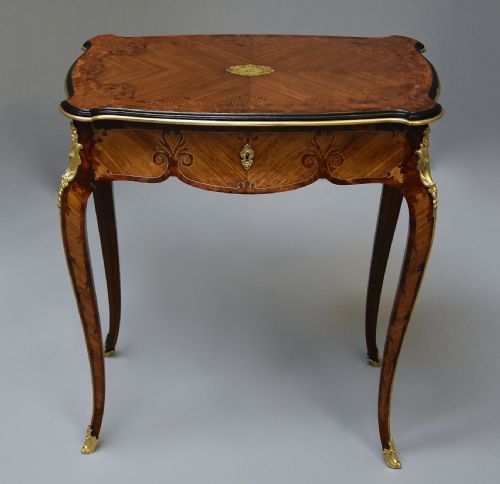
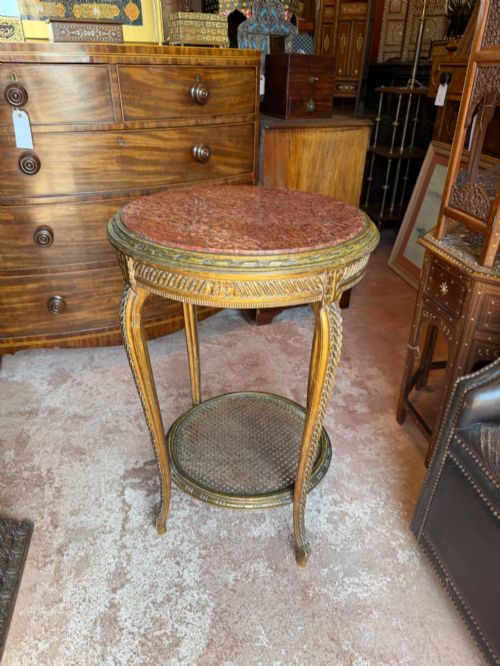
The selections recorded here reflect distinct periods of design revival, heavily influenced by Louis XV, Louis XVI, and Empire aesthetics. Buyers frequently encounter variations featuring marble tops, single drawers, or delicate cabriole legs suited for drawing rooms and chambers alike.
How They Were Made
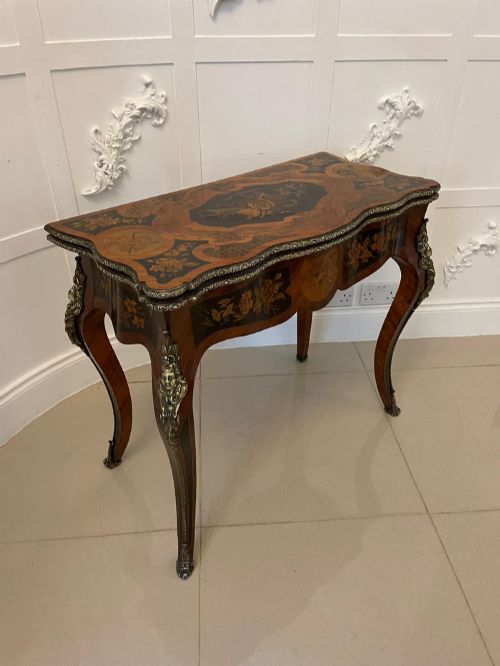
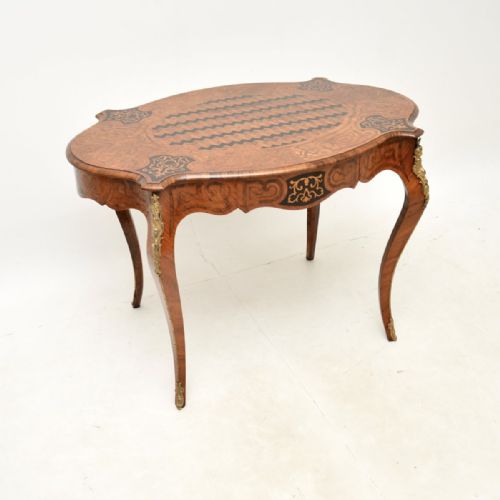
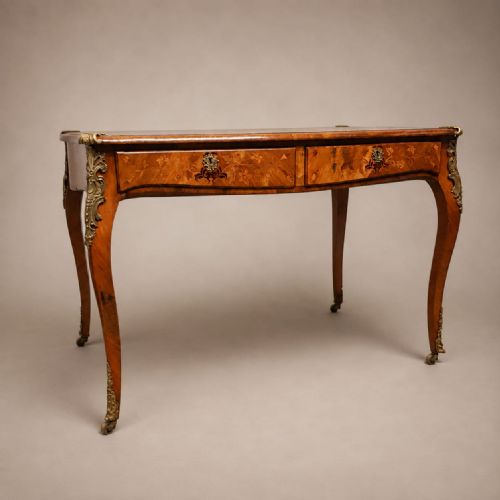
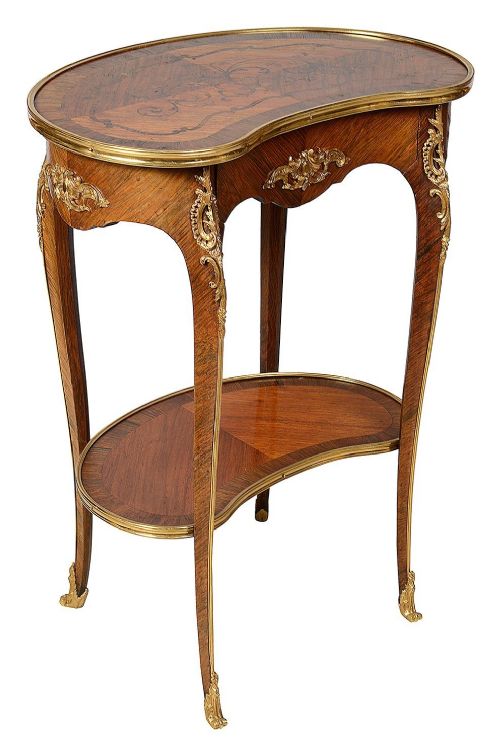
Cabinetmakers utilised dense hardwoods like mahogany, walnut, and kingwood as foundations for intricate marquetry and parquetry patterns. Surface decoration often incorporated contrasting satinwood or fruitwood to create geometric and floral motifs across the top and sides.
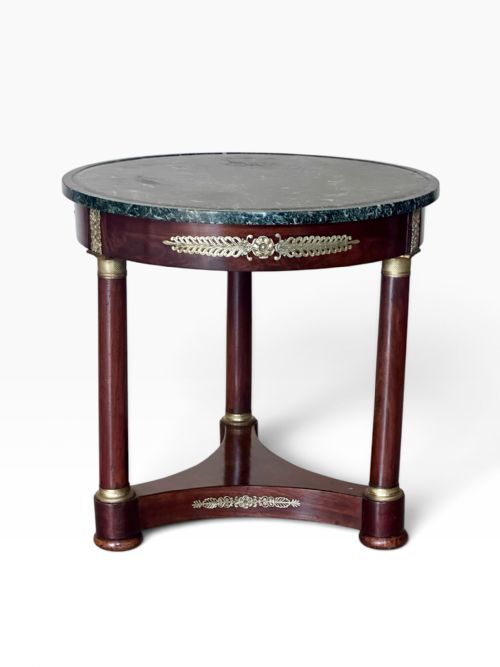
Metal mounts in ormolu, gilt bronze, and brass were cast and applied to enhance structural corners and legs. Many circular and occasional designs incorporated inset veined marble slabs secured within wooden galleries.
Some tables hide ingenious mechanisms or fold-over tops designed for secret games of chance.
What Varies in Quality
The refinement of the timber selection and the precision of the parquetry inlay distinguish standard production from exceptional examples. Cabinetmakers who matched veneer grains symmetrically across serpentine surfaces achieved a much higher level of visual harmony.
The execution of cast metal mounts and the retention of original hardware play a major role in establishing the integrity of an antique piece. Well-balanced proportions and smooth drawer mechanics indicate superior workshop construction.
Edward And Roberts·E Rousseau
The 19th Century French Side Table Glossary
- Gueridon
- A small circular table supported by a central column or multiple legs, frequently topped with marble. Originating in the seventeenth century, these tables remained popular throughout the nineteenth century for display.
- Ormolu
- Gilded bronze applied as decorative mounts on furniture and clocks. The technique involves coating metal in a finely ground mercury and gold amalgam.
- Marquetry
- The art of applying thin decorative veneers of different woods to a structural panel to form pictures or ornamental patterns. Skilled artisans cut these elements meticulously to fit together without gaps.
- Parquetry
- A geometric mosaic of wood pieces used for floor or furniture surfaces. It creates repeating patterns like cubes, chevrons, or squares.
- Bouillotte
- A small round card or gaming table featuring a raised gallery edge to prevent counters or dice from falling. They typically include small pull-out candle slides around the perimeter.
19th Century French Side Table: Frequently Asked Questions
What is a gueridon table?
A gueridon is a traditional round occasional table often fitted with a marble top and a single central pillar or slender legs. These tables served various functional uses in nineteenth-century interiors.
They frequently appear as small lamp tables or display surfaces within formal sitting rooms.
How do I identify Louis XV revival style?
Louis XV revival pieces are recognised by their flowing, asymmetrical curves and prominent cabriole legs. Decoration often draws inspiration from natural forms such as foliage and scrolls.
Cabinetmakers utilised this style to bring a softer, organic aesthetic to nineteenth-century domestic spaces.
Were these tables used as bedside cabinets?
Many compact nineteenth-century examples functioned as bedside tables, often incorporating a small drawer and lower enclosed storage. Their dimensions made them ideal for holding chamber lighting and personal items.
Woods like oak, walnut, and mahogany were common for these domestic bedside variants.
What distinguishes marquetry from parquetry?
Marquetry involves creating pictorial or floral designs using various coloured wood veneers arranged on a surface. Parquetry relies on strict geometric patterns like cubes and diamonds.
Both techniques demonstrate high levels of cabinetmaking skill across nineteenth-century occasional tables.