
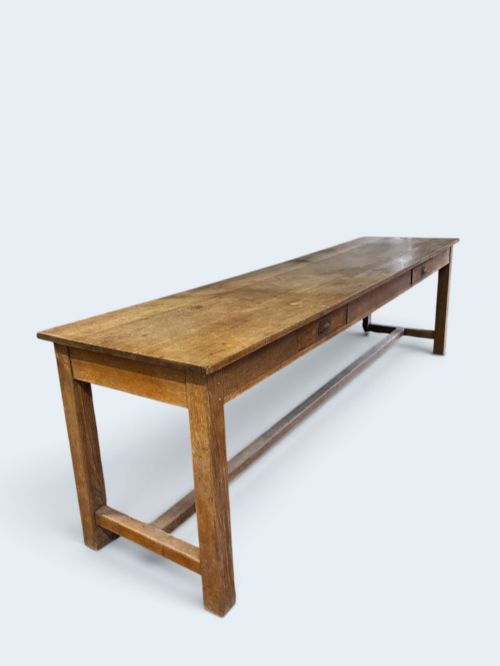
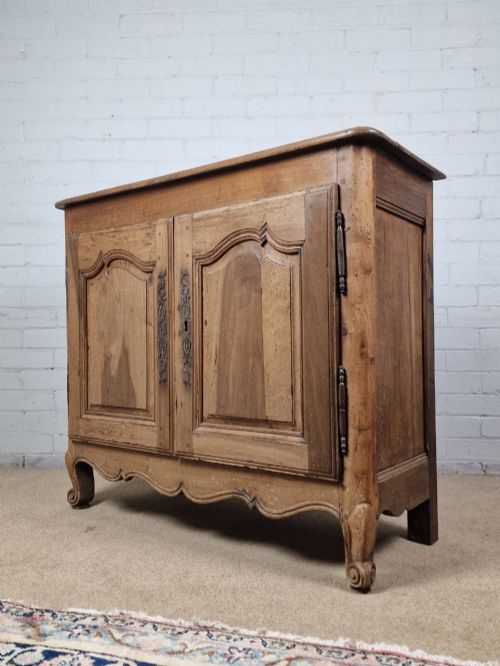
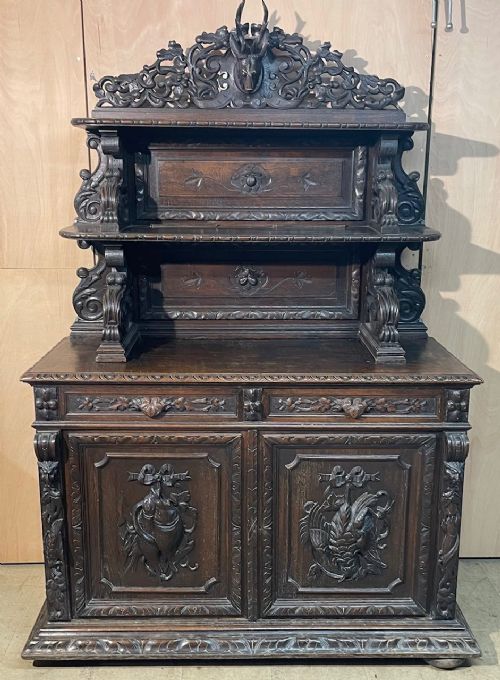
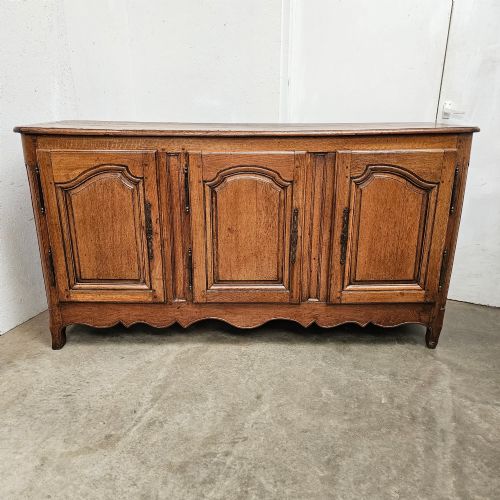


Rustic French Oak Sideboard
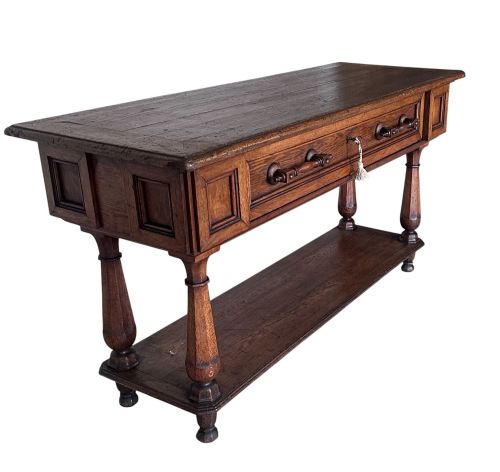
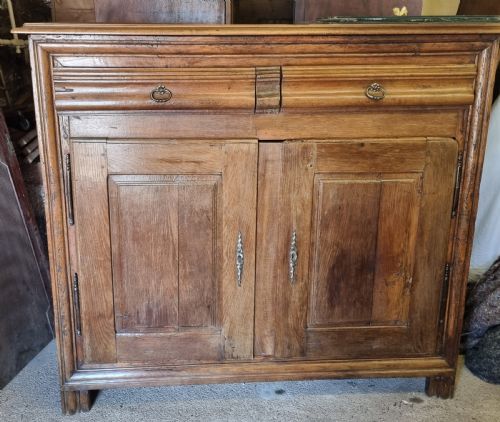
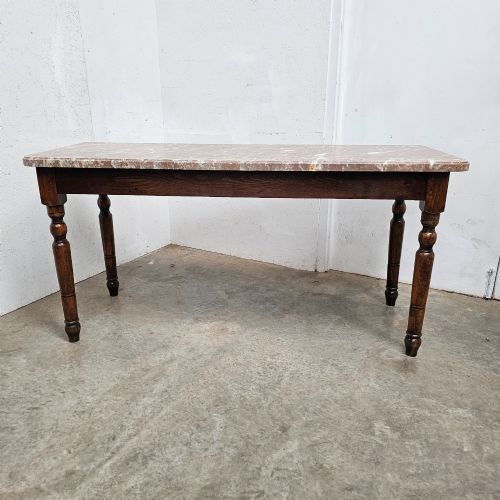
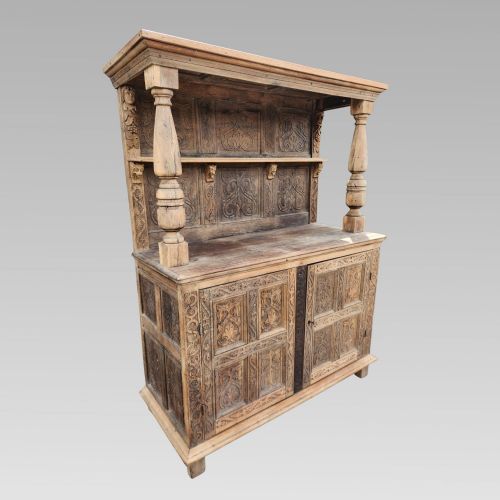
A rustic french oak sideboard brings grounded provincial character to a dining space, offering deep storage built from heavy regional timber.

Rustic French Oak Sideboard
A rustic french oak sideboard encompasses substantial storage furniture originating from provincial regions, designed for utility in kitchens, dining rooms, and hallways. When searching for a rustic french oak sideboard, buyers encounter heavy timber forms built to serve domestic needs over generations.
The pieces appearing under this category span various centuries, led by nineteenth-century examples alongside eighteenth-century provincial pieces. Common forms include low buffets, enfilades with multiple doors, and dresser bases executed in solid oak supplemented by regional hardwoods.
Regional origins shape these items, drawing on French provincial and country traditions that prioritize practical storage over ornate courtly styling. The results are robust items that anchor modern rooms with authentic rural patination and unpretentious scale.

Distinctions in quality and execution
Quality rests in the integrity of the timber selection and the restraint of the carving, where pieces with deep, hand-cut relief work outlast flatter machine-finished alternatives. The tightness of the joinery and the survival of original backboards and internal shelving distinguish superior provincial examples from later adaptations.
Proportion and surface patination dictate desirability, as items retaining unstripped timber surfaces with centuries of handling command greater appreciation than heavily restored or chemically stripped equivalents. Original hardware and unaltered door configurations elevate a piece above those with replaced elements.
Listings feature oak, chestnut, fruitwood, and walnut, spanning the eighteenth and nineteenth centuries through to the Victorian era.
The Rustic French Oak Sideboard Glossary
- Enfilade
- A long sideboard featuring three or more doors in a continuous line, commonly utilised in French dining rooms for serving and storage.
- Buffet
- A low storage cabinet designed for domestic utility, frequently housing interior shelving and drawers for kitchen or dining equipment.
- Dresser base
- The lower section of a storage unit featuring drawers and cupboards beneath a flat surface, omitting any upper plate rack.
- Provincial
- A designation for items made in the regions outside major urban centres, reflecting local vernacular styles and materials.
- Patina
- The surface sheen and colour acquired by timber and metal through age, use, and polishing over extended periods.
Rustic French Oak Sideboard: Frequently Asked Questions
How do I date an old sideboard?
Dating relies on examining construction marks, nail types, and joinery methods visible inside the cupboards and drawer linings. Hand-sawn boards and pegged joints typically point to eighteenth or early nineteenth-century provincial workshops.
Secondary indicators include the style of panel moulding and the wear patterns around handles and hinges. Comparing these details against known regional typologies helps narrow down the decade of manufacture.
Are these sideboards suitable for daily kitchen use?
These cabinets provide deep interior volumes and sturdy top surfaces well suited to contemporary kitchen and dining storage. Solid timber construction handles everyday items easily while offering durable workspace.
Care should be taken with unsealed wooden surfaces near moisture, using mats and coasters to protect the historic finish from water marks. Regular waxing maintains the moisture barrier of the oak.
How do I clean an oak surface?
Dusting with a dry or slightly damp lint-free cloth removes everyday particles without harming the aged surface. Avoid harsh chemical sprays or silicone polishes that build up and dull the timber over time.
Applying a traditional beeswax periodically nourishes the dry oak and enhances the natural lustre of the grain. Buffing gently with a soft brush brings up a subtle sheen.
What is the difference between an enfilade and a buffet?
An enfilade typically presents a longer facade with three or more doors aligned in a single row along the base. Buffets generally offer a more compact footprint with fewer doors and sometimes integrated drawers.
Both serve similar dining room functions, but the extended length of an enfilade accommodates larger serving requirements in spacious rooms.