
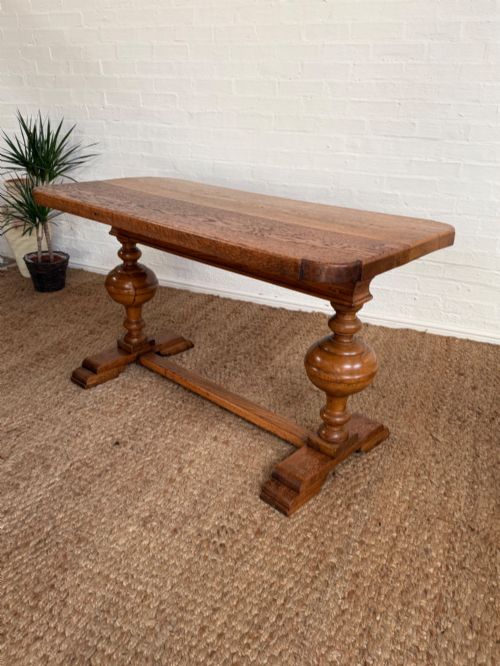
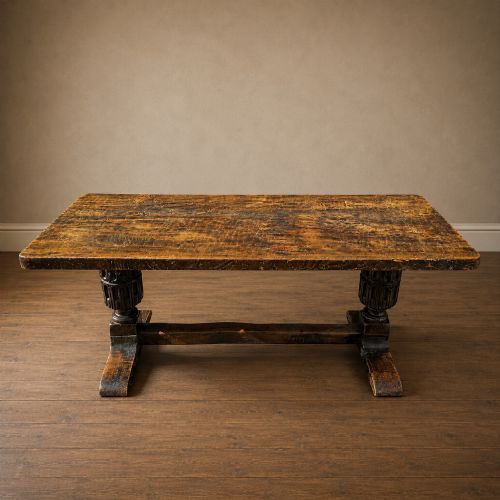
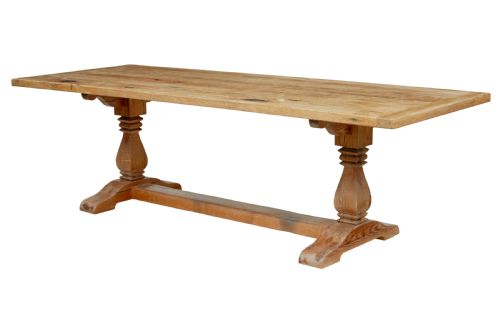
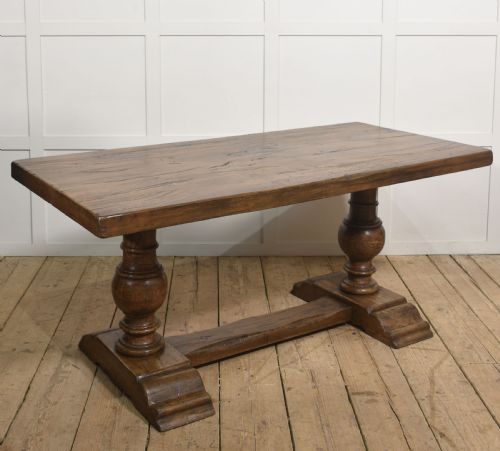


Carved Baluster Refectory Table
These carved baluster refectory table examples bring enduring joinery and generous proportions to the dining room.
Carved Baluster Refectory Table
Most examples met here date from the nineteenth and twentieth centuries, including Edwardian interpretations and revival pieces that emulate seventeenth-century originals. Forms span from standard oak dining tables to draw-leaf variants and long trestle designs, with timber species such as oak, elm, and pine appearing across the inventory. These tables serve as the focal point of a room, designed to seat many guests comfortably.
Materials and construction methods
Construction relies heavily on solid timber boards, with oak and elm forming the primary structural components for tops and legs. Selected tables feature single plank elm tops supported by sturdy framework, while others utilise bleached oak or pine for a lighter visual weight. Joinery techniques prioritize stability and durability, allowing these large dining surfaces to withstand daily use over centuries.
Carved details and baluster legs are shaped directly into the structural timber, reflecting the craftsmanship of English country house and French country traditions. The surfaces show the natural grain of the wood, whether finished in traditional dark tones or left in a brighter, bleached state. Each piece demonstrates the integration of heavy wooden framing with decorative turning.
Listings feature solid oak, elm, and pine across nineteenth-century and twentieth-century periods, including Edwardian interpretations.
Assessing quality and craftsmanship
Quality in a carved baluster refectory table rests on the selection of timber and the integrity of the original construction. Superior examples feature dense hardwoods like solid oak or single-plank elm tops that lie flat and stable across significant spans. The crispness of the carved baluster legs and the tightness of the joinery distinguish finely made workshop pieces from simpler utilitarian builds.
The choice of materials also dictates the character of the piece, with heavier solid oak versions offering greater permanence than softer pine alternatives. Proportion and balance between the substantial legs and the tabletop define the visual success of the design. The best tables combine robust historical joinery with harmonious scaling.
The Carved Baluster Refectory Table Glossary
- Refectory table
- A long dining table traditionally used in monasteries and large halls for communal meals. These pieces are characterised by their considerable length and sturdy underframes.
- Baluster leg
- A architectural support column with a swelling contour, often turned on a lathe and incorporated into table bases. This shape provides both visual weight and structural strength.
- Draw-leaf
- An extension mechanism where two hidden leaves slide out from beneath the main tabletop to increase the surface area. This feature allows the table to accommodate more diners when needed.
- Jacobean revival
- A nineteenth and twentieth century design style that imitates the robust, dark oak furniture of the early seventeenth century. Pieces in this style often feature geometric mouldings and turned supports.
Carved Baluster Refectory Table: Frequently Asked Questions
How do I seat twelve people?
Large formats such as French oak farm tables and extended refectory designs provide the necessary length for large gatherings.
Checking the clearance beneath the aprons ensures chairs fit comfortably along the entire span of the table.
Are these tables from the seventeenth century?
While seventeenth-century originals exist, the majority of pieces available date from the nineteenth and twentieth centuries.
Revival styles from the Edwardian era and the eighteen-eighties frequently emulate earlier historical aesthetics.
What wood types should I expect?
Solid oak and elm are the predominant timbers found in these listings, providing heavy and durable surfaces.
Pine and bleached oak also appear, offering alternative textures and lighter colour variations for interior spaces.
How do draw-leaf tables work?
Draw-leaf mechanisms allow the main surface to remain stable while auxiliary leaves pull out from each end.
This functional design expands the seating capacity without requiring separate storage for extra boards.